Mrna vaccine vial closeup
1344×768 · AVIF · CC BY 4.0
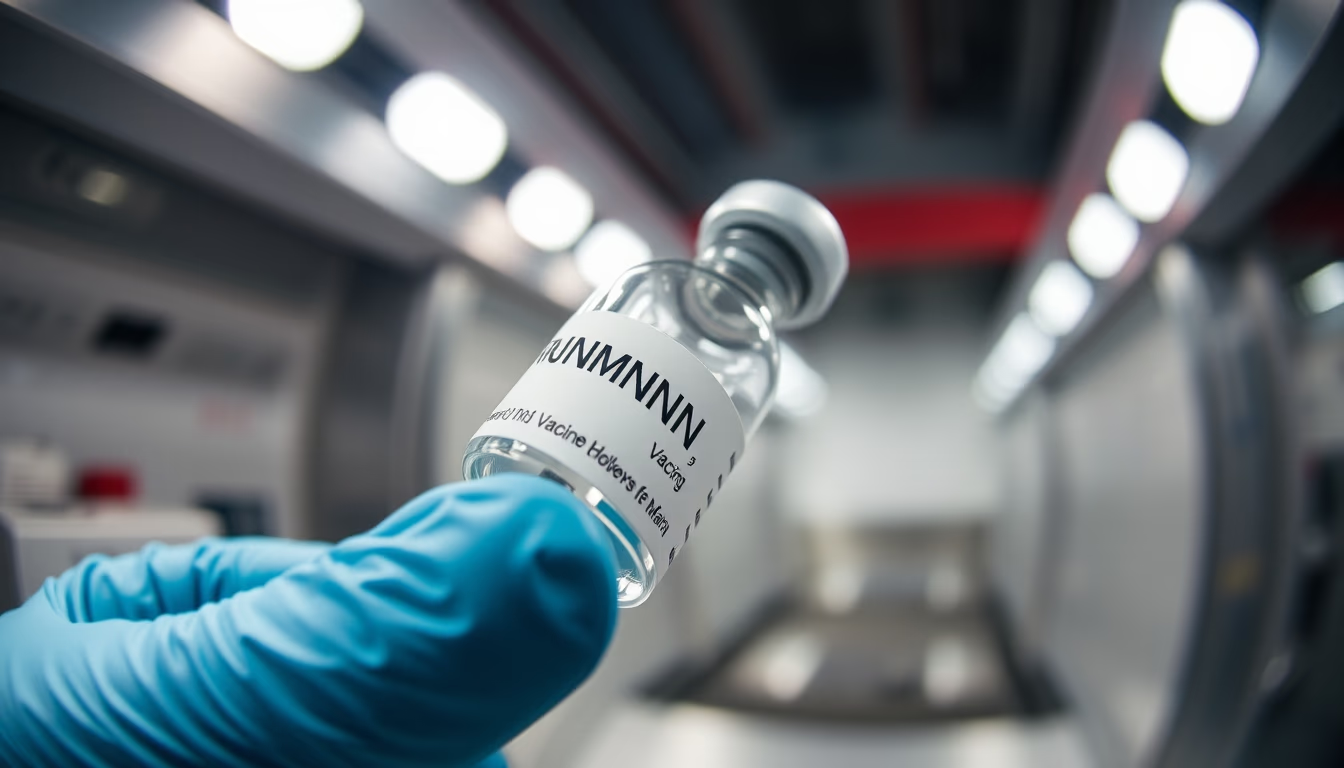
Close-up of an mRNA vaccine vial highlights the revolutionary technology that enabled rapid responses against COVID-19 and paves the way for new treatments.
About this subject
mRNA vaccines represent a breakthrough in immunization. Unlike traditional vaccines that use attenuated or inactivated viruses, mRNA vaccines contain a synthetic molecule that instructs cells to produce a viral protein, triggering an immune response. This method does not use live virus, accelerating production and reducing risks. The first large-scale use occurred in 2020 with the COVID-19 vaccines from Pfizer/BioNTech and Moderna. The vials contain mRNA encapsulated in lipid nanoparticles, which protect the fragile molecule and facilitate delivery to cells.
In Brazil, mRNA vaccines were essential in the COVID-19 vaccination campaign. Millions of doses have been administered since January 2021, drastically reducing hospitalizations and deaths. A major logistical challenge is the need for ultra-cold storage, around -70°C for Pfizer, requiring investment in special freezers and cold chain. Remote regions faced difficulties, but strategies such as thermal boxes with dry ice helped overcome obstacles.
The mRNA platform is versatile and holds promise for treating other diseases. Research is underway for vaccines against influenza, Zika, HIV, and various cancers. The ability to quickly adapt the mRNA sequence allows rapid response to new viral variants within weeks. Clinical trials in Brazil are testing mRNA vaccines against dengue and yellow fever, expanding the technology's potential.
The development of mRNA vaccines has also boosted Brazilian scientific capacity. Institutions like Fiocruz and the Butantan Institute monitor outcomes and participate in follow-up studies. Although domestic production is still under discussion, the experience gained from mass application strengthens preparedness for future health emergencies. The mRNA vaccine continues to be studied to improve thermal stability and reduce rare adverse effects.
Frequently Asked Questions
How does an mRNA vaccine work?
It uses a messenger RNA molecule that instructs cells to produce a viral protein, triggering an immune response without using live virus.
What are the logistical challenges of mRNA vaccines?
They require ultra-cold storage, such as -70°C for Pfizer, demanding special freezers and strict cold chain, complicating distribution in remote areas.
Which diseases could mRNA treat in the future?
Research is ongoing for vaccines against influenza, Zika, HIV, and cancer, with trials in Brazil for dengue and yellow fever.
Direct URL
https://pub-c7d6a6ea828543ac903a74a341ccb2e1.r2.dev/imagens/mrna-vaccine-vial-closeup-fish-eye-wide-angle-p4.avifHow to credit
Include a visible link back to UtilizAí. Copy one of the snippets below:
<a href="https://xn--utiliza-eza.com/en/midia/imagens/mrna-vaccine-vial-closeup-fish-eye-wide-angle-p4">Mrna vaccine vial closeup</a> by <a href="https://xn--utiliza-eza.com">UtilizAí</a>, licensed under <a href="https://creativecommons.org/licenses/by/4.0/">CC BY 4.0</a>.
[Mrna vaccine vial closeup](https://xn--utiliza-eza.com/en/midia/imagens/mrna-vaccine-vial-closeup-fish-eye-wide-angle-p4) by [UtilizAí](https://xn--utiliza-eza.com), CC BY 4.0
License: CC-BY-4.0