Mrna vaccine vial closeup
1344×768 · AVIF · CC BY 4.0
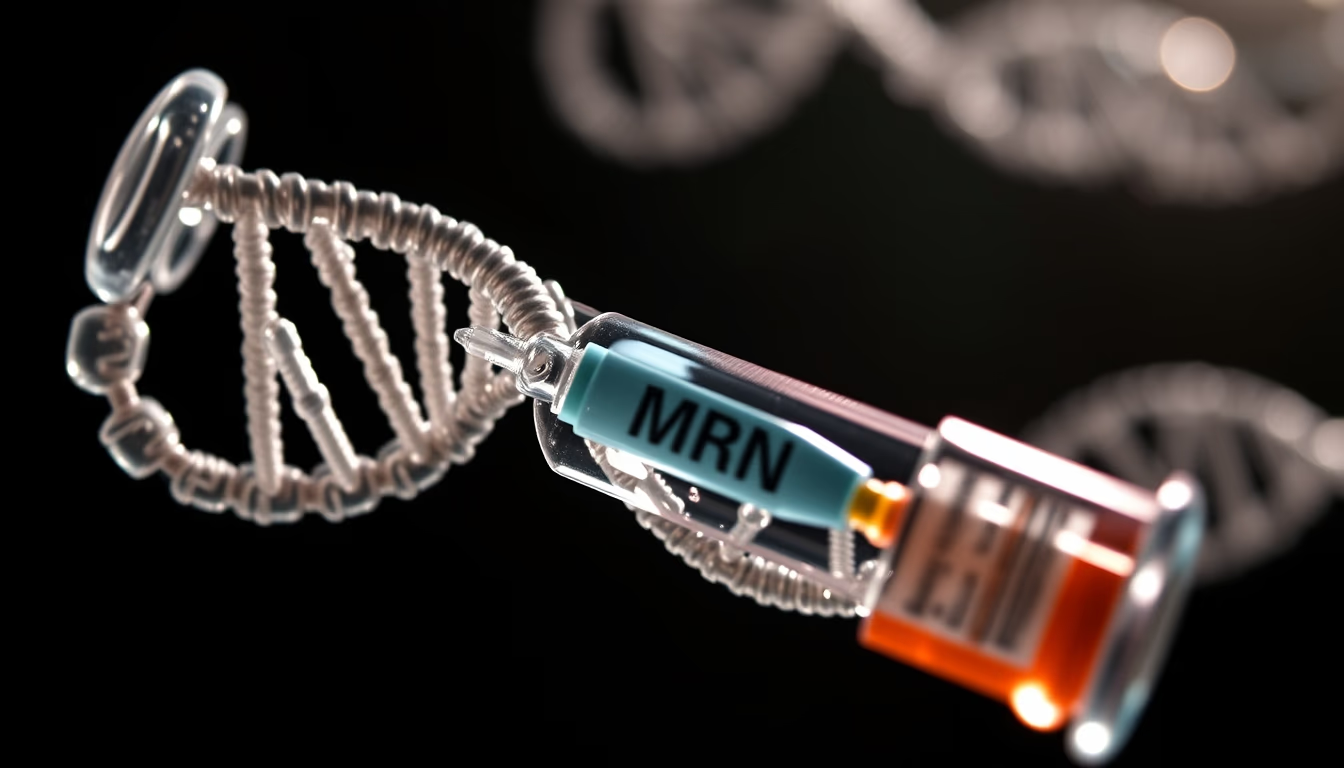
Close-up of an mRNA vaccine vial: the technology that revolutionized COVID-19 immunization, with logistical challenges of ultra-cold storage.
About this subject
mRNA vaccines, such as those developed by Pfizer-BioNTech and Moderna, represent a technological leap in immunization. Unlike traditional vaccines using weakened viruses or proteins, these vaccines employ messenger RNA molecules that instruct cells to produce a spike protein of SARS-CoV-2, triggering an immune response. The vials are small, typically made of amber glass, and contain multiple doses. For instance, the Pfizer vial originally held six doses, but after authorization from Anvisa, it yielded up to six doses when using low dead-volume syringes. In Brazil, distribution required an extremely strict cold chain: vials must be kept between -80°C and -60°C (Pfizer) or between -25°C and -15°C (Moderna). This demanded investments in specialized freezers and logistics using dry ice. The vial's color and label vary by manufacturer, but all carry barcodes and lot numbers for traceability. The ultra-cold temperature preserves mRNA stability, as the molecule degrades rapidly at higher temperatures. After thawing, Pfizer vials can be stored in a standard refrigerator for up to 5 days, facilitating administration at health posts. mRNA technology is not new; research began in the 1990s, but the pandemic accelerated development and approval. These vaccines have shown over 90% efficacy in clinical trials and significantly reduced hospitalizations and deaths. Beyond COVID-19, mRNA technology is being tested for other diseases, including influenza, Zika, and cancer. The close-up vial symbolizes scientific innovation and hope in combating the pandemic, but also the challenges of global equity, as low-income countries struggled with access due to refrigeration infrastructure requirements.
Frequently Asked Questions
Why do mRNA vaccine vials require ultra-cold storage?
mRNA is a fragile molecule that degrades quickly at temperatures above -20°C. Ultra-cold storage (between -80°C and -60°C for Pfizer) ensures mRNA stability until use. After thawing, vials can be kept in a standard refrigerator (2°C to 8°C) for up to 5 days.
How many doses are in an mRNA vaccine vial?
Originally, Pfizer-BioNTech vials contained six doses, but with low dead-volume syringes, six or even seven doses can be extracted. Moderna vials contain ten doses. The exact number depends on dilution and syringe type.
What is the difference between Pfizer and Moderna vials?
Pfizer vials are smaller with a gray cap, while Moderna vials have a red cap. The mRNA concentration and dilution volume differ: Pfizer requires dilution with saline, while Moderna is ready-to-use. Storage conditions also vary: Pfizer requires -80°C to -60°C; Moderna, -25°C to -15°C.
Direct URL
https://pub-c7d6a6ea828543ac903a74a341ccb2e1.r2.dev/imagens/mrna-vaccine-vial-closeup-fine-art-photography-p12.avifHow to credit
Include a visible link back to UtilizAí. Copy one of the snippets below:
<a href="https://xn--utiliza-eza.com/en/midia/imagens/mrna-vaccine-vial-closeup-fine-art-photography-p12">Mrna vaccine vial closeup</a> by <a href="https://xn--utiliza-eza.com">UtilizAí</a>, licensed under <a href="https://creativecommons.org/licenses/by/4.0/">CC BY 4.0</a>.
[Mrna vaccine vial closeup](https://xn--utiliza-eza.com/en/midia/imagens/mrna-vaccine-vial-closeup-fine-art-photography-p12) by [UtilizAí](https://xn--utiliza-eza.com), CC BY 4.0
License: CC-BY-4.0