Mri scanner machine modern
1344×768 · AVIF · CC BY 4.0
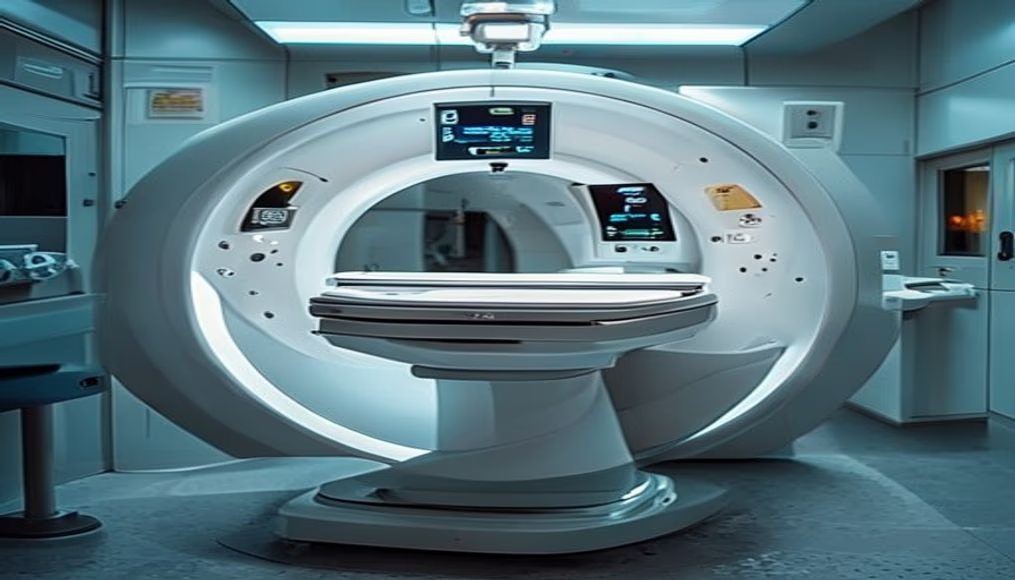
Modern MRI scanner: non-invasive technology that revolutionized diagnostic imaging with high anatomical and functional resolution.
About this subject
Magnetic resonance imaging (MRI) is a medical imaging technique that uses strong magnetic fields and radio waves to produce detailed images of organs and tissues. Unlike computed tomography, MRI does not use ionizing radiation, making it safe for repeated use and particularly useful in pediatric and pregnant patients (though gadolinium contrast is avoided during pregnancy). Since its clinical introduction in the 1980s, the technology has evolved significantly: modern scanners, such as 3 Tesla (3T) systems, offer submillimeter resolution and allow functional MRI (fMRI) that maps brain activity in real time.
Current equipment features multi-channel radiofrequency coils, ultrafast pulse sequences, and artificial intelligence to reduce acquisition time and motion artifacts. Larger bores (70 cm diameter) and quieter magnet designs improve patient comfort, reducing claustrophobia. Applications range from neurology (tumors, multiple sclerosis) to orthopedics (ligament injuries), cardiology (myocardial viability), and oncology (staging of neoplasms).
Culturally, MRI has become a symbol of medical precision, often depicted in TV shows and films as a definitive diagnostic tool. In Brazil, the public health system (SUS) offers MRI exams at referral hospitals, though distribution is unequal. A curiosity: the first whole-body MRI scanner was built by Raymond Damadian in 1977, and the technique earned Paul Lauterbur and Peter Mansfield the Nobel Prize in Medicine in 2003.
Frequently Asked Questions
Is an MRI painful?
No, the exam is painless. The patient must remain still inside the scanner. Loud knocking noises are normal due to electrical currents in the coils; ear protection is provided.
How long does an MRI scan take?
Typically 30 to 60 minutes, depending on the area and need for contrast. Faster sequences, such as those from 3T scanners, can reduce the time.
Who cannot have an MRI?
Patients with pacemakers, aneurysm clips, intraocular metal fragments, or incompatible cochlear implants. Modern devices may be MRI-conditional, but verification is always required.
Direct URL
https://pub-c7d6a6ea828543ac903a74a341ccb2e1.r2.dev/imagens/mri-scanner-machine-modern-street-photography-v11.avifHow to credit
Include a visible link back to UtilizAí. Copy one of the snippets below:
<a href="https://xn--utiliza-eza.com/en/midia/imagens/mri-scanner-machine-modern-street-photography-v11">Mri scanner machine modern</a> by <a href="https://xn--utiliza-eza.com">UtilizAí</a>, licensed under <a href="https://creativecommons.org/licenses/by/4.0/">CC BY 4.0</a>.
[Mri scanner machine modern](https://xn--utiliza-eza.com/en/midia/imagens/mri-scanner-machine-modern-street-photography-v11) by [UtilizAí](https://xn--utiliza-eza.com), CC BY 4.0
License: CC-BY-4.0