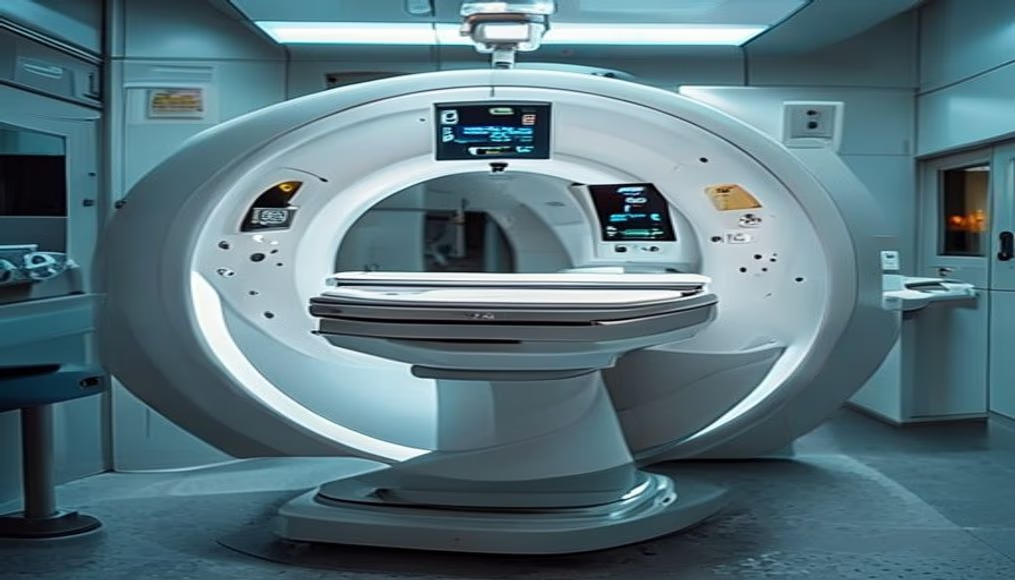
Mri scanner machine modern
1344×768 · AVIF · CC BY 4.0
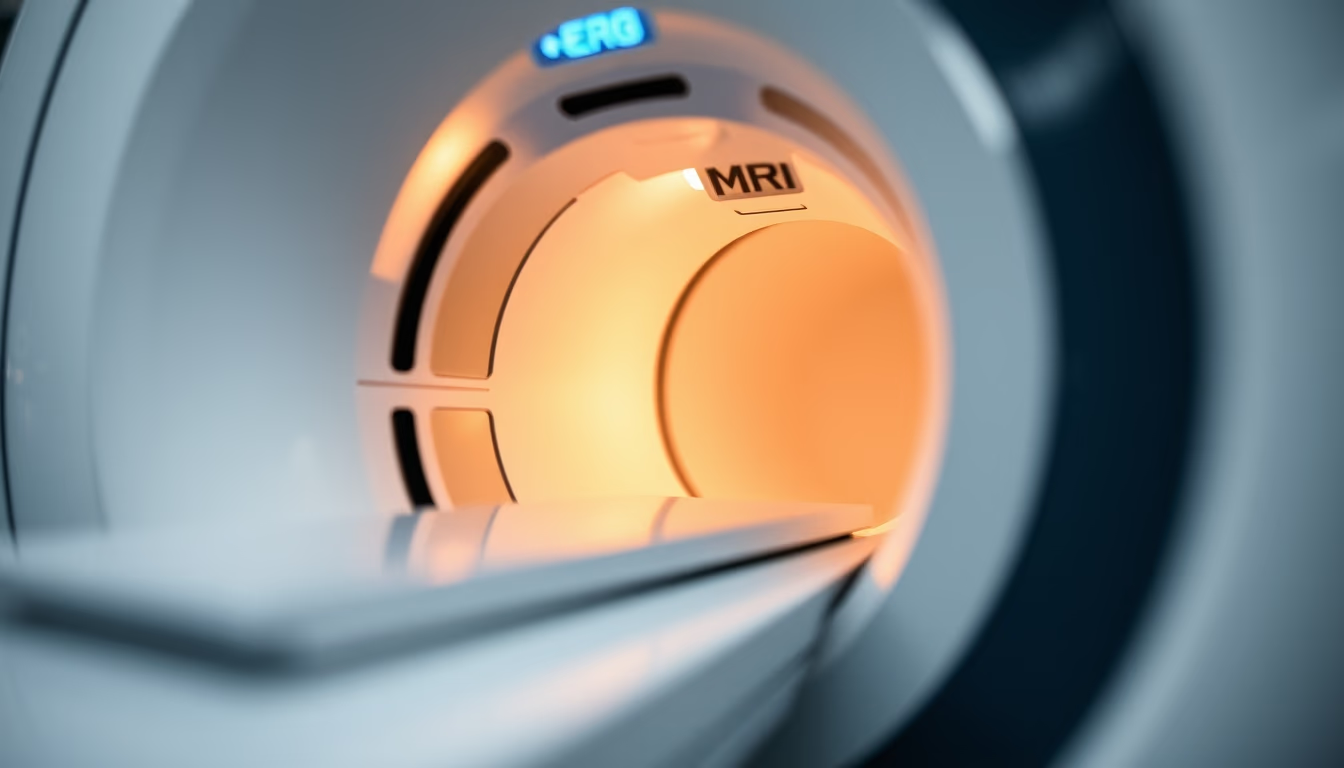
Modern MRI scanners revolutionize medical diagnosis with high-precision imaging and no ionizing radiation.
About this subject
Magnetic resonance imaging (MRI) is a medical imaging technique that uses strong magnetic fields and radio waves to generate detailed images of organs and tissues. Unlike X-rays or CT scans, MRI does not use ionizing radiation, making it safe for repeated use, especially in children and pregnant women (with specific precautions). The modern scanner consists of a large tubular magnet that surrounds the patient, capable of generating magnetic fields of 1.5 to 3 Tesla or more. The physical principle relies on aligning hydrogen protons in the body with the magnetic field; they are then excited by radiofrequency pulses and emit signals as they relax, which are captured by coils and processed by a computer to form images.
MRI technology has evolved significantly since its clinical introduction in the 1980s. Modern scanners offer faster pulse sequences, higher spatial resolution, and functional imaging capabilities (fMRI) that map brain activity. High-performance gradient systems enable real-time acquisitions for cardiac and motion studies. Multichannel receiver coils, up to 128 channels, improve signal-to-noise ratio and speed up exams. Larger bores (70 cm or more) reduce claustrophobia in anxious patients.
In Brazil, MRI is available mainly in large hospitals and specialized clinics, concentrated in the South and Southeast regions. The public health system (SUS) provides scans for priority indications such as brain tumors, spinal cord injuries, and joint disorders. Demand grows annually due to aging populations and rising chronic disease rates. Maintenance of high-field equipment requires specialized technicians and proper infrastructure, including electromagnetic shielding.
Fun facts: The first human MRI scanner was built in 1977 by Raymond Damadian. Earth's magnetic field is about 0.00005 Tesla, while a 3 Tesla scanner is 60,000 times stronger. Drawbacks: high equipment cost (millions of dollars) and loud noise during scans, requiring ear protection. Current research aims to reduce scan time and develop safer contrast agents, such as manganese-based alternatives to gadolinium.
Frequently Asked Questions
What is the difference between MRI and CT scan?
MRI uses magnetic fields and radio waves, no ionizing radiation, and excels at soft tissue imaging. CT uses X-rays, is faster, and better for bones and emergencies.
Is an MRI painful or dangerous?
It is painless but requires staying still. It is safe, but contraindicated for people with pacemakers or ferromagnetic metal implants.
How long does an MRI scan take?
Typically 30 to 60 minutes, depending on the area and contrast use. Newer scanners can be faster.
Direct URL
https://pub-c7d6a6ea828543ac903a74a341ccb2e1.r2.dev/imagens/mri-scanner-machine-modern-macro-closeup.avifHow to credit
Include a visible link back to UtilizAí. Copy one of the snippets below:
<a href="https://xn--utiliza-eza.com/en/midia/imagens/mri-scanner-machine-modern-macro-closeup">Mri scanner machine modern</a> by <a href="https://xn--utiliza-eza.com">UtilizAí</a>, licensed under <a href="https://creativecommons.org/licenses/by/4.0/">CC BY 4.0</a>.
[Mri scanner machine modern](https://xn--utiliza-eza.com/en/midia/imagens/mri-scanner-machine-modern-macro-closeup) by [UtilizAí](https://xn--utiliza-eza.com), CC BY 4.0
License: CC-BY-4.0