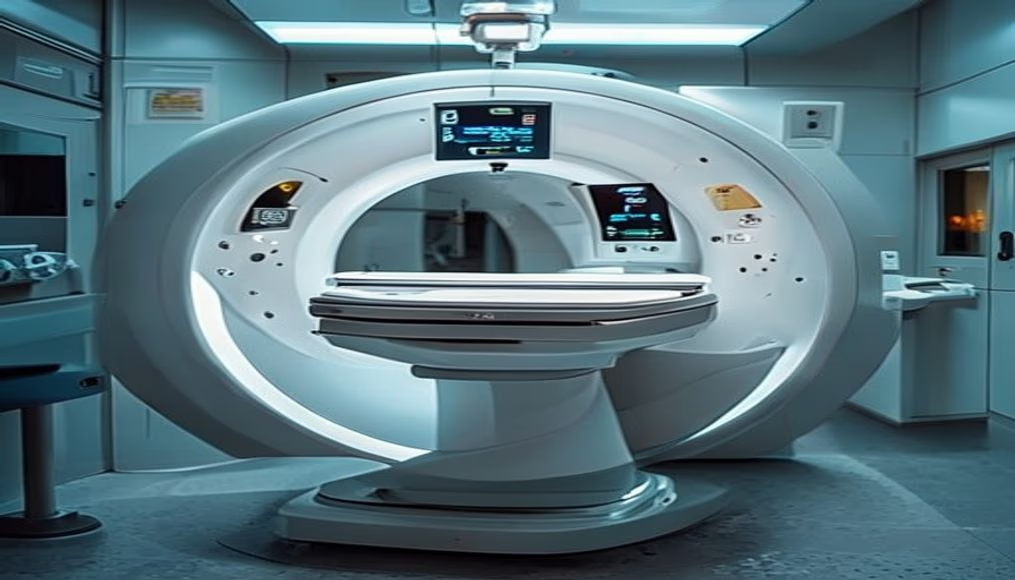
Mri scanner machine modern
1344×768 · AVIF · CC BY 4.0
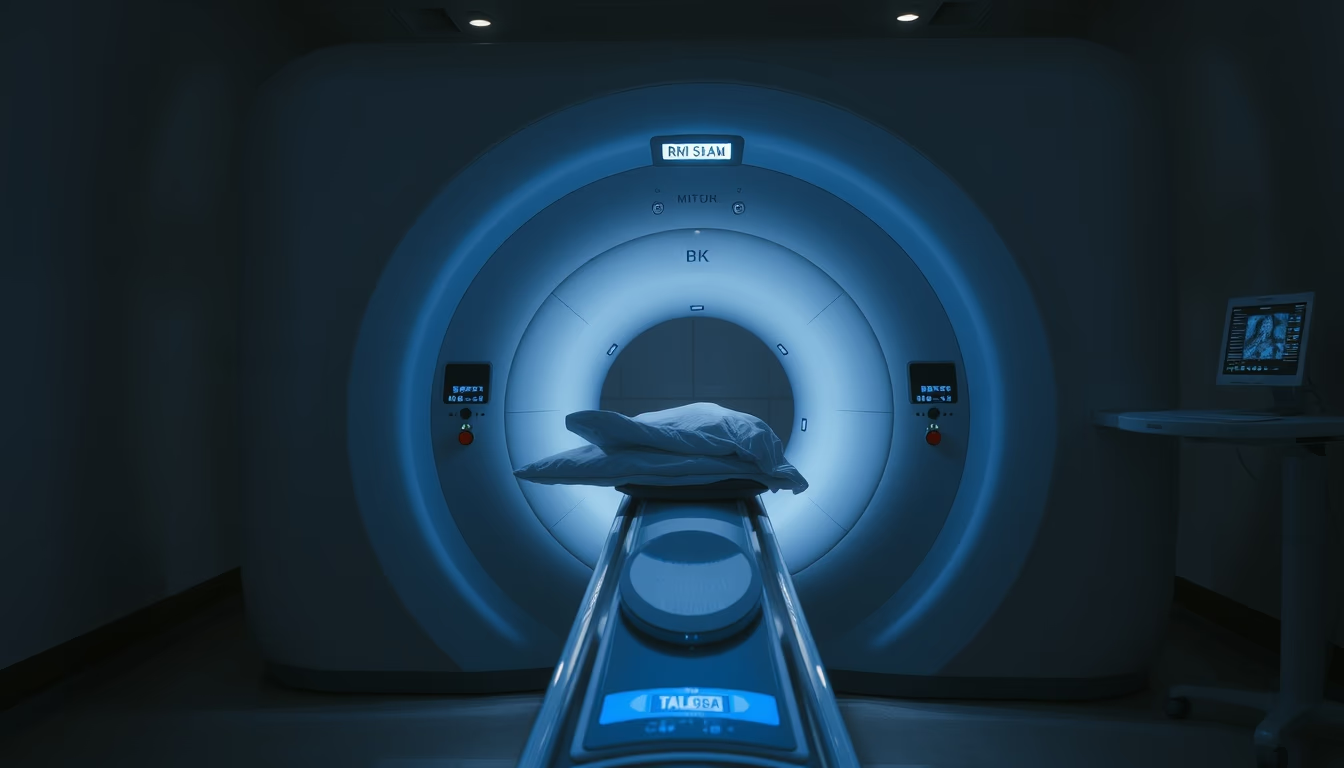
The modern MRI scanner is a technological breakthrough in diagnostic medicine, offering precision and safety in complex imaging procedures.
About this subject
Magnetic Resonance Imaging (MRI) is a medical imaging technique using magnetic fields and radio waves to generate 3D details of organs and tissues. Developed in the 1970s-80s, it evolved from rudimentary machines to advanced systems with superconducting coils and AI algorithms capable of mapping biological processes in real-time. For brain scans, cerebrospinal fluid contrast helps detect injuries, tumors, and degenerative diseases. The 7T technology, used in research centers, offers nanoscale resolution, revealing neural structures invisible to conventional devices.
In Brazil, the implementation of 3T machines in public and private hospitals has expanded access to non-invasive diagnostics, reducing reliance on ionizing radiation. Patients with claustrophobia benefit from horizontal models with wider tunnels, while functional MRI (fMRI) has revolutionized neuroscience studies, mapping brain connections during cognitive activities. In 2023, Brazilian startup NeuroScan patented an augmented reality system for scans, allowing doctors to visualize a patient's anatomy in 3D during procedures.
The aesthetic appeal of modern MRI equipment, with minimalist architecture and chromatic design, attracts editorial photographers. The glow of superconducting coils and the geometry of magnetic rings create abstract compositions, balancing technology and art. International exhibitions highlight how controlled lighting on sensors and component symmetry transform medical devices into futuristic sculptures.
Frequently Asked Questions
How does an MRI scanner work?
MRI uses strong magnetic fields and radio waves to align protons in the human body. When the magnetic field is turned off, the protons emit signals detected by sensitive coils, which a computer converts into detailed images.
What are the main benefits of MRI compared to other imaging exams?
Unlike computed tomography (CT) scans, MRI does not use ionizing radiation, making it safer for repeated exams. It also provides better soft tissue contrast, crucial for neurological and musculoskeletal diagnoses.
Is MRI safe for all patients?
No. Patients with metallic implants, pacemakers, or nanotechnology are not eligible for the exam. Additionally, people with severe claustrophobia may choose larger open models.
Direct URL
https://pub-c7d6a6ea828543ac903a74a341ccb2e1.r2.dev/imagens/mri-scanner-machine-modern-fine-art-photography-v7.avifHow to credit
Include a visible link back to UtilizAí. Copy one of the snippets below:
<a href="https://xn--utiliza-eza.com/en/midia/imagens/mri-scanner-machine-modern-fine-art-photography-v7">Mri scanner machine modern</a> by <a href="https://xn--utiliza-eza.com">UtilizAí</a>, licensed under <a href="https://creativecommons.org/licenses/by/4.0/">CC BY 4.0</a>.
[Mri scanner machine modern](https://xn--utiliza-eza.com/en/midia/imagens/mri-scanner-machine-modern-fine-art-photography-v7) by [UtilizAí](https://xn--utiliza-eza.com), CC BY 4.0
License: CC-BY-4.0