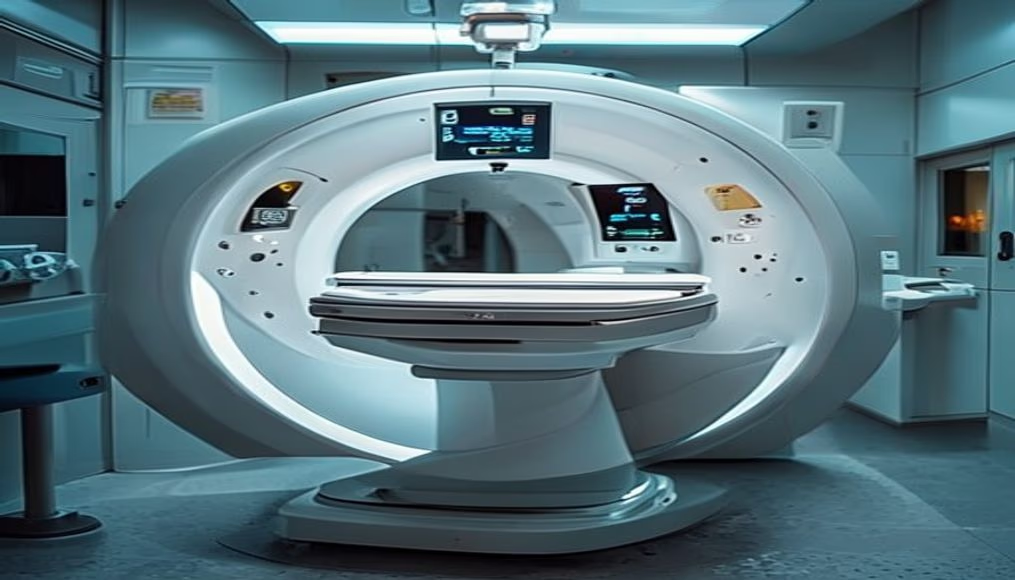
Mri scanner machine in radiology department
1344×768 · AVIF · CC BY 4.0
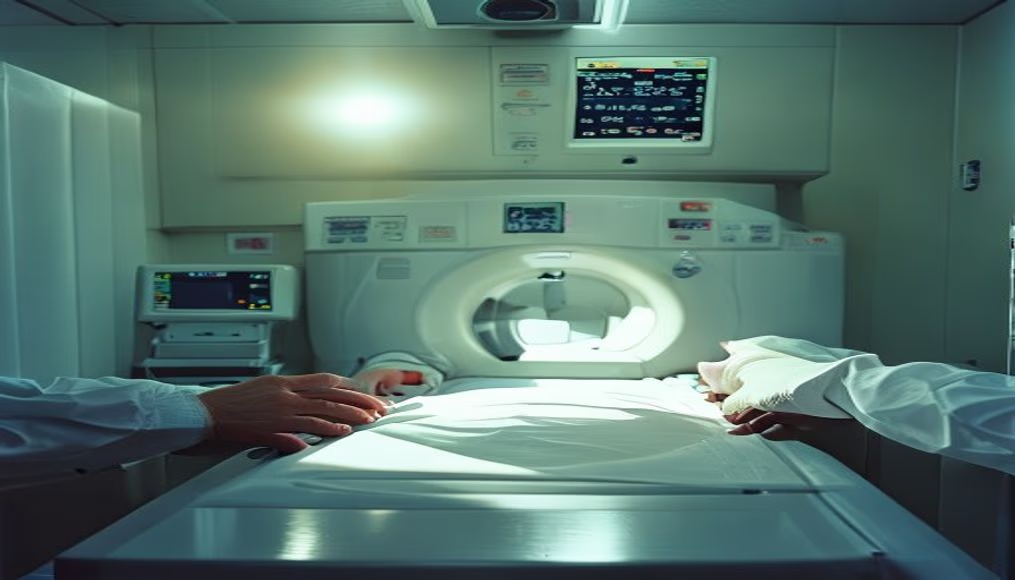
MRI scanner machine in a radiology department, essential equipment for non-invasive diagnostic imaging.
About this subject
Magnetic resonance imaging (MRI) is a medical imaging technique that uses magnetic fields and radio waves to generate detailed images of organs and tissues. Unlike X-rays or CT scans, MRI does not use ionizing radiation, making it safer for repeated exams, especially in children and pregnant women. The equipment shown is a superconducting magnet that creates an intense magnetic field (typically 1.5 to 3 Tesla), aligning protons in the body to produce signals captured by coils.
In Brazil, the public health system (SUS) offers MRI scans in public and accredited hospitals, although demand often exceeds supply in many regions. The average wait time for an elective MRI can range from weeks to months depending on location. The exam is crucial for diagnosing tumors, spinal cord injuries, brain aneurysms, joint and heart diseases, among other conditions. The machine in the image is likely in a medium or large diagnostic imaging center, with acoustic insulation and a liquid helium cooling system to maintain the superconducting magnet.
Interesting fact: the first clinical MRI scanner was installed in 1980 in the United States. Since then, technology has evolved to open machines (reducing claustrophobia) and AI-powered equipment that accelerates image acquisition. The loud noise during the exam (up to 120 decibels) is caused by vibration of gradient coils, requiring ear protection for the patient. Safety is strict: metal objects such as pacemakers or surgical clips can be attracted by the magnetic field, posing a risk.
Frequently Asked Questions
What is the difference between MRI and CT scan?
MRI uses magnetic fields and radio waves, no ionizing radiation, ideal for soft tissues. CT uses X-rays, with radiation, and is better for bones and emergencies.
How long does an MRI scan take?
Typically 30 to 60 minutes, depending on the area being scanned and the protocol. More complex exams, such as with contrast, may take longer.
Is it safe to have an MRI with piercings or tattoos?
Metal piercings must be removed. Tattoos with metallic pigments may cause irritation, but most are safe. Inform your doctor about any metal in your body.
Direct URL
https://pub-c7d6a6ea828543ac903a74a341ccb2e1.r2.dev/imagens/mri-scanner-machine-in-radiology-department-editorial-portrait-bright-midday-sun.avifHow to credit
Include a visible link back to UtilizAí. Copy one of the snippets below:
<a href="https://xn--utiliza-eza.com/en/midia/imagens/mri-scanner-machine-in-radiology-department-editorial-portrait-bright-midday-sun">Mri scanner machine in radiology department</a> by <a href="https://xn--utiliza-eza.com">UtilizAí</a>, licensed under <a href="https://creativecommons.org/licenses/by/4.0/">CC BY 4.0</a>.
[Mri scanner machine in radiology department](https://xn--utiliza-eza.com/en/midia/imagens/mri-scanner-machine-in-radiology-department-editorial-portrait-bright-midday-sun) by [UtilizAí](https://xn--utiliza-eza.com), CC BY 4.0
License: CC-BY-4.0