Mount fuji winter snow
1344×768 · AVIF · CC BY 4.0
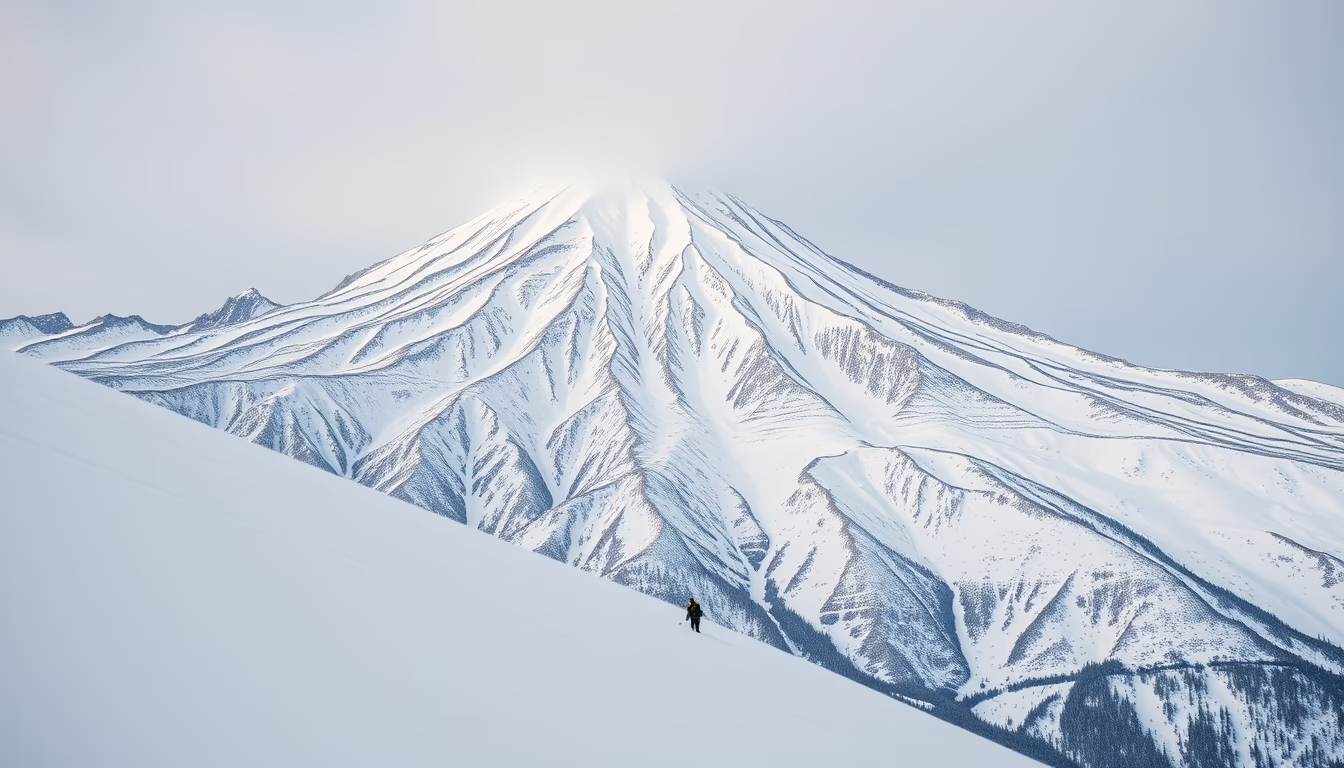
Mount Fuji covered in winter snow, Japan's sacred symbol and UNESCO World Heritage site, attracts visitors from around the world.
About this subject
Mount Fuji, standing at 3,776 meters, is Japan's tallest peak and an active stratovolcano located on Honshu Island, about 100 km southwest of Tokyo. Its nearly perfect conical shape results from volcanic eruptions thousands of years ago. The winter snow cover, typically from October to May, enhances its iconic silhouette and makes it one of the most photographed landmarks in the country.
During winter, Mount Fuji is blanketed in thick snow, with temperatures at the summit dropping to -20°C. The official climbing season runs from July to September when conditions are safest; off-season ascents are discouraged and require special permits. Nonetheless, the snow-capped mountain viewed from spots like Lake Kawaguchi or the city of Fujiyoshida attracts millions of tourists.
Culturally, Mount Fuji is revered as a sacred mountain in Shinto and Buddhism. It has been featured in countless artworks, notably Katsushika Hokusai's ukiyo-e prints, including the series "Thirty-six Views of Mount Fuji." In 2013, it was designated a UNESCO World Heritage site for its cultural significance, not natural, highlighting its influence on art, literature, and religious pilgrimages.
Interestingly, Mount Fuji's last eruption was in 1707 during the Edo period, scattering ash as far as Tokyo. The mountain is part of Fuji-Hakone-Izu National Park, an area rich in biodiversity. For photographers, winter offers the chance to capture the "Red Fuji" at dawn, when the snow reflects orange hues.
Frequently Asked Questions
What is the best time to see snow on Mount Fuji?
Snow on Mount Fuji typically appears from October to May, with peak cover in January and February. Winter months offer the best views, though weather conditions can be harsh.
Is it possible to climb Mount Fuji in winter?
Winter climbing is extremely dangerous due to ice, strong winds, and avalanches. Outside the official season (July to September), it is discouraged and requires permission from local authorities.
Why is Mount Fuji a UNESCO World Heritage site?
Mount Fuji was inscribed as a Cultural Heritage site in 2013 for its profound influence on Japanese art, literature, and religious traditions, including pilgrimages and depictions in ukiyo-e prints.
Direct URL
https://pub-c7d6a6ea828543ac903a74a341ccb2e1.r2.dev/imagens/mount-fuji-winter-snow-national-geographic-style-p4.avifHow to credit
Include a visible link back to UtilizAí. Copy one of the snippets below:
<a href="https://xn--utiliza-eza.com/en/midia/imagens/mount-fuji-winter-snow-national-geographic-style-p4">Mount fuji winter snow</a> by <a href="https://xn--utiliza-eza.com">UtilizAí</a>, licensed under <a href="https://creativecommons.org/licenses/by/4.0/">CC BY 4.0</a>.
[Mount fuji winter snow](https://xn--utiliza-eza.com/en/midia/imagens/mount-fuji-winter-snow-national-geographic-style-p4) by [UtilizAí](https://xn--utiliza-eza.com), CC BY 4.0
License: CC-BY-4.0