Mount fuji winter snow
1344×768 · AVIF · CC BY 4.0
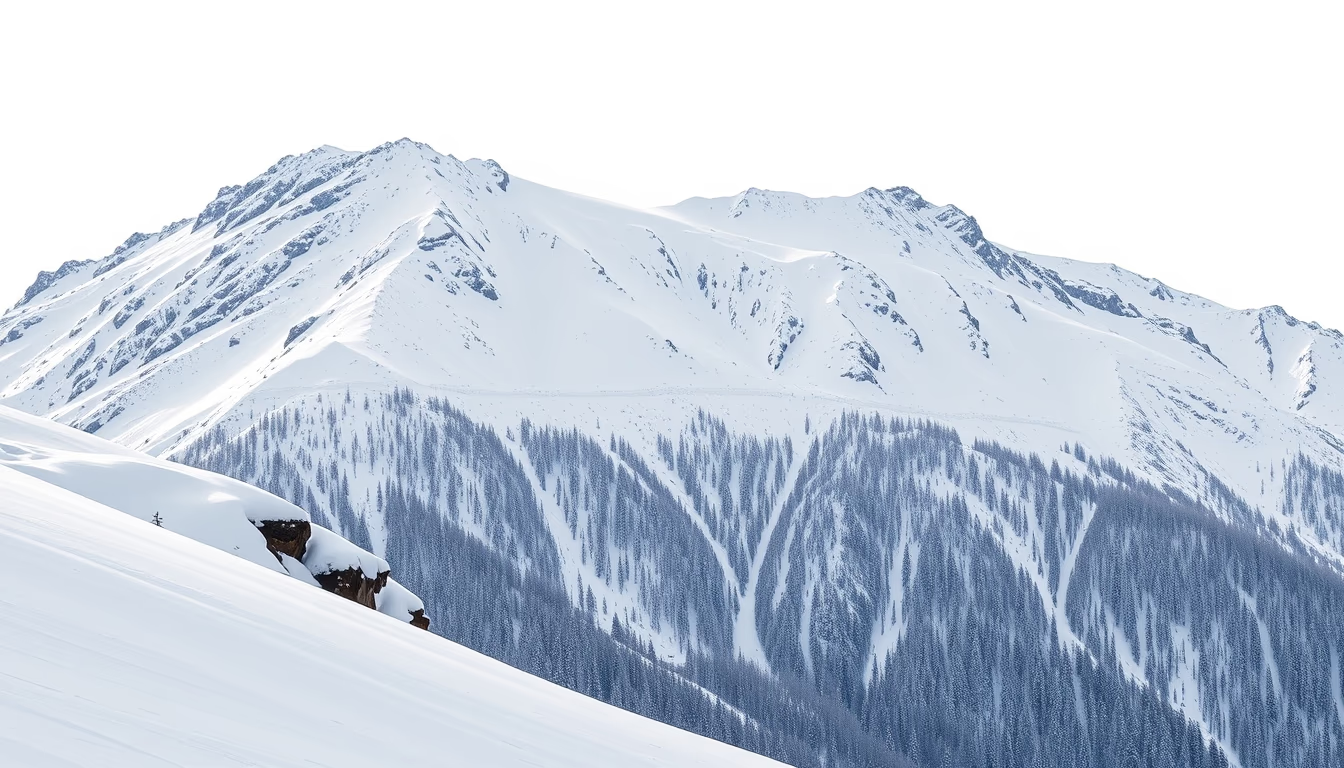
Mount Fuji covered in winter snow, iconic symbol of Japan and UNESCO World Heritage site, seen in its frozen majesty.
About this subject
Mount Fuji, standing at 3,776 meters, is Japan's tallest peak and an active stratovolcano, though its last eruption occurred between 1707 and 1708. Located on Honshu Island about 100 km southwest of Tokyo, it is a National Symbol of Japan and a UNESCO World Heritage site since 2013. During winter, Fuji is covered in snow from base to summit, a striking contrast to summer months when snow partially melts, allowing the official climbing season from July to September.
The image of snow-covered Fuji is deeply rooted in Japanese culture, particularly in 19th-century ukiyo-e woodblock prints, such as Katsushika Hokusai's series "Thirty-six Views of Mount Fuji." The mountain is considered sacred in Shinto and was once a restricted pilgrimage destination for women, though it is now open to all. Snow typically appears in October and lasts until May, with the first snowfall announced by the Japan Meteorological Agency.
For visitors, the best viewpoints of Fuji in winter include Lake Kawaguchi and Lake Yamanaka in the Fuji Five Lakes region, and the town of Hakone to the east. Beyond being a visual icon, Fuji plays a crucial role in the local ecosystem: its annual snowmelt feeds rivers and lakes that supply the region. Climbing Fuji in winter is dangerous and officially prohibited outside the season, but distant observation remains a popular activity for photographers and tourists.
Frequently Asked Questions
What is the best time to see Mount Fuji covered in snow?
Snow typically appears from October to May, with winter (December to February) offering the highest chance of seeing Fuji completely white.
Can you climb Mount Fuji in winter?
No, official climbing is only allowed from July to September. Winter conditions are extremely dangerous with ice, strong winds, and avalanche risk, and trails are closed.
Is Mount Fuji an active volcano?
Yes, it is an active stratovolcano, but its last eruption was in 1707-1708. It is continuously monitored by Japanese authorities.
Direct URL
https://pub-c7d6a6ea828543ac903a74a341ccb2e1.r2.dev/imagens/mount-fuji-winter-snow-commercial-product-photography-p2.avifHow to credit
Include a visible link back to UtilizAí. Copy one of the snippets below:
<a href="https://xn--utiliza-eza.com/en/midia/imagens/mount-fuji-winter-snow-commercial-product-photography-p2">Mount fuji winter snow</a> by <a href="https://xn--utiliza-eza.com">UtilizAí</a>, licensed under <a href="https://creativecommons.org/licenses/by/4.0/">CC BY 4.0</a>.
[Mount fuji winter snow](https://xn--utiliza-eza.com/en/midia/imagens/mount-fuji-winter-snow-commercial-product-photography-p2) by [UtilizAí](https://xn--utiliza-eza.com), CC BY 4.0
License: CC-BY-4.0