Mount fuji japan reflection
1344×768 · AVIF · CC BY 4.0
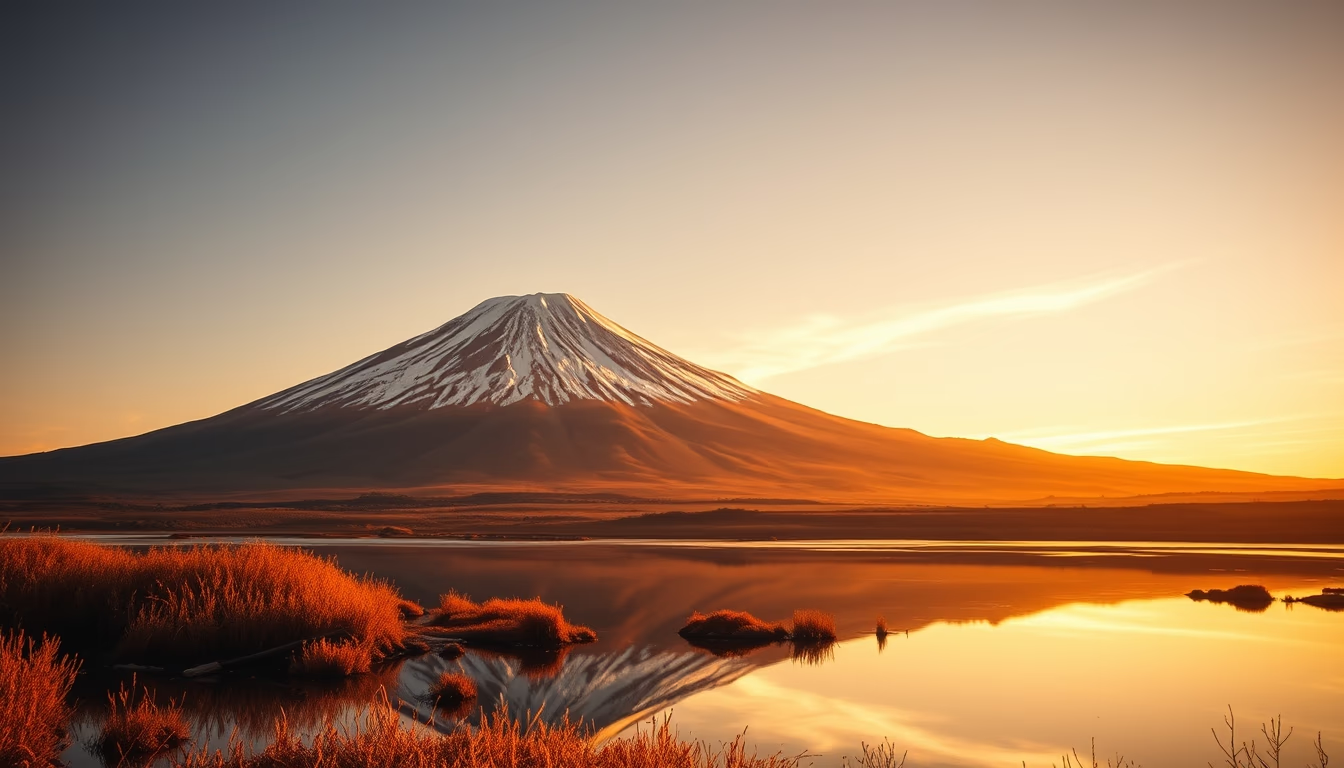
Mount Fuji, Japan's highest peak, is a cultural and natural icon revered for its symmetrical beauty and spiritual significance.
About this subject
Mount Fuji, standing at 3,776 meters, is an active stratovolcano located on Honshu Island, about 100 km southwest of Tokyo. Its near-perfect conical shape results from volcanic eruptions over millennia, with the last recorded eruption in 1707 during the Edo period, which scattered ash as far as Tokyo. It is part of the Fuji-Hakone-Izu National Park and was designated a UNESCO World Heritage Site in 2013, recognized not only for its geology but also for its influence on Japanese art and religion.
Culturally, Mount Fuji is a sacred site in Shinto and Buddhism. Pilgrims have climbed the mountain for centuries, and today mountaineering is popular from July to September when trails are open. The classic view of Fuji with a lake in the foreground, such as Lake Kawaguchi or Lake Motosu, is a recurring theme in ukiyo-e, especially in the works of Hokusai and Hiroshige. The image of Fuji reflecting in water symbolizes harmony and transience.
Beyond its beauty, Mount Fuji plays a major role in modern pop culture, appearing in films, anime, and logos. The surrounding area offers hot springs, temples, and the famous Chureito Pagoda, which frames the mountain during cherry blossom season. Although a tourist destination, the mountain is treated with respect; there are rules to preserve the environment and the spiritual experience. Fuji is more than a landscape: it is a national icon connecting past and present.
Frequently Asked Questions
Is Mount Fuji still active?
Yes, Mount Fuji is an active volcano, though its last eruption was in 1707. It is constantly monitored by seismic agencies.
What is the best time to see Mount Fuji?
Winter (December to February) offers the clearest air and best chance to see the peak cloud-free. For climbing, the official season is July to September.
Where can I photograph the reflection of Mount Fuji?
The best spots are the Fuji Five Lakes: Kawaguchi, Motosu, Shoji, Sai, and Yamanaka. Lake Kawaguchi is the most popular due to accessibility and classic views.
Direct URL
https://pub-c7d6a6ea828543ac903a74a341ccb2e1.r2.dev/imagens/mount-fuji-japan-reflection-travel-photography-p5.avifHow to credit
Include a visible link back to UtilizAí. Copy one of the snippets below:
<a href="https://xn--utiliza-eza.com/en/midia/imagens/mount-fuji-japan-reflection-travel-photography-p5">Mount fuji japan reflection</a> by <a href="https://xn--utiliza-eza.com">UtilizAí</a>, licensed under <a href="https://creativecommons.org/licenses/by/4.0/">CC BY 4.0</a>.
[Mount fuji japan reflection](https://xn--utiliza-eza.com/en/midia/imagens/mount-fuji-japan-reflection-travel-photography-p5) by [UtilizAí](https://xn--utiliza-eza.com), CC BY 4.0
License: CC-BY-4.0