Mother and child at vaccination clinic
1344×768 · AVIF · CC BY 4.0
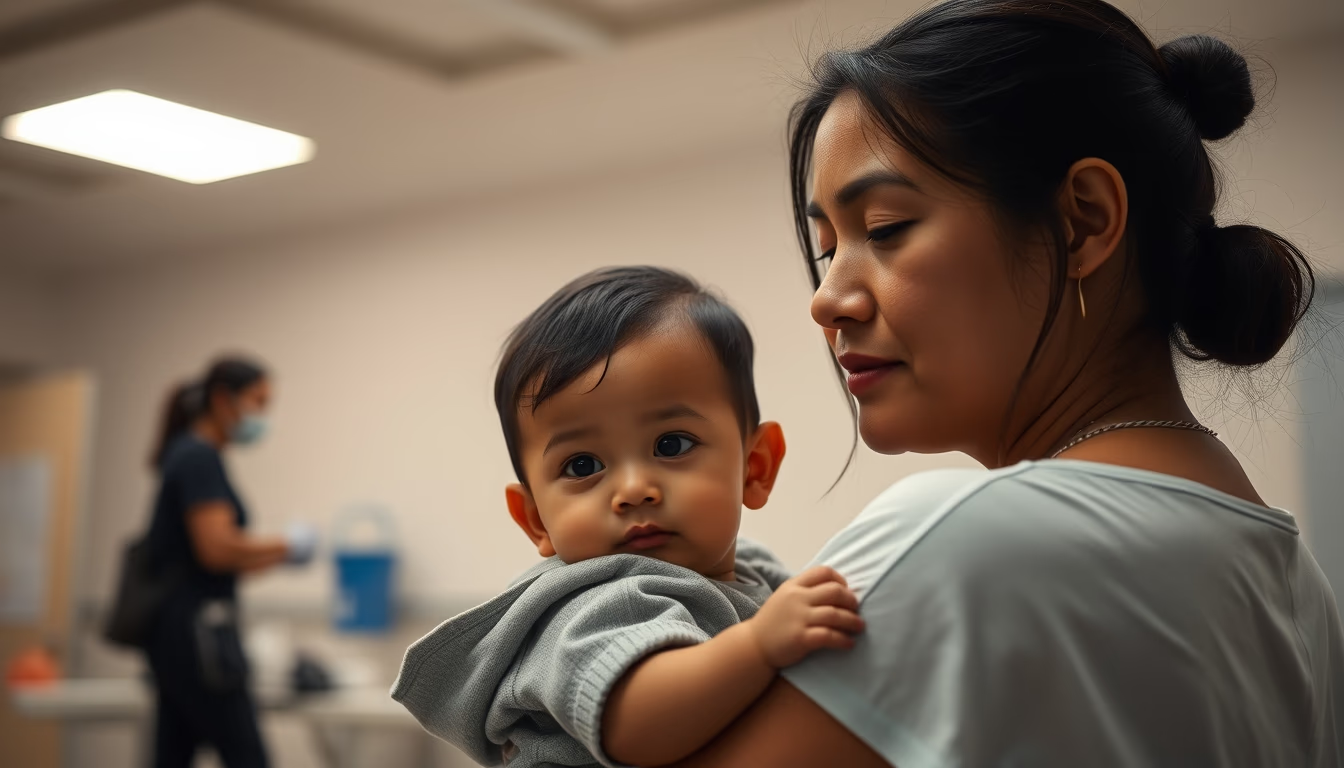
Mother and child at a vaccination clinic during twilight, a moment of essential preventive care for child health.
About this subject
Childhood vaccination is one of the most effective public health interventions, preventing millions of deaths annually. In Brazil, the National Immunization Program (PNI), created in 1973, offers free vaccines such as the MMR (measles, mumps, rubella) and the pentavalent (diphtheria, tetanus, pertussis, hepatitis B, and Haemophilus influenzae type b). The image depicts a mother and her child at a clinic, possibly during the multivaccination campaign that takes place nationwide, usually in August. The twilight hour suggests the clinic extended its hours to accommodate workers, a common practice in urban areas.
The closeup moment highlights the mother's expression of trust and the child's curiosity, elements that reinforce the importance of emotional bonding during medical procedures. Vaccination not only protects the individual but also contributes to herd immunity, essential for controlling diseases like measles, which resurfaced in Brazil in 2018 after years of elimination. Data from the Ministry of Health indicate that childhood vaccination coverage has declined in recent years, making scenes like this a reminder of the need for adherence to campaigns.
Interestingly, Brazil is a global reference in vaccination, being one of the first countries to offer free COVID-19 vaccines to children aged 5 and older. The World Health Organization (WHO) estimates that immunization prevents 2 to 3 million deaths per year globally. The presence of a clinic with extended hours, as suggested by the twilight, reflects efforts to increase accessibility, especially in peripheral regions where public transportation is limited.
The image also evokes the history of vaccination in Brazil, which began with the Vaccine Revolt of 1904, a popular movement against mandatory smallpox vaccination. Since then, the country has advanced significantly, and today the PNI is a model for developing nations. The scene of the mother with her child symbolizes the continuity of this legacy, where preventive care is an act of love and citizenship.
Frequently Asked Questions
Why is childhood vaccination important?
Childhood vaccination protects against serious diseases like measles, polio, and diphtheria, preventing complications and deaths. It also contributes to herd immunity, protecting those who cannot be vaccinated.
What is Brazil's National Immunization Program (PNI)?
Created in 1973, the PNI coordinates vaccination policy in Brazil, offering free vaccines through the public health system (SUS). It is one of the largest immunization programs in the world, administering over 300 million doses annually.
How can I find a vaccination clinic near me?
Look for health centers (UBS) or accredited pharmacies. The ConecteSUS app and the Ministry of Health website list locations and hours, including units with extended hours.
Direct URL
https://pub-c7d6a6ea828543ac903a74a341ccb2e1.r2.dev/imagens/mother-and-child-at-vaccination-clinic-closeup-twilight-6.avifHow to credit
Include a visible link back to UtilizAí. Copy one of the snippets below:
<a href="https://xn--utiliza-eza.com/en/midia/imagens/mother-and-child-at-vaccination-clinic-closeup-twilight-6">Mother and child at vaccination clinic</a> by <a href="https://xn--utiliza-eza.com">UtilizAí</a>, licensed under <a href="https://creativecommons.org/licenses/by/4.0/">CC BY 4.0</a>.
[Mother and child at vaccination clinic](https://xn--utiliza-eza.com/en/midia/imagens/mother-and-child-at-vaccination-clinic-closeup-twilight-6) by [UtilizAí](https://xn--utiliza-eza.com), CC BY 4.0
License: CC-BY-4.0