Mother and child at vaccination clinic
1344×768 · AVIF · CC BY 4.0
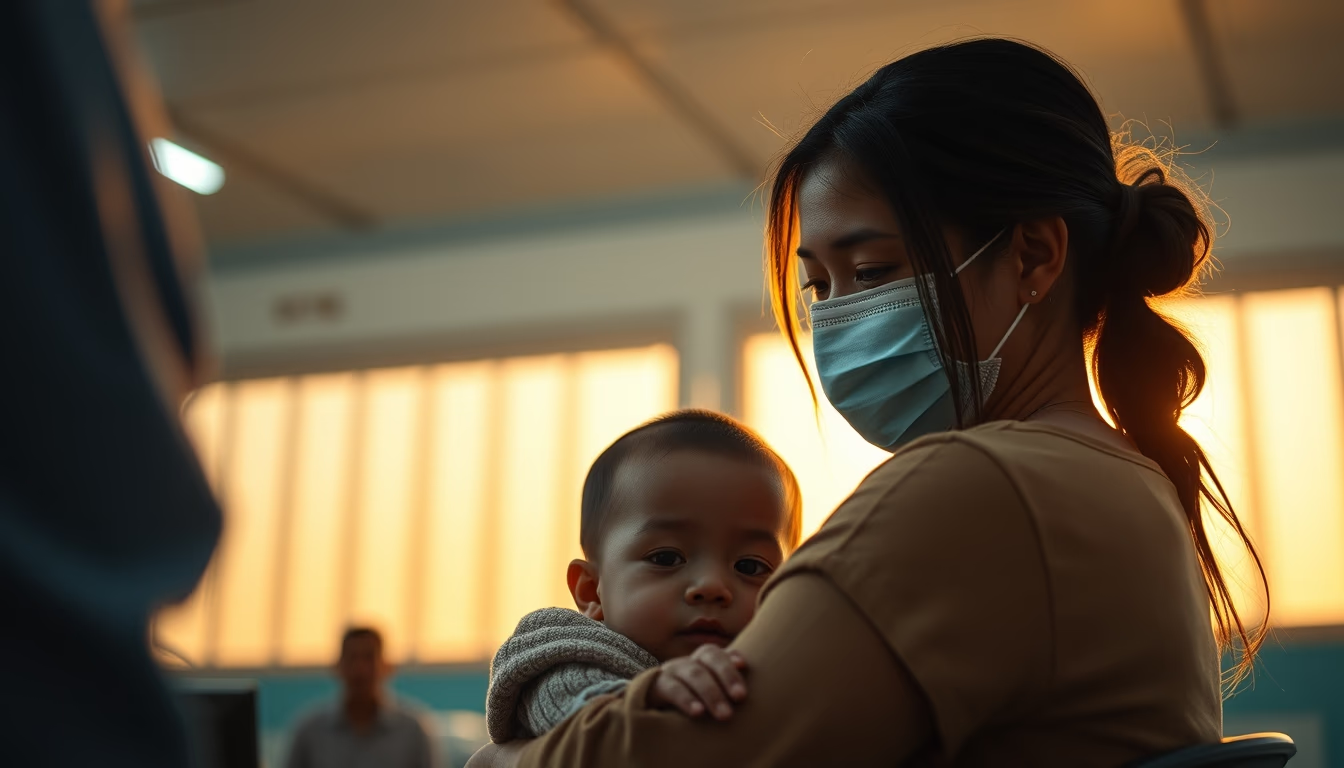
Mother and child at a vaccination clinic: the importance of childhood immunization in Brazil.
About this subject
Childhood vaccination is one of the most cost-effective public health interventions in history. In Brazil, the National Immunization Program (PNI), created in 1973, offers more than 20 vaccines for children free of charge, covering diseases such as measles, polio, tuberculosis, hepatitis, and meningitis. The image captures a common scene in Brazilian health posts: a mother holding her child during vaccine administration, usually in the first months of life. The act, though momentarily uncomfortable, represents lasting protection.
The Brazilian vaccination schedule is a global reference. The BCG vaccine, given at birth, prevents severe forms of tuberculosis. Polio, eradicated in the country since 1990, requires annual booster doses in national campaigns. Data from the Ministry of Health indicate that childhood vaccination coverage exceeded 95% in 2020 for most immunizers, although there has been a decline in recent years due to fake news and anti-vaccine movements.
The mother's presence is crucial not only to comfort the child but also to ensure proper follow-up of the vaccination card. Many clinics provide guidance on possible mild adverse reactions, such as fever or local redness, which are expected and usually transient. Trust in the healthcare system is built through this direct contact between professional and family.
Trivia: Brazil was the first country in Latin America to introduce the hepatitis B vaccine into the basic schedule, in 1998. Today, the pentavalent vaccine (which protects against diphtheria, tetanus, pertussis, hepatitis B, and Haemophilus influenzae type b meningitis) is given in three doses at 2, 4, and 6 months. The image symbolizes preventive care that saves millions of lives annually.
Frequently Asked Questions
Why is childhood vaccination important?
It prevents serious and potentially fatal diseases, protects the community through herd immunity, and reduces hospital treatment costs.
Which vaccines are mandatory in Brazil?
The national schedule includes BCG, hepatitis B, pentavalent, polio, rotavirus, 10-valent pneumococcal, meningococcal C, yellow fever, MMR (measles, mumps, rubella), and DTP (diphtheria, tetanus, pertussis), among others.
What should I do if my child has a reaction to the vaccine?
Mild reactions such as low fever, local pain, or irritability are common and can be relieved with cold compresses and antipyretics under medical guidance. Severe reactions are rare and should be reported to the health service.
Direct URL
https://pub-c7d6a6ea828543ac903a74a341ccb2e1.r2.dev/imagens/mother-and-child-at-vaccination-clinic-closeup-twilight-5.avifHow to credit
Include a visible link back to UtilizAí. Copy one of the snippets below:
<a href="https://xn--utiliza-eza.com/en/midia/imagens/mother-and-child-at-vaccination-clinic-closeup-twilight-5">Mother and child at vaccination clinic</a> by <a href="https://xn--utiliza-eza.com">UtilizAí</a>, licensed under <a href="https://creativecommons.org/licenses/by/4.0/">CC BY 4.0</a>.
[Mother and child at vaccination clinic](https://xn--utiliza-eza.com/en/midia/imagens/mother-and-child-at-vaccination-clinic-closeup-twilight-5) by [UtilizAí](https://xn--utiliza-eza.com), CC BY 4.0
License: CC-BY-4.0