Morse code key brass
1344×768 · AVIF · CC BY 4.0
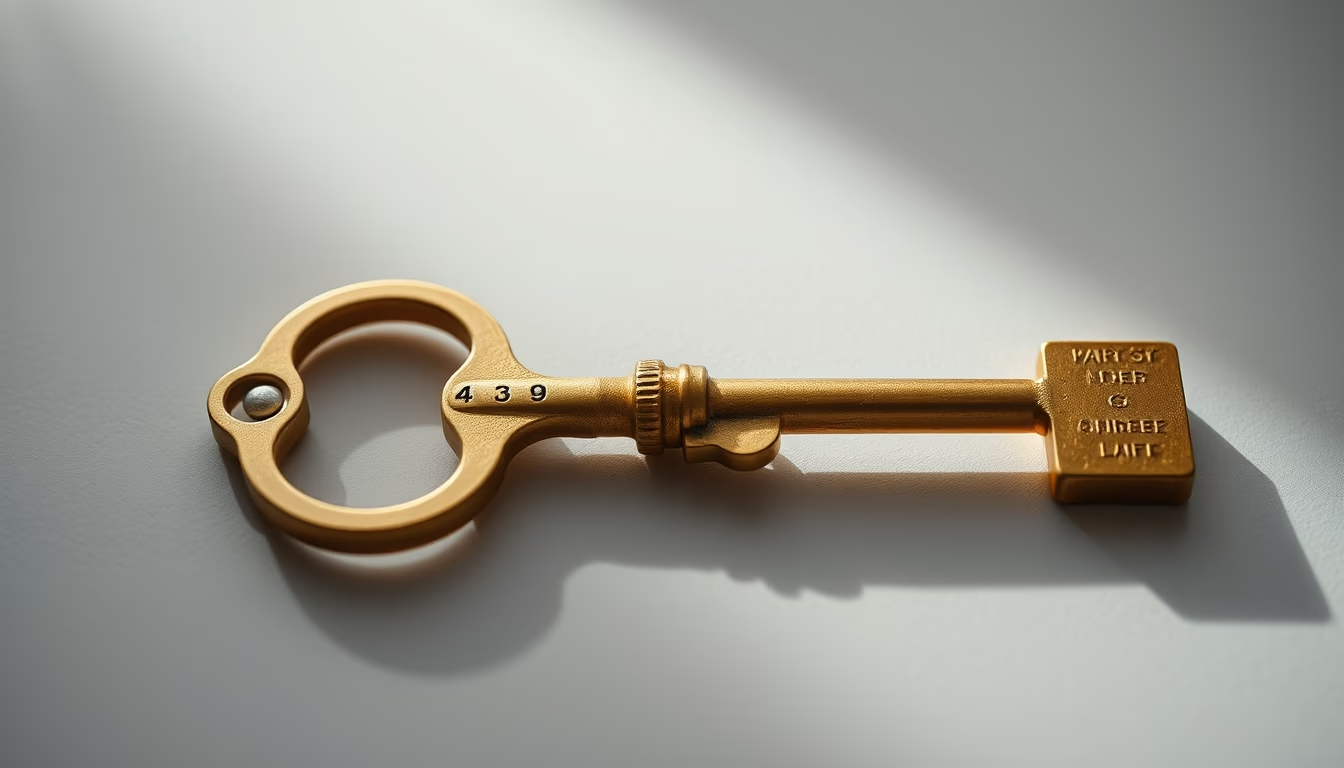
Brass telegraph key used to transmit Morse code, an icon of the electrical communication era in the 19th century.
About this subject
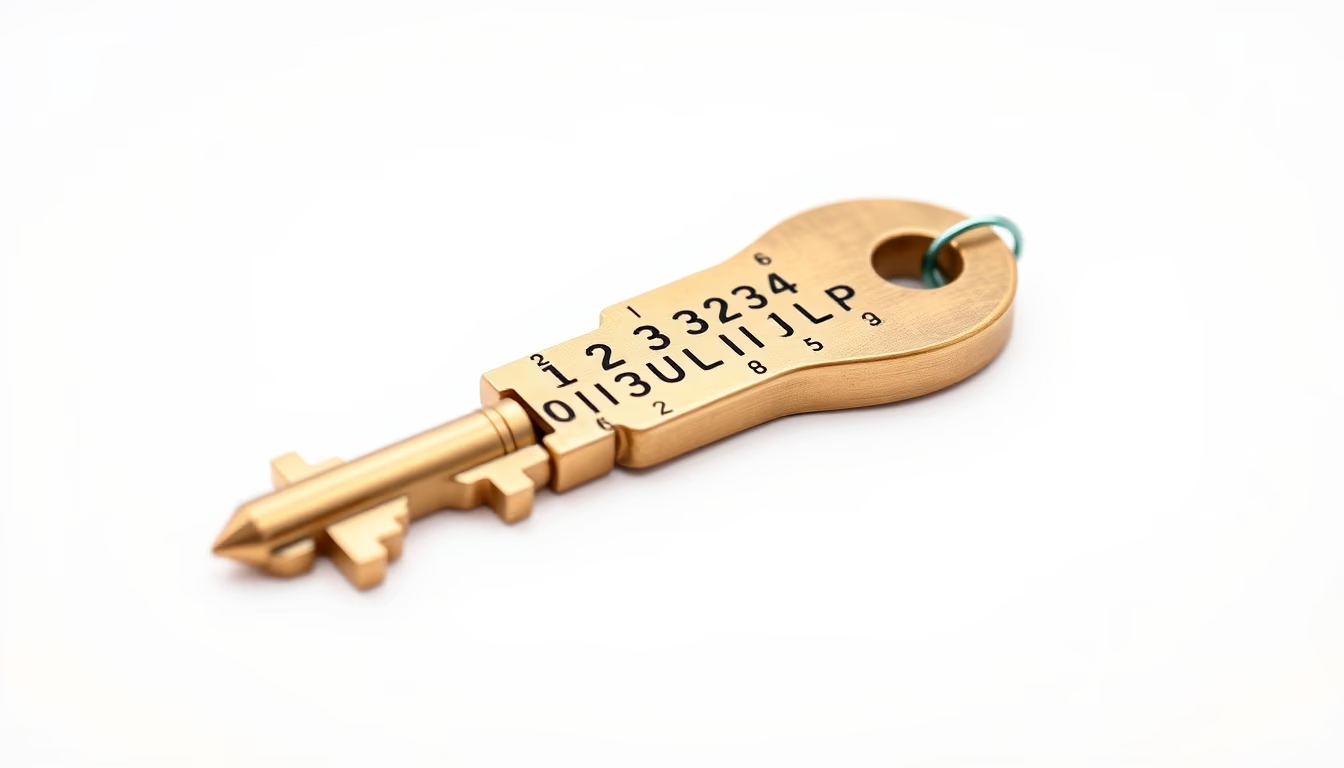
The brass Morse code key, also known as a telegraph key or straight key, is the central device for manually transmitting Morse code. Made of brass, a durable and conductive material, it consists of a pivoted lever that, when pressed, closes an electrical circuit, generating current pulses that travel along the telegraph wire. These pulses are interpreted at the destination as dots and dashes, forming letters and numbers.
Historically, the telegraph key was the primary long-distance communication instrument from the 1840s onward, after Samuel Morse and Alfred Vail developed the electric telegraph. In Brazil, the first telegraph lines were installed in the 1850s, connecting Rio de Janeiro to Petrópolis. Later, network expansion, especially under Marshal Rondon's expeditions, brought the telegraph key to remote Amazon regions, making it crucial for national integration.
Brass was the preferred material due to its corrosion resistance, good electrical conductivity, and adequate weight for tactile operation. Different models emerged, such as the straight key and the semi-automatic bug key, which used springs and contacts to speed up transmission. Skilled operators developed their own style with distinct rhythm and cadence, turning telegraphy into a true art.
Although replaced by digital technologies, the brass telegraph key remains an icon in telecommunications history, still used by amateur radio operators and in historical reenactments. Its handcrafted polished brass construction also makes it a collector's item, prized for its aesthetics and the memory of Morse code, which is still employed in emergency situations and amateur radio training.
Frequently Asked Questions
How does a brass telegraph key work?
A brass telegraph key works as a manual switch. Pressing the lever closes an electrical contact, allowing current to flow through a wire. The duration of the press determines whether the signal is a dot (short press) or a dash (long press). The sequence of dots and dashes forms Morse code letters.
What is the historical importance of Morse code?
Morse code was the first widely adopted long-distance electrical communication system. It revolutionized communications in the 19th century, enabling rapid message transmission across continents via submarine cables and telegraphy. It was essential in wars, railways, and the integration of countries like Brazil.
What distinguishes a straight key from a bug key?
A straight key requires the operator to manually press and release for each dot and dash. A bug key is a semi-automatic manipulator that automatically generates a series of dots when the lever is moved to one side, while dashes are made manually, allowing for higher transmission speeds.
Direct URL
https://pub-c7d6a6ea828543ac903a74a341ccb2e1.r2.dev/imagens/morse-code-key-brass-magazine-editorial-fresh16.avifHow to credit
Include a visible link back to UtilizAí. Copy one of the snippets below:
<a href="https://xn--utiliza-eza.com/en/midia/imagens/morse-code-key-brass-magazine-editorial-fresh16">Morse code key brass</a> by <a href="https://xn--utiliza-eza.com">UtilizAí</a>, licensed under <a href="https://creativecommons.org/licenses/by/4.0/">CC BY 4.0</a>.
[Morse code key brass](https://xn--utiliza-eza.com/en/midia/imagens/morse-code-key-brass-magazine-editorial-fresh16) by [UtilizAí](https://xn--utiliza-eza.com), CC BY 4.0
License: CC-BY-4.0