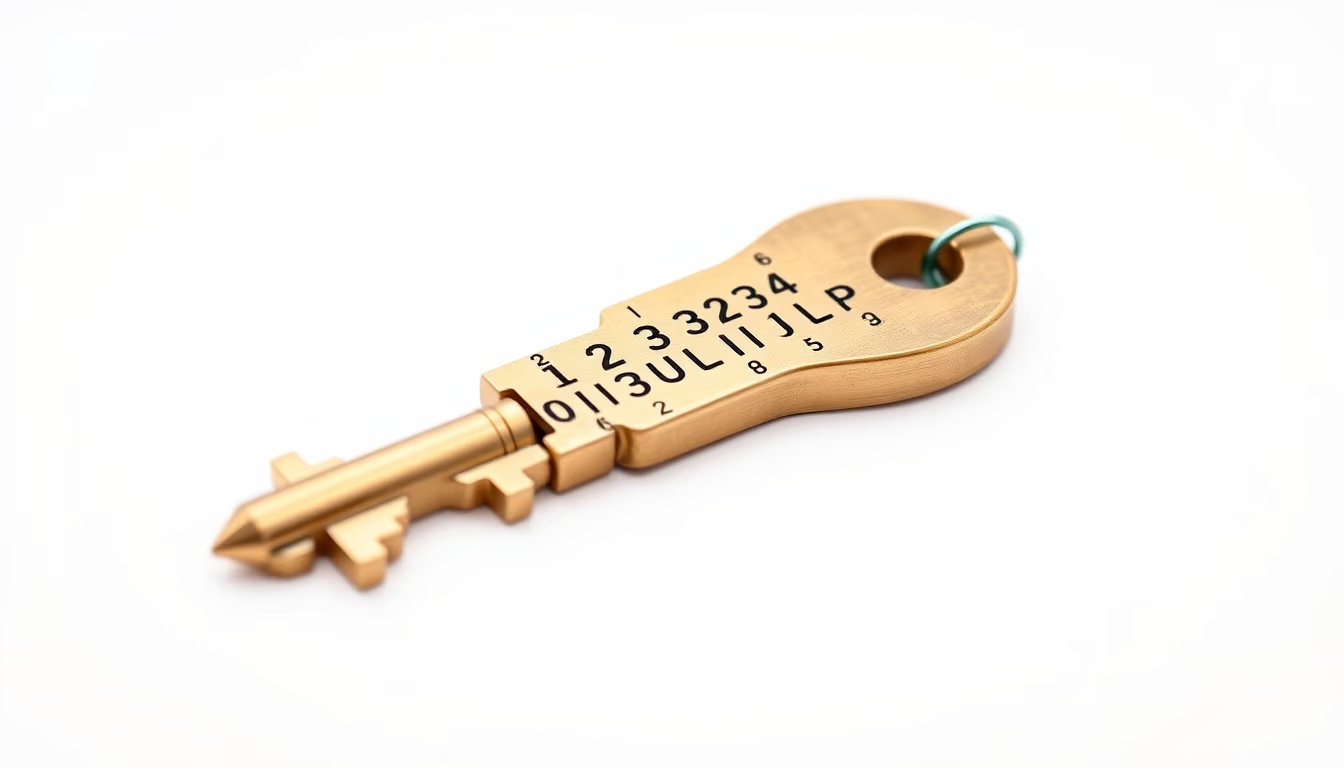
Morse code key brass
1344×768 · AVIF · CC BY 4.0

Brass telegraph key, essential instrument for Morse code transmission, marked the history of communications.
About this subject
The brass telegraph key, also known as a Morse key or straight key, was the primary device used to send Morse code signals during the heyday of telegraphy from the mid-19th to early 20th century. It consisted of a metal lever mounted on a base, typically made of brass or wood, allowing the operator to open and close an electrical circuit with precise movements, generating the dots and dashes of the code. Brass was favored for its durability, conductivity, and corrosion resistance, ensuring reliability on the telegraph lines that spanned continents.
The first practical demonstration of the electric telegraph took place in 1844, when Samuel Morse sent the message "What hath God wrought" between Washington and Baltimore. Telegraph keys quickly spread and were used in railways, newspapers, stock exchanges, and military operations. Design evolved over time, including variants like the pump key and the semi-automatic bug, which sped up transmission. However, the straight brass key remains the most iconic symbol of the telegraph era.
Operating a telegraph key required great skill and rhythm. Experienced operators could transmit 30 to 40 words per minute. The characteristic clicking sound of the key, amplified by a mechanical or electromagnetic sounder, became a language among telegraphers. Beyond professional use, Morse code played a crucial role in maritime emergencies, such as the sinking of the Titanic in 1912, when operators sent distress signals using similar keys.
With the rise of digital communications and the retirement of commercial telegraphy, brass keys became collector's items and museum pieces. Today, amateur radio enthusiasts still use them to keep the tradition of Morse code alive, a valuable skill in low-tech scenarios. The robust design and vintage aesthetics of these keys also make them desirable for decorators and historians, perpetuating the legacy of an invention that revolutionized the world.
Frequently Asked Questions
How does a brass telegraph key work?
The telegraph key works as a manual switch that closes and opens an electrical circuit. By pressing the lever, the operator sends a continuous signal (dash) or a short one (dot) according to Morse code.
Why was brass important for telegraph keys?
Brass was chosen for its excellent electrical conductivity, corrosion resistance, and mechanical durability. This ensured reliable contact and long service life, even in humid environments or under heavy use.
Is Morse code still used today?
Yes, though rarely for commercial communications. Morse code is kept alive by amateur radio operators, used in scouting training, and as a backup in emergencies. It is also studied as historical heritage of telecommunications.
Direct URL
https://pub-c7d6a6ea828543ac903a74a341ccb2e1.r2.dev/imagens/morse-code-key-brass-lo-fi-disposable-camera-fresh2.avifHow to credit
Include a visible link back to UtilizAí. Copy one of the snippets below:
<a href="https://xn--utiliza-eza.com/en/midia/imagens/morse-code-key-brass-lo-fi-disposable-camera-fresh2">Morse code key brass</a> by <a href="https://xn--utiliza-eza.com">UtilizAí</a>, licensed under <a href="https://creativecommons.org/licenses/by/4.0/">CC BY 4.0</a>.
[Morse code key brass](https://xn--utiliza-eza.com/en/midia/imagens/morse-code-key-brass-lo-fi-disposable-camera-fresh2) by [UtilizAí](https://xn--utiliza-eza.com), CC BY 4.0
License: CC-BY-4.0