Morse code key brass
1344×768 · AVIF · CC BY 4.0
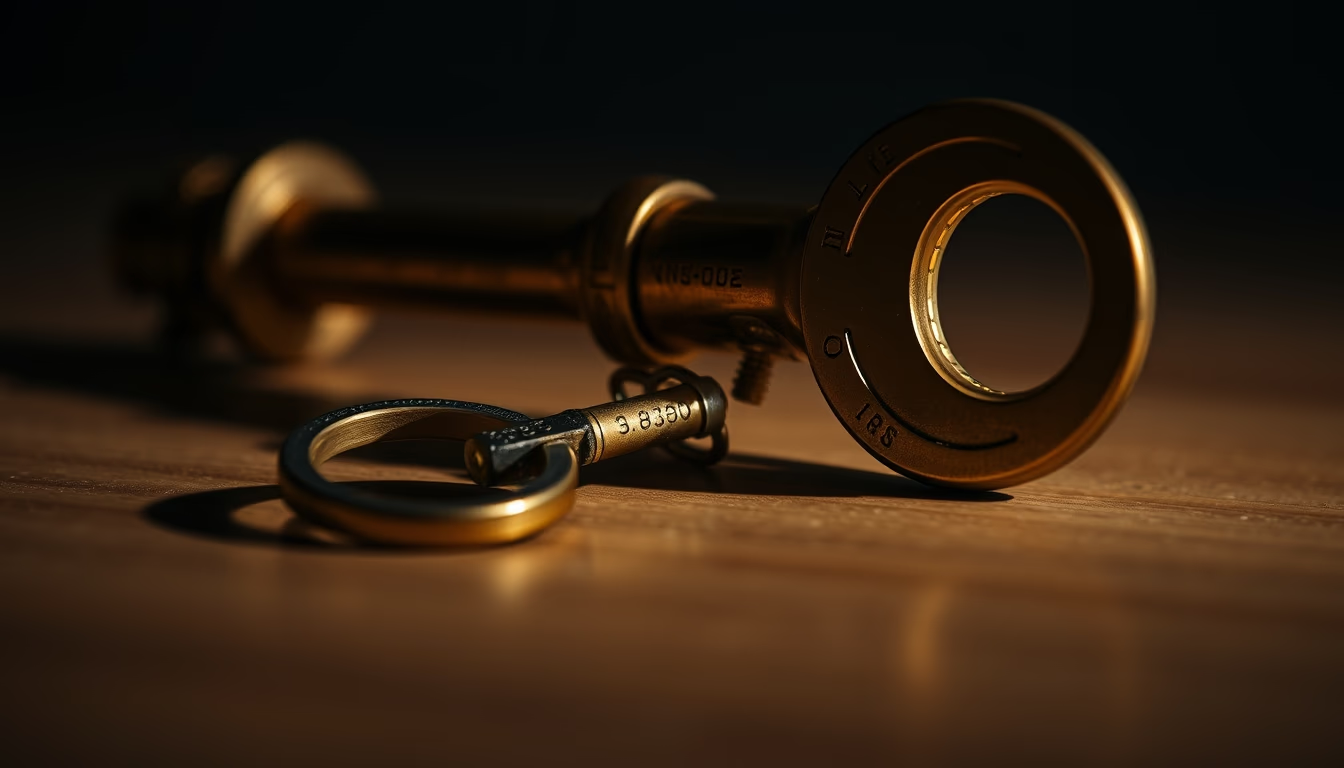
Brass telegraph key: a historic instrument that encoded messages in Morse code, revolutionizing 19th-century communications.
About this subject
The brass telegraph key, also known as a Morse manipulator, was the primary input device for the electrical telegraph. Invented by Samuel Morse and Alfred Vail in the 1830s, the key allowed operators to transmit dots and dashes by making and breaking electrical contact. Brass was the preferred material for its durability and conductivity, as well as its weight, which stabilized the equipment during use. These keys were mounted on wooden or metal bases and connected to telegraph lines that spread globally, shrinking distances and transforming journalism, commerce, and military operations.
Operating a telegraph key required skill and rhythm. Experienced operators could send up to 40 words per minute, an impressive feat at the time. The characteristic metallic click was heard in stations, and telegraphers developed personal “fists” that were recognizable to other operators. The original Morse code, different from the international version used today, was adapted for various languages and eventually standardized. The brass key became an icon of the Victorian era and railway expansion, as telegraph lines followed railroad tracks.
With the advent of radio and telephone, the telegraph declined, but the Morse key remains a symbol of an innovative era. Today, collectors and amateur radio enthusiasts preserve these objects, and Morse code is still used in emergencies and by hobbyists. The brass key represents the fusion of mechanical and electrical engineering that paved the way for modern communications. Its simple yet functional design is a testament to Industrial Revolution engineering.
Trivia: the word “telegraph” comes from Greek “tele” (far) and “graphein” (to write). The first telegraph message, sent in 1844 between Washington and Baltimore, was “What hath God wrought!” The key used in that transmission was brass, similar to those that became standard for decades.
Frequently Asked Questions
How does a brass telegraph key work?
Pressing the lever closes an electrical circuit, allowing current to flow and generate a signal at the receiving end. The duration of the contact determines whether the signal is a dot (short) or a dash (long), forming Morse code.
What is the difference between original Morse code and international Morse code?
The original American Morse code had different dot/dash sequences for letters and numbers compared to the international Morse code (ITU). The international version is simpler and used globally, while the original has fallen out of use.
Why was brass used for telegraph keys?
Brass is durable, corrosion-resistant, and a good electrical conductor. Its weight also helped keep the key steady on the table, ensuring stable contact during transmission.
Direct URL
https://pub-c7d6a6ea828543ac903a74a341ccb2e1.r2.dev/imagens/morse-code-key-brass-fine-art-photography-fresh15.avifHow to credit
Include a visible link back to UtilizAí. Copy one of the snippets below:
<a href="https://xn--utiliza-eza.com/en/midia/imagens/morse-code-key-brass-fine-art-photography-fresh15">Morse code key brass</a> by <a href="https://xn--utiliza-eza.com">UtilizAí</a>, licensed under <a href="https://creativecommons.org/licenses/by/4.0/">CC BY 4.0</a>.
[Morse code key brass](https://xn--utiliza-eza.com/en/midia/imagens/morse-code-key-brass-fine-art-photography-fresh15) by [UtilizAí](https://xn--utiliza-eza.com), CC BY 4.0
License: CC-BY-4.0