Morse code key brass
1344×768 · AVIF · CC BY 4.0
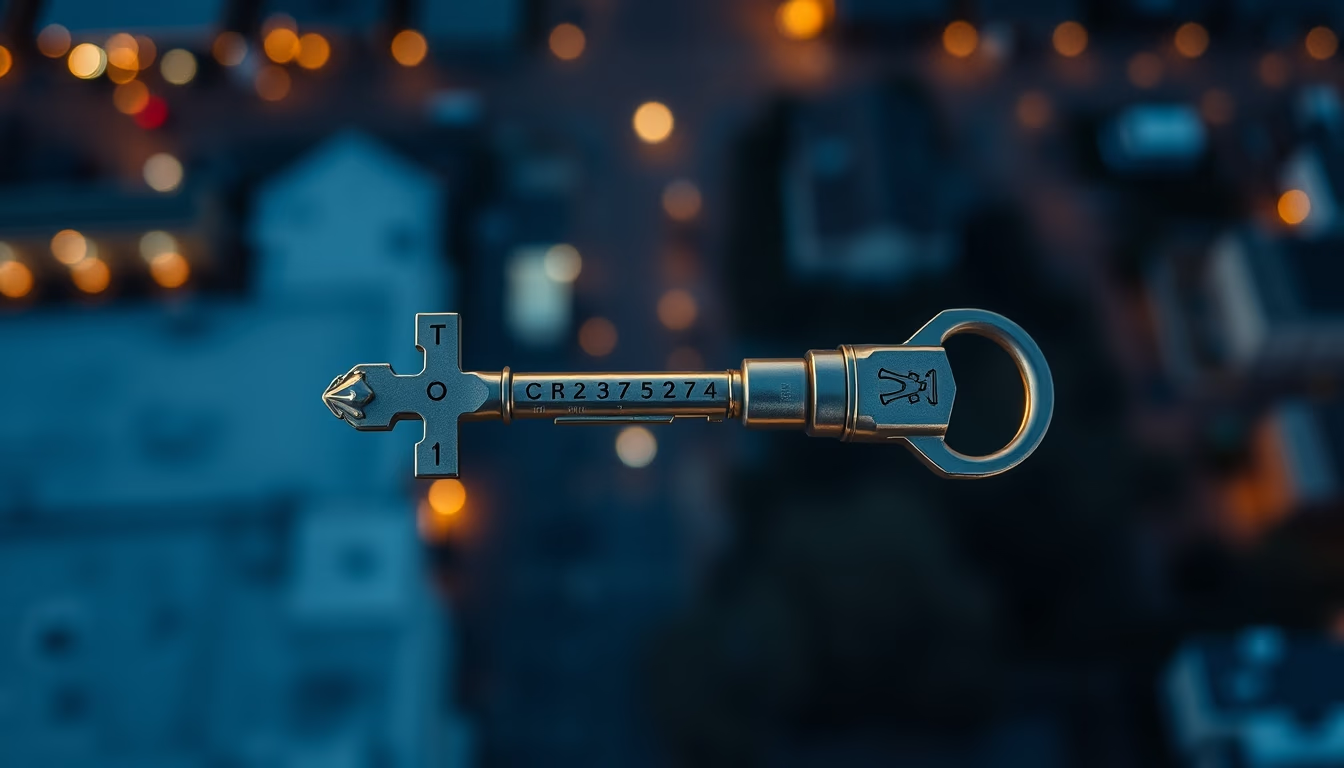
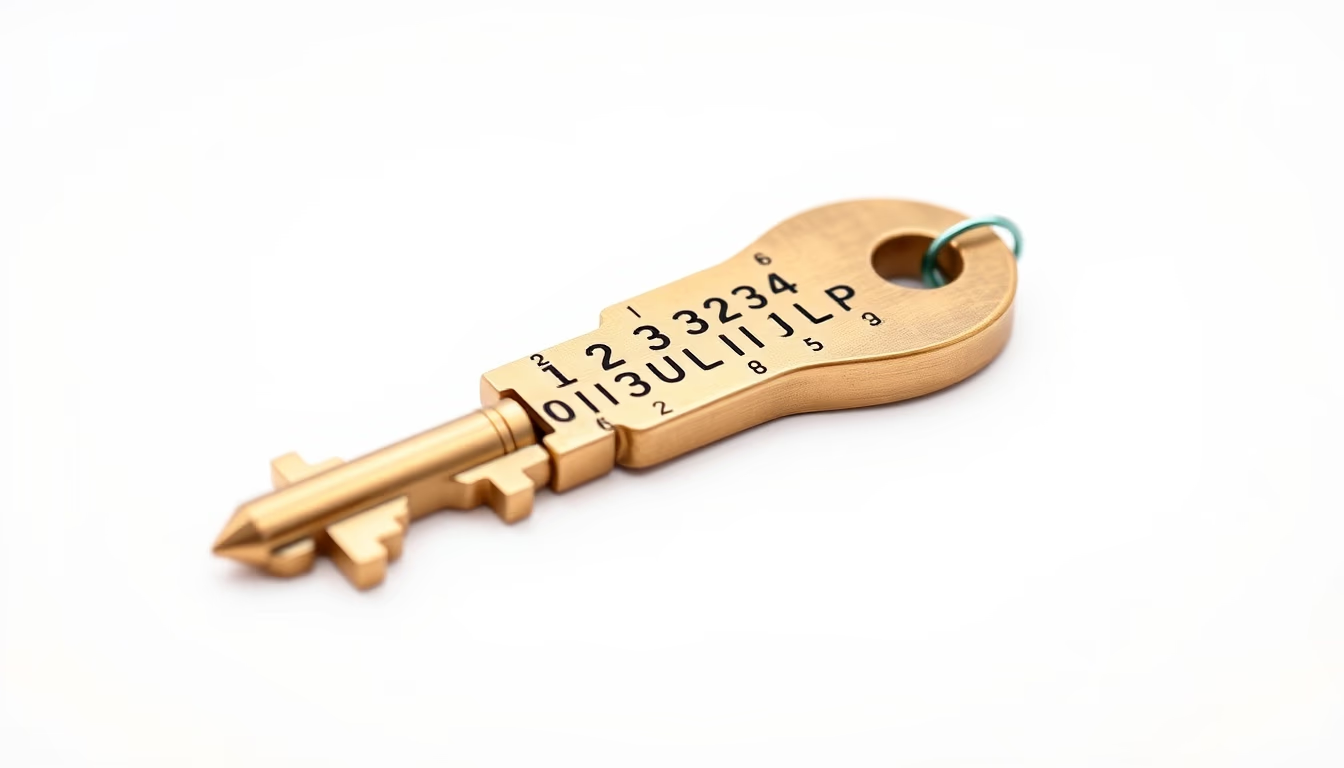
Brass telegraph key used to transmit Morse code, a fundamental piece of 19th century communications.
About this subject
Morse code was developed by Samuel Morse and Alfred Vail in the 1830s, revolutionizing long-distance communications. The telegraph key, also known as a manipulator, is the device that allowed operators to transmit electrical signals as dots and dashes. Brass models, like the one depicted, were common due to their durability and electrical conductivity. Brass, an alloy of copper and zinc, resisted corrosion and maintained the precision needed for transmission.
Using the key required training and skill, with operators able to send 20 to 40 words per minute. In the United States, the first telegraph line was established in 1844 between Washington, D.C., and Baltimore. The telegraph was vital for railroad operations, news dissemination, and personal messages. The brass key became an icon of instant communication until it was gradually replaced by teleprinters and later the internet.
Interestingly, Morse code is still used today in amateur radio and emergency situations, and original brass keys are collector's items. The industrial design reflects the Victorian era, with polished metal details and a wooden base. Collectors seek brands like J.H. Bunnell & Co. or Lionel, historic manufacturers in the United States.
Frequently Asked Questions
How does a brass telegraph key work?
Pressing the key closes an electrical circuit, generating a brief signal. The duration of contact determines dots (short) and dashes (long). Brass conducts electricity and resists wear.
What is the historical significance of the telegraph key?
The telegraph key was the primary input device for the telegraph, enabling near-instant communication over long distances in the 19th century. It transformed business, journalism, and military operations.
Is Morse code still used today?
Yes, mainly by amateur radio operators and in rescue training. Additionally, knowledge of Morse code is required for some amateur radio licenses in various countries.
Direct URL
https://pub-c7d6a6ea828543ac903a74a341ccb2e1.r2.dev/imagens/morse-code-key-brass-aerial-drone-shot-fresh12.avifHow to credit
Include a visible link back to UtilizAí. Copy one of the snippets below:
<a href="https://xn--utiliza-eza.com/en/midia/imagens/morse-code-key-brass-aerial-drone-shot-fresh12">Morse code key brass</a> by <a href="https://xn--utiliza-eza.com">UtilizAí</a>, licensed under <a href="https://creativecommons.org/licenses/by/4.0/">CC BY 4.0</a>.
[Morse code key brass](https://xn--utiliza-eza.com/en/midia/imagens/morse-code-key-brass-aerial-drone-shot-fresh12) by [UtilizAí](https://xn--utiliza-eza.com), CC BY 4.0
License: CC-BY-4.0