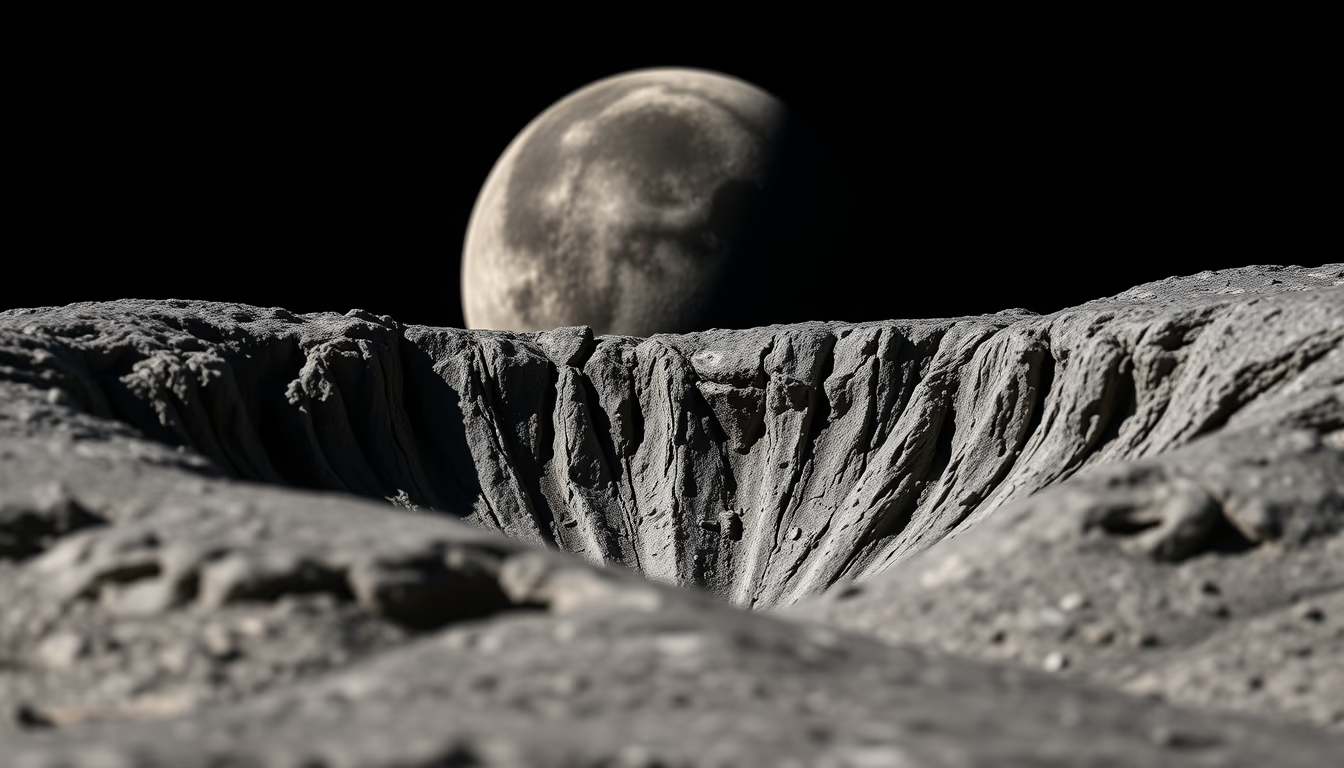
Moon detail crater closeup
1344×768 · AVIF · CC BY 4.0
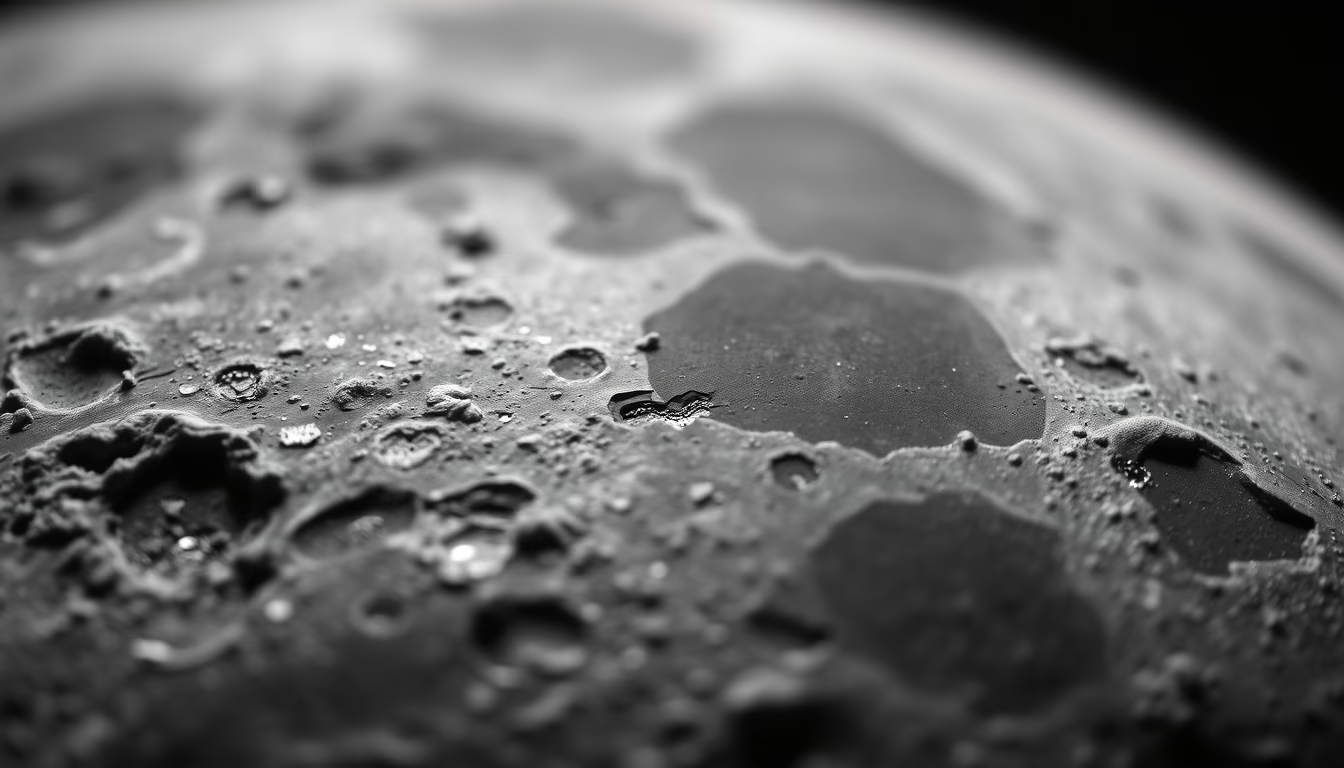
A close-up of a lunar crater reveals geological details of the Moon's surface and its impact history.
About this subject
Lunar craters are formations resulting from the impact of asteroids, comets, or meteoroids on the Moon's surface. They vary in size from small pits to enormous basins hundreds of kilometers in diameter. The detailed study of these craters, as seen in photographic closeups, provides crucial information about the history of the Solar System, including the impact frequency over time. Famous examples include Tycho crater, with its 85 km diameter and bright ray system extending thousands of kilometers, and Copernicus, a 93 km crater with complex central peaks. In closeups, features such as central peaks (formed by material rebounding after impact), terraced walls (caused by collapse of the rim), and ejecta (material thrown out around the crater) are visible. Missions like Apollo and NASA's Lunar Reconnaissance Orbiter have mapped and photographed these structures in high resolution, allowing detailed analysis of crater composition and age. Interestingly, lunar craters are named after deceased scientists, explorers, and artists, according to the International Astronomical Union convention. The largest crater visible from Earth is Clavius, with a diameter of 225 km, located in the southern hemisphere of the Moon.
Frequently Asked Questions
How do lunar craters form?
They form when asteroids, comets, or meteoroids collide with the lunar surface at high speeds, creating an impact cavity and ejecting material around it.
Why are lunar craters important for science?
They record the impact history of the Solar System, help determine relative ages of lunar surfaces, and reveal information about the Moon's geological composition.
What is the largest lunar crater visible from Earth?
The largest lunar crater visible from Earth is Clavius, with a diameter of about 225 km, located in the southern hemisphere of the Moon.
Direct URL
https://pub-c7d6a6ea828543ac903a74a341ccb2e1.r2.dev/imagens/moon-detail-crater-closeup-macro-closeup-p5.avifHow to credit
Include a visible link back to UtilizAí. Copy one of the snippets below:
<a href="https://xn--utiliza-eza.com/en/midia/imagens/moon-detail-crater-closeup-macro-closeup-p5">Moon detail crater closeup</a> by <a href="https://xn--utiliza-eza.com">UtilizAí</a>, licensed under <a href="https://creativecommons.org/licenses/by/4.0/">CC BY 4.0</a>.
[Moon detail crater closeup](https://xn--utiliza-eza.com/en/midia/imagens/moon-detail-crater-closeup-macro-closeup-p5) by [UtilizAí](https://xn--utiliza-eza.com), CC BY 4.0
License: CC-BY-4.0