Moon detail crater closeup
1344×768 · AVIF · CC BY 4.0
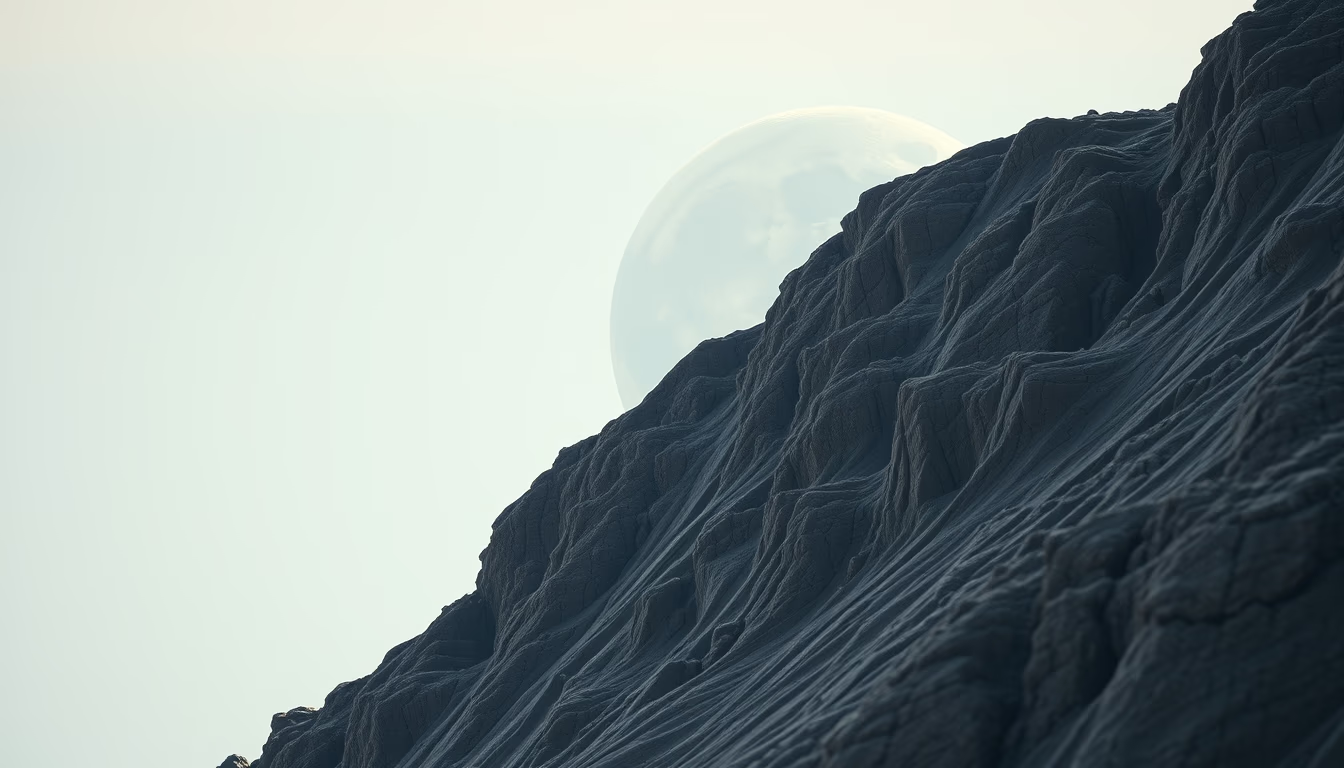
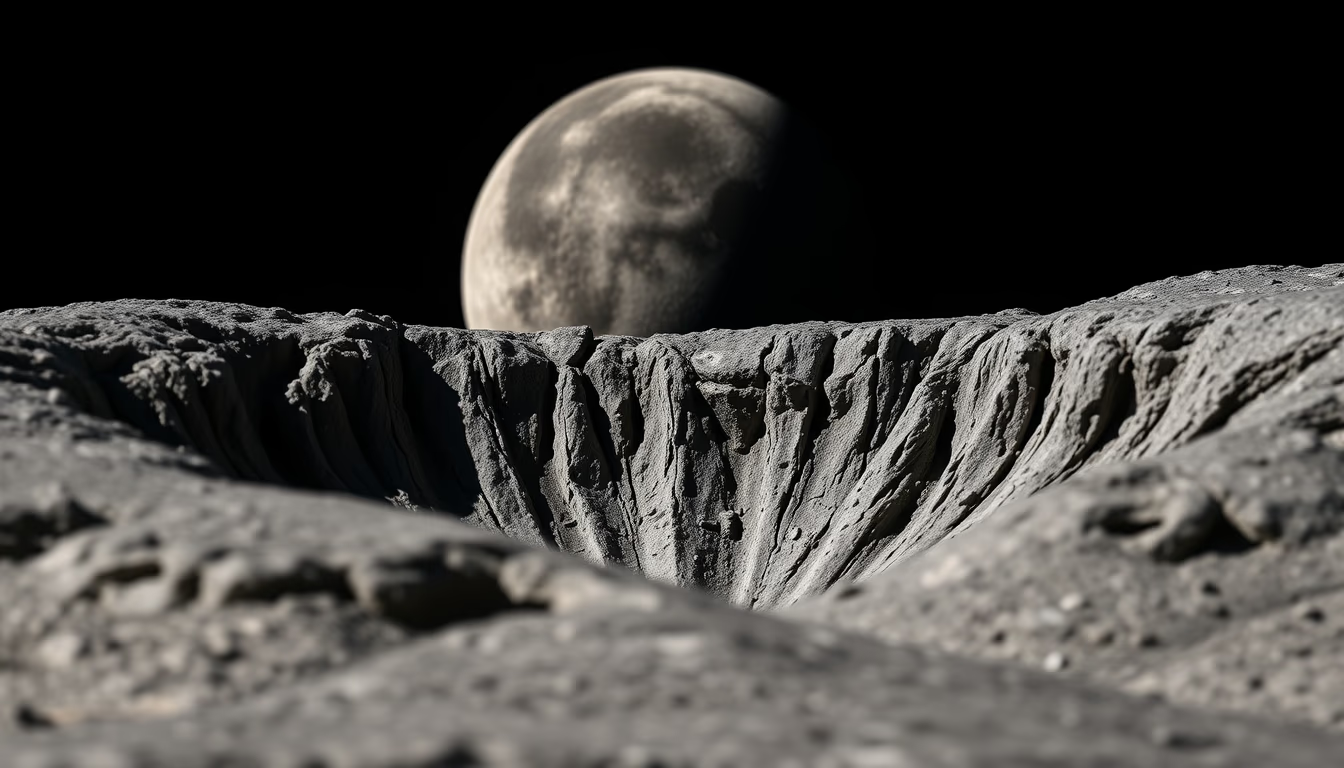
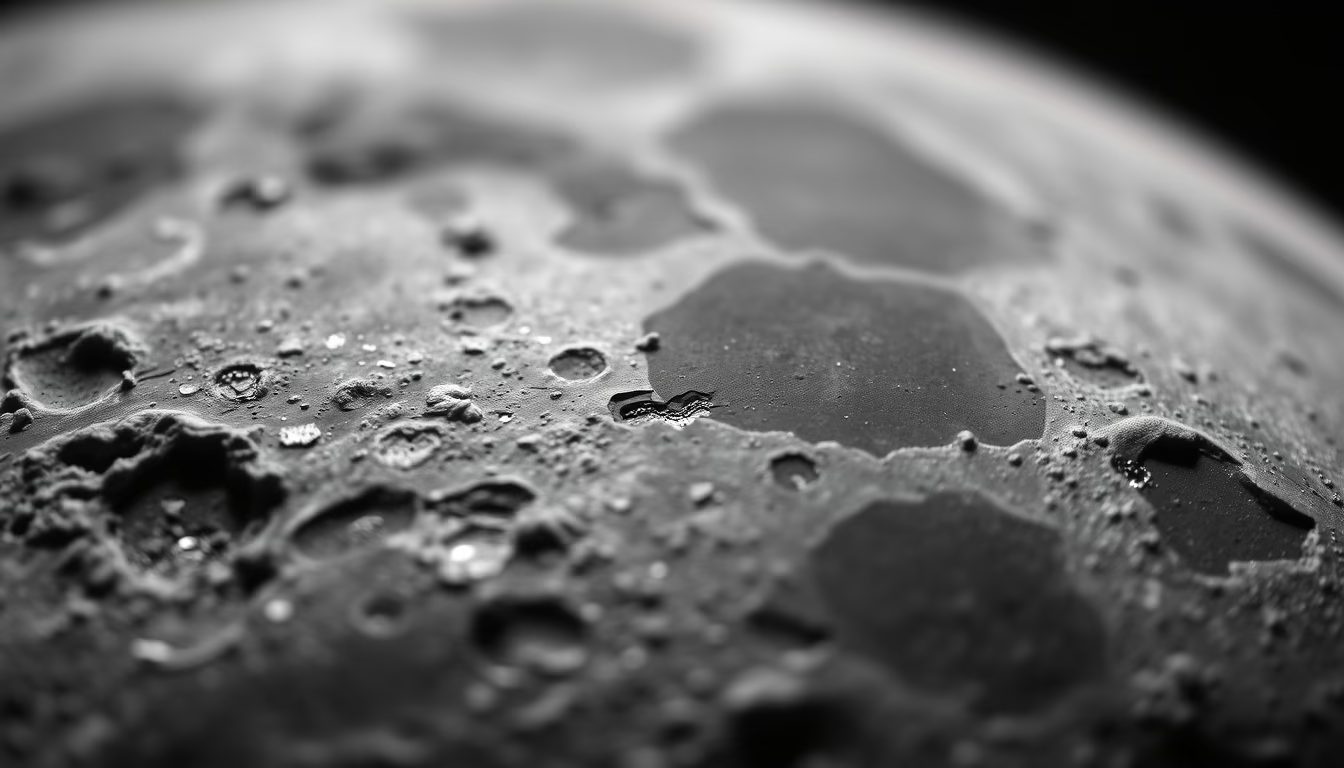
Lunar craters reveal impacts from asteroids and comets over billions of years, with details of their rims and central peaks visible in astronomical close-ups.
About this subject
Lunar craters are geological formations resulting from the impact of meteoroids, asteroids, and comets on the Moon's surface. Since the Moon lacks an atmosphere and significant geological activity, these marks remain preserved for billions of years, offering a unique record of the Solar System's history. Crater sizes range from microscopic to giant basins hundreds of kilometers across, such as the South Pole-Aitken Basin, one of the largest in the solar system.
There are two main types of craters: simple and complex. Simple craters are bowl-shaped with well-defined rims, typically less than 15 kilometers in diameter. Complex craters have central peaks, terraced inner walls, and relatively flat floors. Famous examples include Copernicus, with its bright rays visible even with small telescopes, and Tycho, known for its ray system extending thousands of kilometers.
Crater formation occurs in three stages: compression, excavation, and modification. The impact energy equals thousands of nuclear bombs, melting and vaporizing rock. Ejected material forms a rim, and the central peak arises from the rebound of compressed ground. Young craters like Tycho (about 108 million years old) have sharp rims and prominent rays. Older craters like Ptolemaeus have eroded rims from subsequent impacts.
Studies of lunar craters have been essential for understanding the impact history on Earth, whose records are erased by erosion and plate tectonics. Samples brought by Apollo missions helped date events like the Late Heavy Bombardment about 3.8 billion years ago. Today, scientists use high-resolution images from probes like the Lunar Reconnaissance Orbiter to map crater details and search for resources such as water ice in permanently shadowed regions.
Frequently Asked Questions
How are lunar craters formed?
Lunar craters are formed by the impact of meteoroids, asteroids, or comets on the Moon's surface. The process involves compression, excavation, and modification of the ground, creating a depression with raised rims and, in larger craters, central peaks and terraces.
What is the difference between simple and complex craters?
Simple craters are bowl-shaped and less than 15 km in diameter. Complex craters are larger, with central peaks, terraced inner walls, and flat floors. Examples of complex craters include Copernicus and Tycho.
Why do some craters have bright rays?
Bright rays are fresh, high-albedo ejecta material scattered radially during the impact. Over time, these rays darken due to space weathering, so young craters like Tycho exhibit prominent rays.
Direct URL
https://pub-c7d6a6ea828543ac903a74a341ccb2e1.r2.dev/imagens/moon-detail-crater-closeup-documentary-photography-p1.avifHow to credit
Include a visible link back to UtilizAí. Copy one of the snippets below:
<a href="https://xn--utiliza-eza.com/en/midia/imagens/moon-detail-crater-closeup-documentary-photography-p1">Moon detail crater closeup</a> by <a href="https://xn--utiliza-eza.com">UtilizAí</a>, licensed under <a href="https://creativecommons.org/licenses/by/4.0/">CC BY 4.0</a>.
[Moon detail crater closeup](https://xn--utiliza-eza.com/en/midia/imagens/moon-detail-crater-closeup-documentary-photography-p1) by [UtilizAí](https://xn--utiliza-eza.com), CC BY 4.0
License: CC-BY-4.0