Mona lisa louvre
1344×768 · AVIF · CC BY 4.0
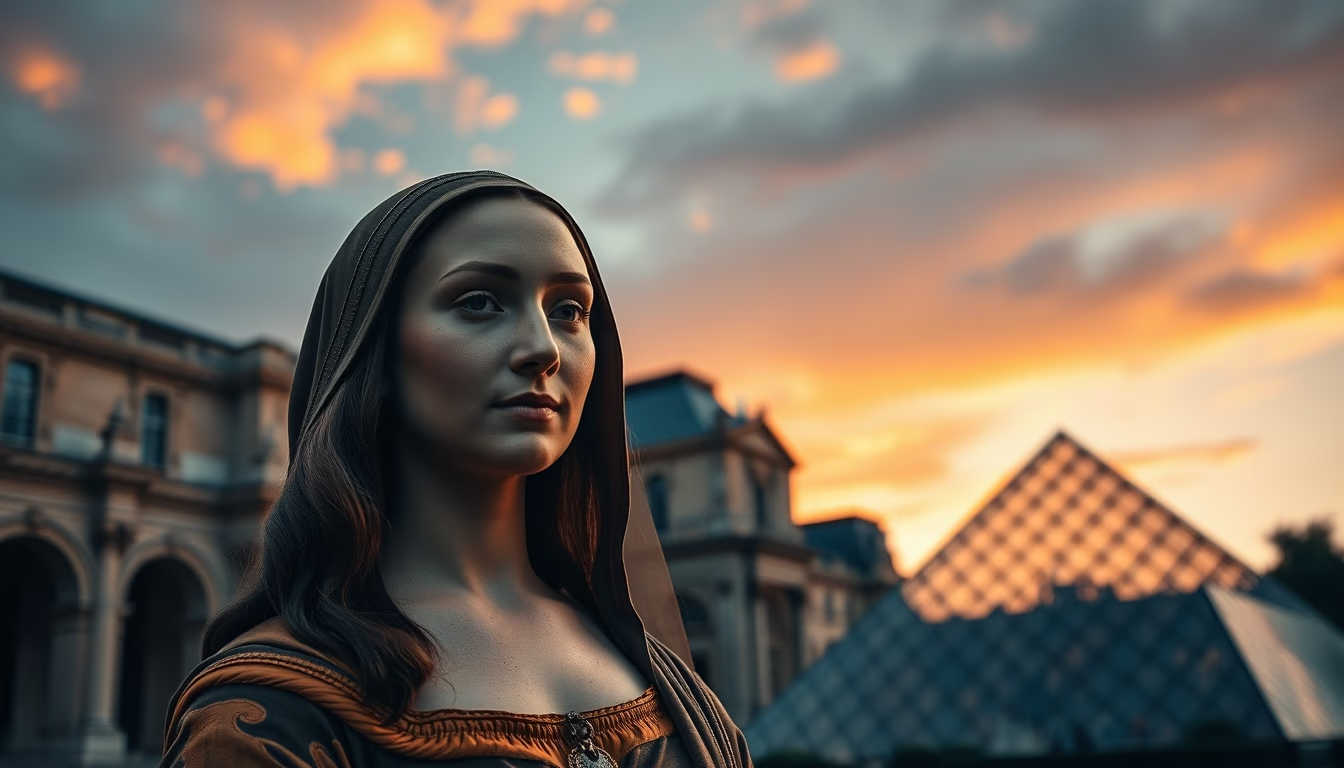
The Mona Lisa, painted by Leonardo da Vinci, is the world's most famous artwork, drawing millions of visitors to the Louvre Museum in Paris.
About this subject
The Mona Lisa, also known as La Gioconda, is an oil painting on poplar wood created by Leonardo da Vinci between 1503 and 1506. The artwork depicts Lisa Gherardini, wife of Florentine merchant Francesco del Giocondo, hence the Italian name La Gioconda. The painting measures 77 cm by 53 cm and has been on display at the Louvre Museum in Paris since 1797. The enigmatic smile of the Mona Lisa and the sfumato technique, characteristic of Da Vinci, have contributed to its enduring fame.
The Mona Lisa's popularity skyrocketed after its theft in 1911, when Vincenzo Peruggia, a Louvre employee, hid it for two years. The robbery generated international coverage and turned the painting into a cultural icon. Since then, the artwork has been subject to vandalism and theft attempts but remains protected by a bulletproof glass case. About 80% of Louvre visitors come specifically to see it, making the painting's surroundings one of the most crowded spots in the museum.
Beyond its artistic value, the Mona Lisa is the subject of numerous theories and studies. Experts debate the model's identity, the meaning of the smile, and the techniques used by Da Vinci. Infrared analysis has revealed hidden layers and adjustments made by the artist. The painting has also influenced pop culture, appearing in films, music, and parodies. In 2023, the Mona Lisa was valued at around 870 million US dollars, making it the most valuable artwork in the world, though it is never sold.
Frequently Asked Questions
Who painted the Mona Lisa?
The Mona Lisa was painted by Leonardo da Vinci, an Italian Renaissance polymath, between 1503 and 1506.
Where is the Mona Lisa displayed?
The Mona Lisa is displayed at the Louvre Museum in Paris, France, in the Salle des États, inside a climate-controlled, bulletproof glass case.
Why is the Mona Lisa so famous?
Its fame stems from the enigmatic smile, Da Vinci's sfumato technique, the 1911 theft that generated massive media coverage, and its status as a global cultural icon.
Direct URL
https://pub-c7d6a6ea828543ac903a74a341ccb2e1.r2.dev/imagens/mona-lisa-louvre-cinematic-wide-shot-p11.avifHow to credit
Include a visible link back to UtilizAí. Copy one of the snippets below:
<a href="https://xn--utiliza-eza.com/en/midia/imagens/mona-lisa-louvre-cinematic-wide-shot-p11">Mona lisa louvre</a> by <a href="https://xn--utiliza-eza.com">UtilizAí</a>, licensed under <a href="https://creativecommons.org/licenses/by/4.0/">CC BY 4.0</a>.
[Mona lisa louvre](https://xn--utiliza-eza.com/en/midia/imagens/mona-lisa-louvre-cinematic-wide-shot-p11) by [UtilizAí](https://xn--utiliza-eza.com), CC BY 4.0
License: CC-BY-4.0