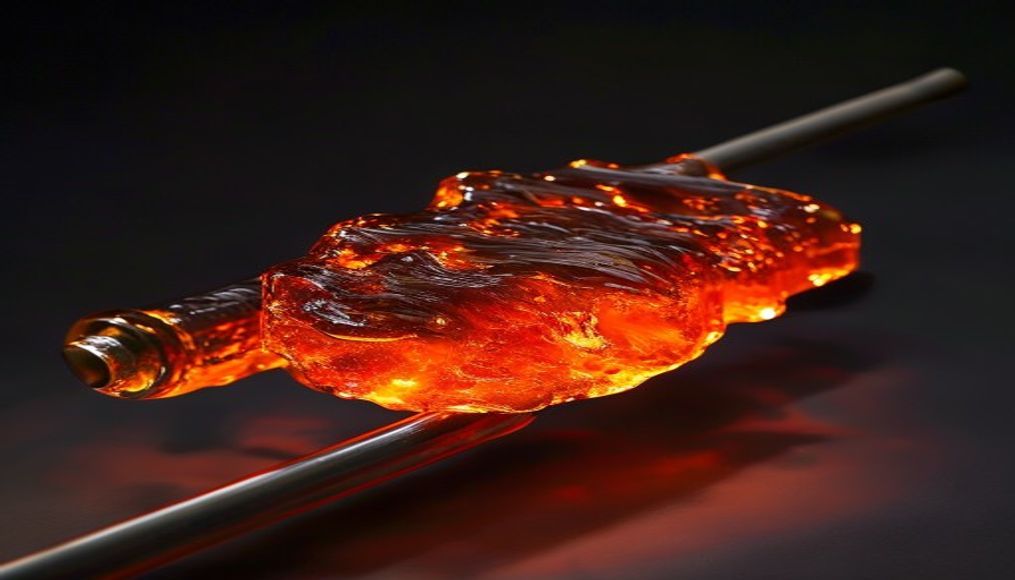
Molten glass on rod
1344×768 · AVIF · CC BY 4.0
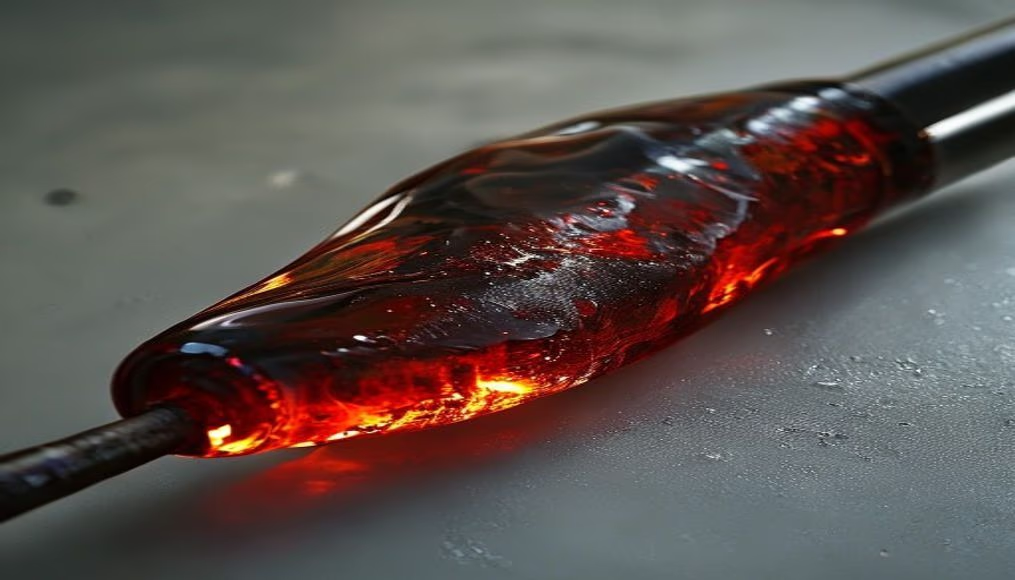
Molten glass gathered on the tip of a metal rod is the first step in glassblowing, an ancient technique that transforms sand into art.
About this subject
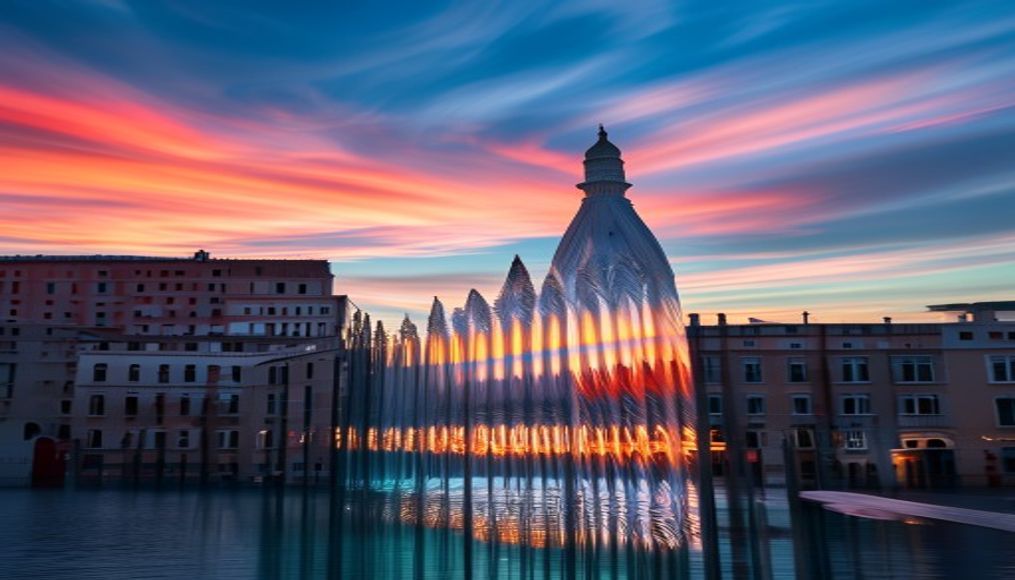
Glassblowing was invented in Syria or the Roman Empire around the 1st century BC, revolutionizing the production of glass objects. The process begins with gathering a glob of molten glass, a glowing mass heated to about 1200°C (2192°F), onto the tip of an iron or steel rod known as a blowpipe. The artisan constantly rotates the rod to prevent the glass from dripping, maintaining the symmetry of the incandescent ball. This movement, called "gathering," requires precision and a sense of balance, as the glass viscosity changes with temperature. After gathering, the blower blows air through the pipe, creating a bubble that is expanded and shaped using hand tools such as pincers and wooden molds. Temperature control is critical: too hot, the glass loses shape; too cold, it becomes brittle. Therefore, an annealing oven is used to slowly cool the piece, preventing internal stress. The technique spread worldwide, with famous centers like Murano, Italy, renowned for the purity and vibrant colors of Venetian glass. In Brazil, glassblowing is practiced in artisan studios, particularly in Pernambuco and São Paulo, where artists explore contemporary forms. Molten glass on the rod is not just a material: it carries the history of a tradition that combines chemistry, fire, and creativity.
Frequently Asked Questions
What is the temperature of molten glass in glassblowing?
Molten glass reaches about 1200°C (2192°F), depending on its chemical composition. At this temperature, it behaves as a viscous, glowing liquid, ideal for gathering on the rod and shaping.
Why doesn't the glass stick to the metal rod?
The rod is made of iron or steel, materials that do not chemically react with molten glass. Additionally, the artisan continuously rotates the rod, preventing the glass from dripping or permanently adhering.
How long does it take to learn glassblowing?
Mastering glassblowing requires years of practice. Introductory courses last a few days and cover basics, but precision in temperature control, blowing, and gestures is only achieved through ongoing experience.
Direct URL
https://pub-c7d6a6ea828543ac903a74a341ccb2e1.r2.dev/imagens/molten-glass-on-rod-film-grain-authentic-p2.avifHow to credit
Include a visible link back to UtilizAí. Copy one of the snippets below:
<a href="https://xn--utiliza-eza.com/en/midia/imagens/molten-glass-on-rod-film-grain-authentic-p2">Molten glass on rod</a> by <a href="https://xn--utiliza-eza.com">UtilizAí</a>, licensed under <a href="https://creativecommons.org/licenses/by/4.0/">CC BY 4.0</a>.
[Molten glass on rod](https://xn--utiliza-eza.com/en/midia/imagens/molten-glass-on-rod-film-grain-authentic-p2) by [UtilizAí](https://xn--utiliza-eza.com), CC BY 4.0
License: CC-BY-4.0