Modular synthesizer rack
1344×768 · AVIF · CC BY 4.0
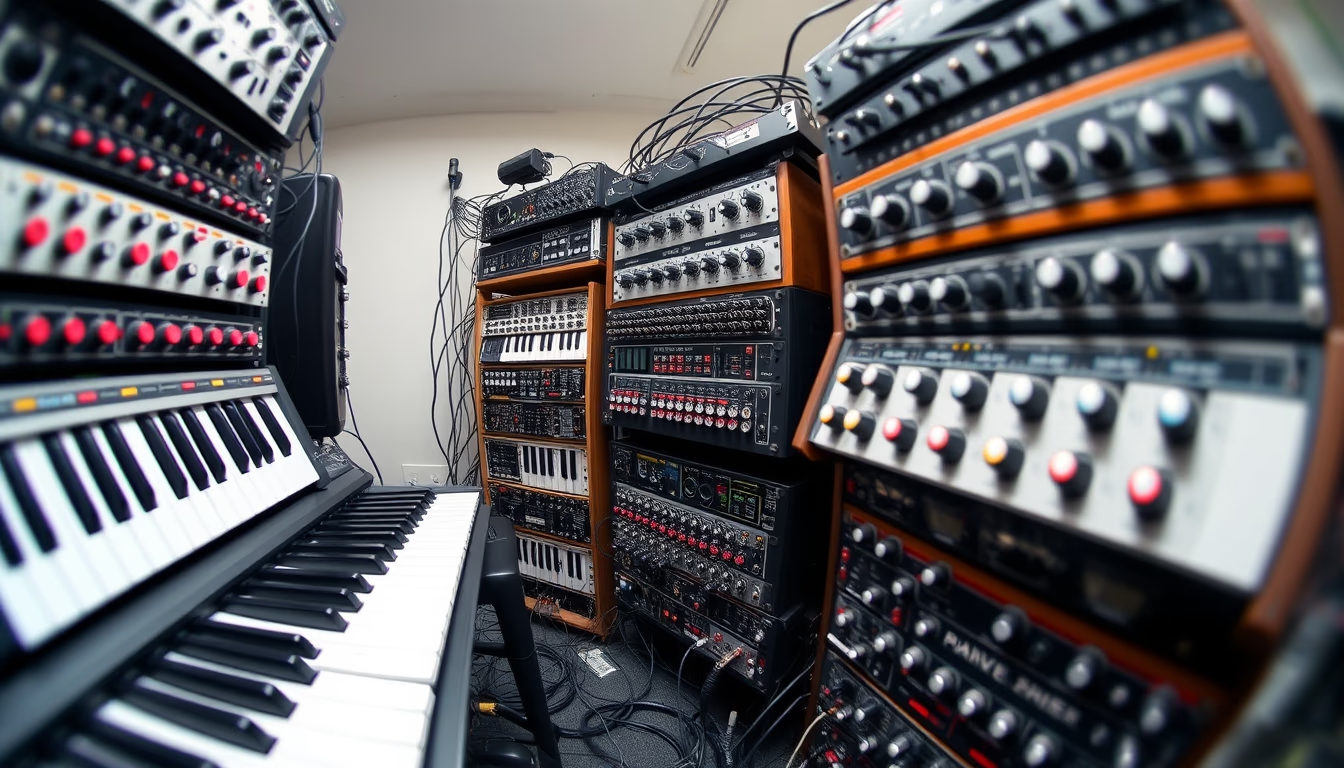
Modular synthesizers revolutionized electronic music since the 1960s, offering infinite sonic possibilities through patchable modules.
About this subject
Modular synthesizers emerged in the 1960s, pioneered by Robert Moog and Don Buchla. Unlike fixed-architecture synthesizers, a modular system consists of independent modules (oscillators, filters, amplifiers, envelopes, LFOs) interconnected via patch cables. This design allows musicians to create unique signal paths, producing timbres impossible with conventional gear. The Eurorack standard, introduced by Doepfer in the 1990s, became the most widespread format, with thousands of modules from hundreds of manufacturers.
The cultural impact of modular synthesizers is immense. They were used by artists such as Kraftwerk, Brian Eno, Tangerine Dream, and more recently by techno, ambient, and experimental musicians. Patching requires knowledge of sound synthesis and creativity, making it both a musical instrument and a sound design tool. Modular festivals and meetups like SynthFest and Knobcon attract enthusiasts worldwide.
Fun fact: the modular synthesizer is one of the few instruments without a standard layout, each system is unique, assembled according to the user's preferences. Furthermore, modularity has enabled integration with computers via modules like the Expert Sleepers ES-8, bridging analog and digital realms. Currently, the modular market is experiencing a renaissance, with new brands emerging and prices ranging from affordable modules to collectible pieces.
Frequently Asked Questions
What is a modular synthesizer?
It is an electronic musical instrument composed of independent modules (such as oscillators, filters, and amplifiers) connected by patch cables to create sound. Unlike fixed-architecture synthesizers, modular allows complete customization of the signal path.
How does patching work in a modular?
Patching is the physical connection between modules using jack cables. Each module has inputs and outputs that control parameters like frequency, amplitude, and modulation. By connecting different modules, the musician defines the sound path and interactions.
Why are modular synthesizers so popular today?
Due to their sonic flexibility, expandability, and DIY culture. The visual aesthetics and tactile experience of connecting cables attract musicians seeking a unique and expressive instrument. The active community and vast module selection also fuel interest.
Direct URL
https://pub-c7d6a6ea828543ac903a74a341ccb2e1.r2.dev/imagens/modular-synthesizer-rack-fish-eye-wide-angle-p4.avifHow to credit
Include a visible link back to UtilizAí. Copy one of the snippets below:
<a href="https://xn--utiliza-eza.com/en/midia/imagens/modular-synthesizer-rack-fish-eye-wide-angle-p4">Modular synthesizer rack</a> by <a href="https://xn--utiliza-eza.com">UtilizAí</a>, licensed under <a href="https://creativecommons.org/licenses/by/4.0/">CC BY 4.0</a>.
[Modular synthesizer rack](https://xn--utiliza-eza.com/en/midia/imagens/modular-synthesizer-rack-fish-eye-wide-angle-p4) by [UtilizAí](https://xn--utiliza-eza.com), CC BY 4.0
License: CC-BY-4.0