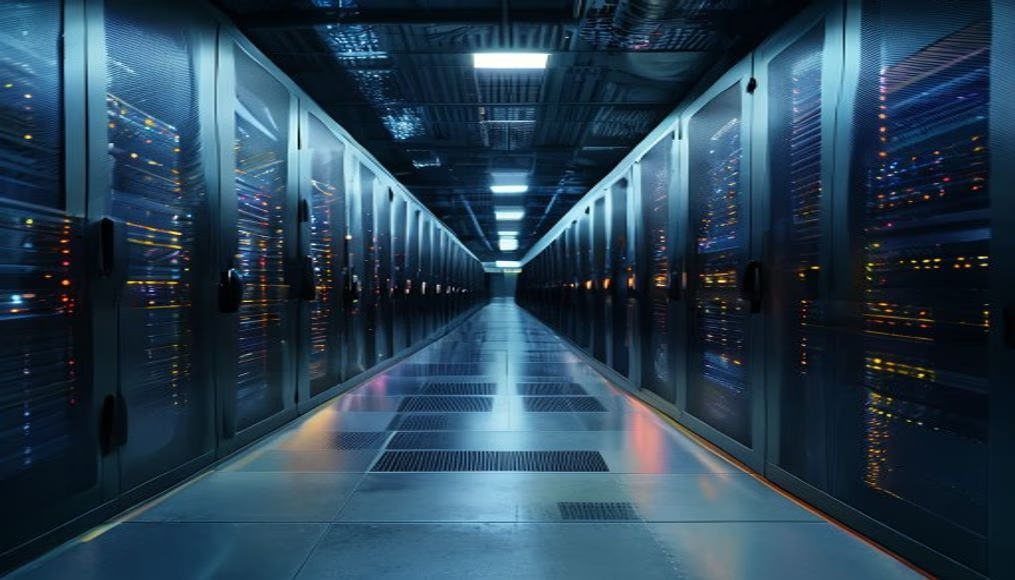
Modern data center cooling system
1344×768 · AVIF · CC BY 4.0
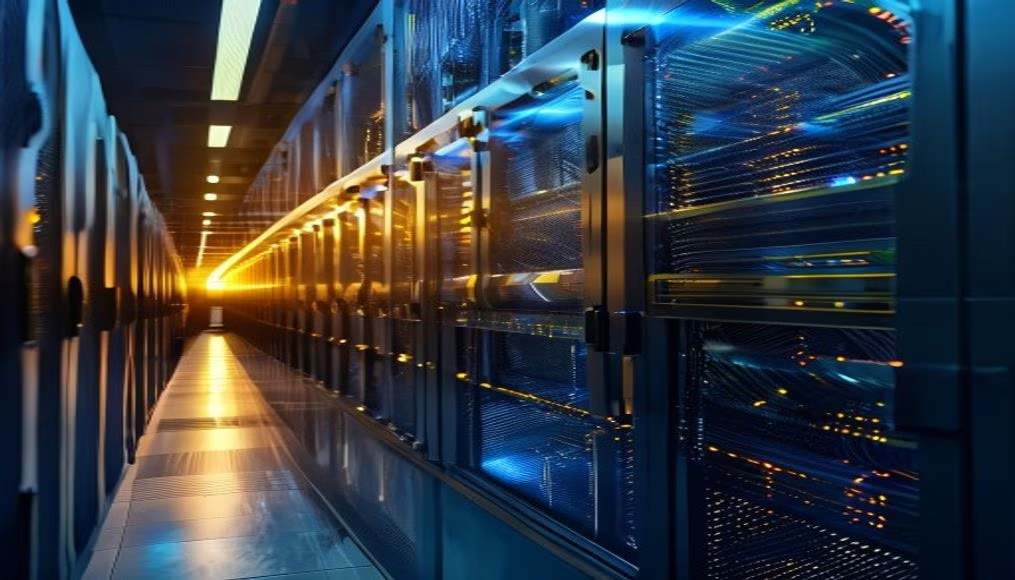
Modern cooling systems are vital for data centers, ensuring energy efficiency and safe server operation.
About this subject
Data centers house thousands of servers that generate intense heat during data processing. Without an effective cooling system, overheating can cause hardware failures and service disruptions. Traditional methods like room air conditioning are being replaced by more advanced solutions that reduce energy consumption and increase reliability.
One of the most innovative approaches is direct liquid cooling, where a coolant circulates through tubes in direct contact with hot components. This technique can remove up to 1000 times more heat than air, allowing higher server density. Immersion cooling goes a step further by submerging equipment in a non-conductive dielectric liquid, eliminating the need for fans and reducing noise.
Another key strategy is free cooling, which leverages external climate conditions to cool the data center. In temperate regions, air economizers can drastically reduce chiller usage. In Brazil, data centers in São Paulo and Campinas adopt hot/cold aisle containment techniques to optimize airflow. Containment physically separates the hot exhaust air from servers and the cold supply air, improving cooling efficiency.
Sustainability is also a growing focus. Operators aim to reduce PUE (Power Usage Effectiveness), a metric indicating energy efficiency. Modern data centers achieve PUE below 1.2 thanks to intelligent cooling systems that adjust capacity based on load. The trend is for cooling systems to integrate artificial intelligence, predicting thermal demands and optimizing consumption in real time.
Frequently Asked Questions
What is the difference between air cooling and liquid cooling in data centers?
Air cooling uses fans and air conditioning to dissipate heat, while liquid cooling uses refrigerants that transfer heat more efficiently. Liquid can remove up to 1000 times more heat than air, making it more suitable for high-density servers.
How does free cooling work in data centers?
Free cooling leverages low outside temperatures to cool the data center without using chillers. Air or water economizers exchange heat directly with the environment, reducing energy consumption. It is most effective in temperate or cold climates.
Why is PUE important in evaluating data center efficiency?
PUE (Power Usage Effectiveness) measures energy efficiency by dividing total data center energy consumption by the energy used by IT equipment. The closer to 1, the less waste from cooling and other systems. A low PUE indicates lower operational cost and environmental impact.
Direct URL
https://pub-c7d6a6ea828543ac903a74a341ccb2e1.r2.dev/imagens/modern-data-center-cooling-system-travel-photography-v10.avifHow to credit
Include a visible link back to UtilizAí. Copy one of the snippets below:
<a href="https://xn--utiliza-eza.com/en/midia/imagens/modern-data-center-cooling-system-travel-photography-v10">Modern data center cooling system</a> by <a href="https://xn--utiliza-eza.com">UtilizAí</a>, licensed under <a href="https://creativecommons.org/licenses/by/4.0/">CC BY 4.0</a>.
[Modern data center cooling system](https://xn--utiliza-eza.com/en/midia/imagens/modern-data-center-cooling-system-travel-photography-v10) by [UtilizAí](https://xn--utiliza-eza.com), CC BY 4.0
License: CC-BY-4.0