Modern Brazilian hospital exterior at sunrise
1344×768 · AVIF · CC BY 4.0
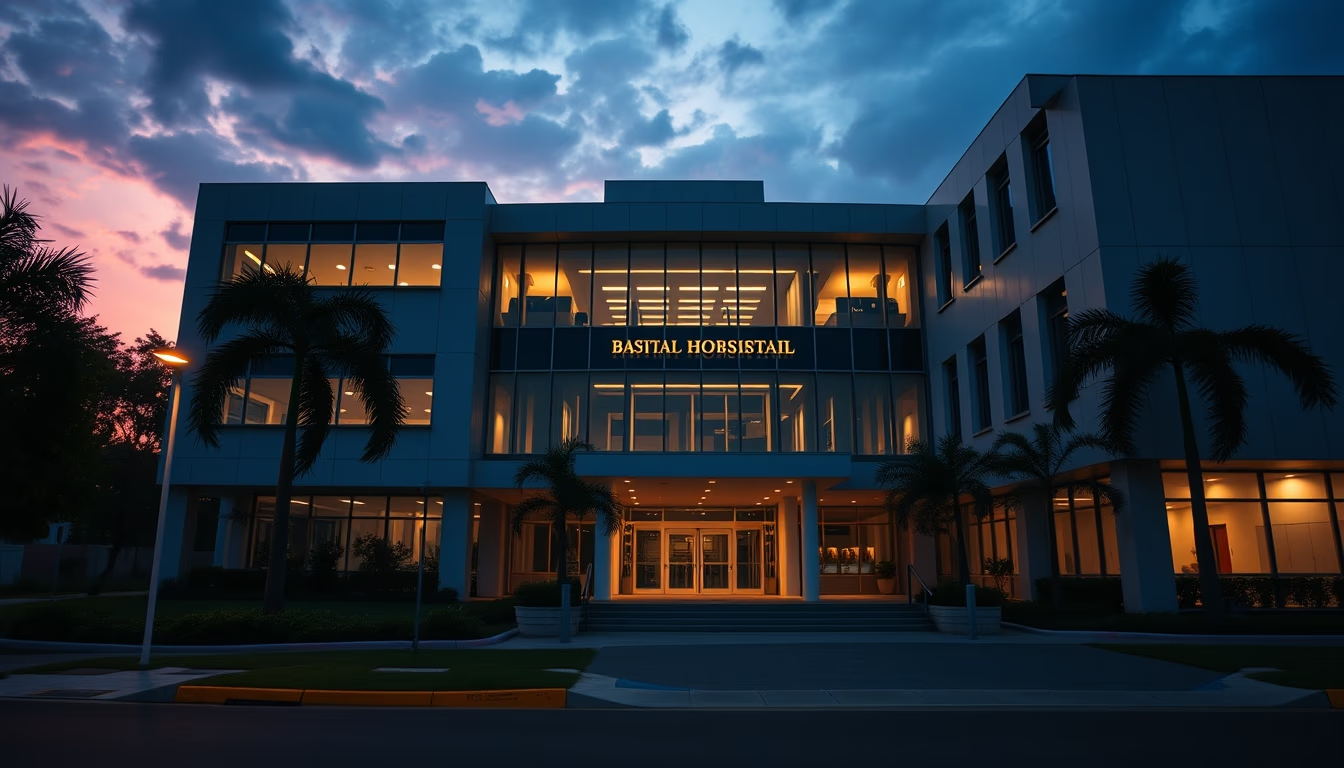
Modern Brazilian hospital exterior at dawn, with glass façade reflecting orange sky tones.
About this subject
Brazilian hospital architecture has undergone significant transformation in recent decades, aligning with international standards of energy efficiency and environmental comfort. This hospital, whose glass façade dominates the urban landscape, exemplifies the trend of integrating natural lighting into indoor environments, reducing electricity consumption and improving the well-being of patients and staff. High-performance glass with solar control minimizes heat gain without compromising transparency, a particularly important feature in regions with high light incidence like Brazil.
The dawn captured in this image highlights the relationship between the building and its surroundings. In cities such as São Paulo, Rio de Janeiro, and Brasília, modern hospitals often occupy central areas or upscale neighborhoods, close to fast-access roads and public transportation. Strategic location is crucial for emergency care and the logistics of medical supplies. Additionally, the building's solar orientation is carefully planned: the east-facing façade receives morning light, passively heating the interiors in winter, while brise-soleil or shading elements protect against the afternoon sun.
The choice of glass façades also reflects a cultural shift in the perception of hospitals. Once seen as cold and impersonal places, new designs aim to convey transparency, warmth, and innovation. Glass allows passersby to see internal movement, humanizing the institution. In many cases, ground floors house common areas, cafeterias, and shops, integrating the hospital into the urban fabric. This visual openness, combined with internal gardens and green terraces, helps reduce stress for patients and visitors, according to environmental psychology studies.
In the Brazilian context, the adoption of certifications such as LEED (Leadership in Energy and Environmental Design) and AQUA (High Environmental Quality) has driven sustainable projects. Hospitals seek efficiency in water use, waste management, and thermal comfort. The exterior at dawn is not only aesthetically striking; it symbolizes the commitment to quality of life and innovation in the country's healthcare system.
Frequently Asked Questions
Why do modern hospitals in Brazil use glass façades?
Glass façades provide natural lighting, reduce energy consumption, and convey transparency and warmth. Solar control glass minimizes heat gain, essential in Brazil's climate.
What sustainable certifications are common in Brazilian hospitals?
The LEED (international) and AQUA (Brazilian) certifications are the most adopted, evaluating energy efficiency, water management, environmental comfort, and sustainable materials.
How does a hospital's location influence its architectural design?
Location determines solar orientation, access to public transport, and fast roads. Hospitals in central urban areas prioritize façades that integrate with the landscape and offer visibility.
Direct URL
https://pub-c7d6a6ea828543ac903a74a341ccb2e1.r2.dev/imagens/modern-brazilian-hospital-exterior-at-sunrise-closeup-twilight-6.avifHow to credit
Include a visible link back to UtilizAí. Copy one of the snippets below:
<a href="https://xn--utiliza-eza.com/en/midia/imagens/modern-brazilian-hospital-exterior-at-sunrise-closeup-twilight-6">Modern Brazilian hospital exterior at sunrise</a> by <a href="https://xn--utiliza-eza.com">UtilizAí</a>, licensed under <a href="https://creativecommons.org/licenses/by/4.0/">CC BY 4.0</a>.
[Modern Brazilian hospital exterior at sunrise](https://xn--utiliza-eza.com/en/midia/imagens/modern-brazilian-hospital-exterior-at-sunrise-closeup-twilight-6) by [UtilizAí](https://xn--utiliza-eza.com), CC BY 4.0
License: CC-BY-4.0