Mixing console studio professional
1344×768 · AVIF · CC BY 4.0
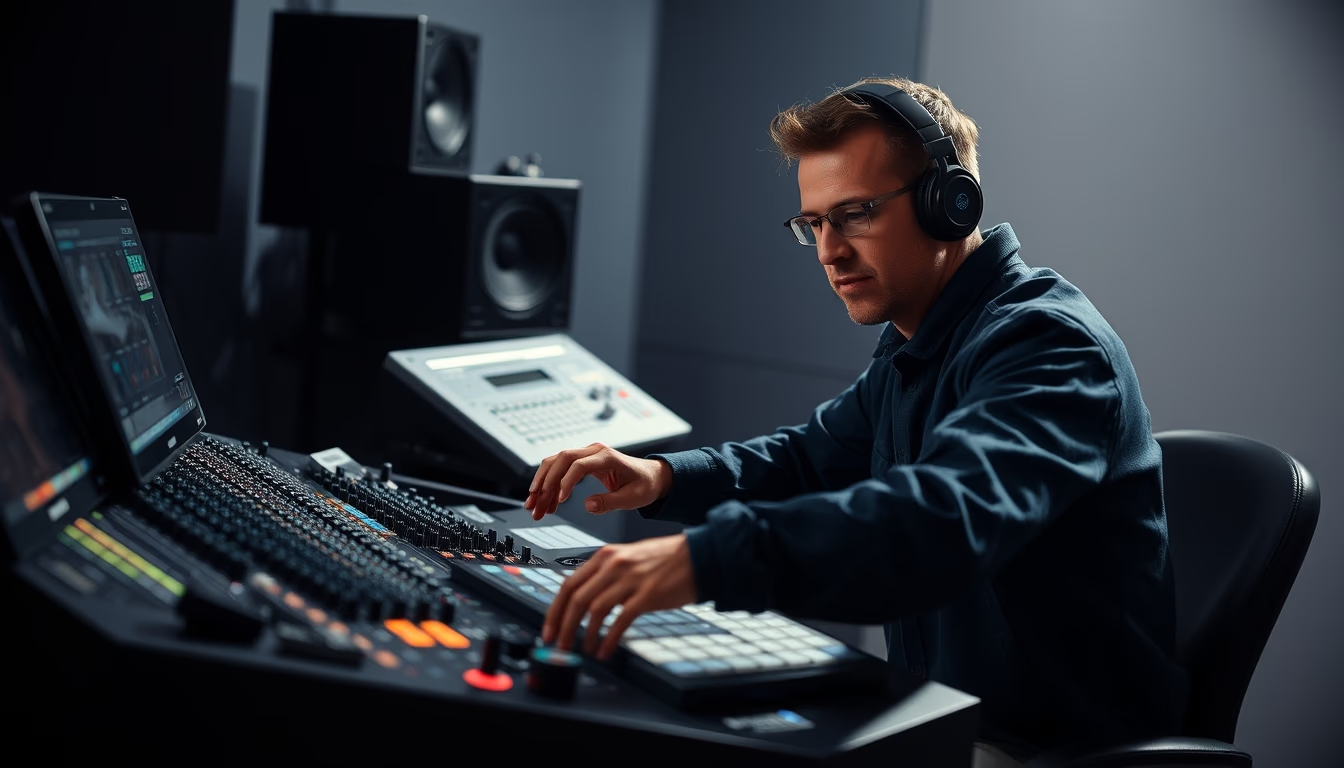
A professional mixing console is the heart of a recording studio, enabling precise control over multichannel audio for high-level music productions.
About this subject
A professional mixing console, also called an audio console, is a fundamental piece of equipment in recording studios. It allows sound engineers to adjust volumes, equalize frequencies, apply effects, and combine multiple sound sources into a cohesive final mix. Each channel on the console has individual controls for gain, equalization, and routing, along with faders that regulate output levels. Modern models include digital control surfaces that integrate with DAW software such as Pro Tools or Logic Pro. However, classic analog consoles like the Neve 8078 or SSL 4000 are still prized for their distinctive sound and musical response.
In Brazil, the music industry adopted mixing consoles from the 1960s, with studios like Estúdio Transamérica (Rio de Janeiro) and Estúdio Factor (Brasília) using imported equipment. The arrival of digital consoles in the 1990s democratized access, but technical knowledge to operate them remains a differentiator. A professional console can have 16 to 96 channels, depending on the production’s complexity. The price of a high-end unit may exceed USD 100,000, reflecting its precise engineering and quality components.
The use of mixing consoles is not limited to music. They are essential in post-production studios for film and television, controlling dialogue, sound effects, and scores. Additionally, at live shows, digital consoles allow real-time adjustments with automation and scene saving. The trend for 2026 points to greater integration with artificial intelligence, which may suggest automatic EQ or compression adjustments, but the technician’s human sensitivity remains irreplaceable.
Trivia: the largest mixing console ever built is the Solid State Logic SL 9000 J, with 120 channels, used in legendary studios like Abbey Road. Maintenance of such equipment requires specialized technicians, and many older units are restored to preserve their vintage sound.
Frequently Asked Questions
What is the difference between analog and digital mixing consoles?
Analog consoles process audio as continuous electrical signals using components like transistors and capacitors, giving a 'warmer' sound. Digital consoles convert audio to binary data, enabling automation, scene recall, and built-in effects, while being lighter and more compact.
How many channels does a professional mixing console need?
It depends on the application. For a live band, 16 to 24 channels may suffice. Recording studios often use 32 to 48 channels. Large orchestral or film productions may require 72 or more channels, but the ideal number depends on the number of simultaneous audio sources.
Is it worth buying a used mixing console?
Yes, many engineers seek used analog consoles for their distinctive sound and robust build. However, it's crucial to inspect channels, faders, power supplies, and noise levels. Used digital consoles may have software obsolescence but are still affordable options for home studios.
Direct URL
https://pub-c7d6a6ea828543ac903a74a341ccb2e1.r2.dev/imagens/mixing-console-studio-professional-magazine-editorial-p3.avifHow to credit
Include a visible link back to UtilizAí. Copy one of the snippets below:
<a href="https://xn--utiliza-eza.com/en/midia/imagens/mixing-console-studio-professional-magazine-editorial-p3">Mixing console studio professional</a> by <a href="https://xn--utiliza-eza.com">UtilizAí</a>, licensed under <a href="https://creativecommons.org/licenses/by/4.0/">CC BY 4.0</a>.
[Mixing console studio professional](https://xn--utiliza-eza.com/en/midia/imagens/mixing-console-studio-professional-magazine-editorial-p3) by [UtilizAí](https://xn--utiliza-eza.com), CC BY 4.0
License: CC-BY-4.0