Mitochondria 3d render
1344×768 · AVIF · CC BY 4.0
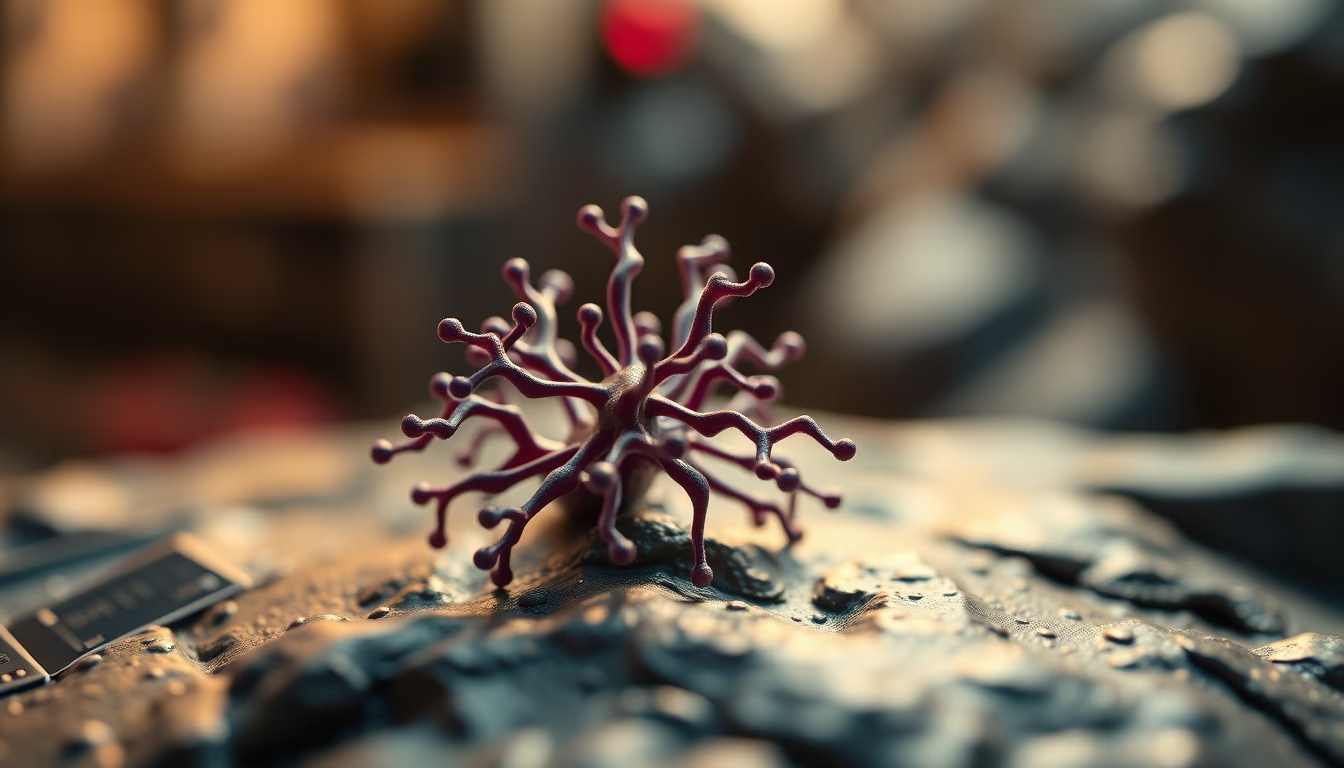
Mitochondria are cellular organelles responsible for energy production in the form of ATP, essential for the function of eukaryotic cells.
About this subject
Mitochondria are organelles found in the cytoplasm of eukaryotic cells, often referred to as the powerhouse of the cell. They convert nutrients into ATP (adenosine triphosphate) through cellular respiration, a process that occurs in their inner folded membranes known as cristae. Each mitochondrion contains its own circular DNA, similar to bacterial DNA, suggesting an endosymbiotic evolutionary origin. This theory, proposed by Lynn Margulis in the 1960s, posits that mitochondria descended from ancestral bacteria that were engulfed by primitive cells, establishing a symbiotic relationship.
The number of mitochondria varies by cell type: muscle cells and neurons, which require high energy, can contain thousands, while mature red blood cells have none. Beyond energy production, mitochondria participate in processes such as apoptosis (programmed cell death), calcium regulation, and synthesis of heme and steroids. Mitochondrial dysfunction is linked to various diseases, including neuromuscular disorders, type 2 diabetes, and aging.
Visually, mitochondria are elongated or oval, measuring between 0.5 and 10 micrometers. Electron microscopy reveals a smooth outer membrane and an inner membrane with folds that increase surface area for chemical reactions. The space between membranes (intermembrane space) and the mitochondrial matrix (inner compartment) contain essential enzymes and substrates. The popularization of 3D renderings in vivid colors, such as those created by scientific artists, helps communicate their complexity in an accessible way to lay audiences and students.
Frequently Asked Questions
What are mitochondria?
Mitochondria are cellular organelles that produce most of the energy (ATP) in eukaryotic cells through cellular respiration.
Why do mitochondria have their own DNA?
Mitochondrial DNA is inherited from an ancient endosymbiotic bacterium, according to the endosymbiotic theory proposed by Lynn Margulis.
What happens when mitochondria malfunction?
Mitochondrial dysfunction can cause neuromuscular diseases, premature aging, type 2 diabetes, and other metabolic disorders.
Direct URL
https://pub-c7d6a6ea828543ac903a74a341ccb2e1.r2.dev/imagens/mitochondria-3d-render-tilt-shift-miniature-p3.avifHow to credit
Include a visible link back to UtilizAí. Copy one of the snippets below:
<a href="https://xn--utiliza-eza.com/en/midia/imagens/mitochondria-3d-render-tilt-shift-miniature-p3">Mitochondria 3d render</a> by <a href="https://xn--utiliza-eza.com">UtilizAí</a>, licensed under <a href="https://creativecommons.org/licenses/by/4.0/">CC BY 4.0</a>.
[Mitochondria 3d render](https://xn--utiliza-eza.com/en/midia/imagens/mitochondria-3d-render-tilt-shift-miniature-p3) by [UtilizAí](https://xn--utiliza-eza.com), CC BY 4.0
License: CC-BY-4.0