Mitochondria 3d render
1344×768 · AVIF · CC BY 4.0
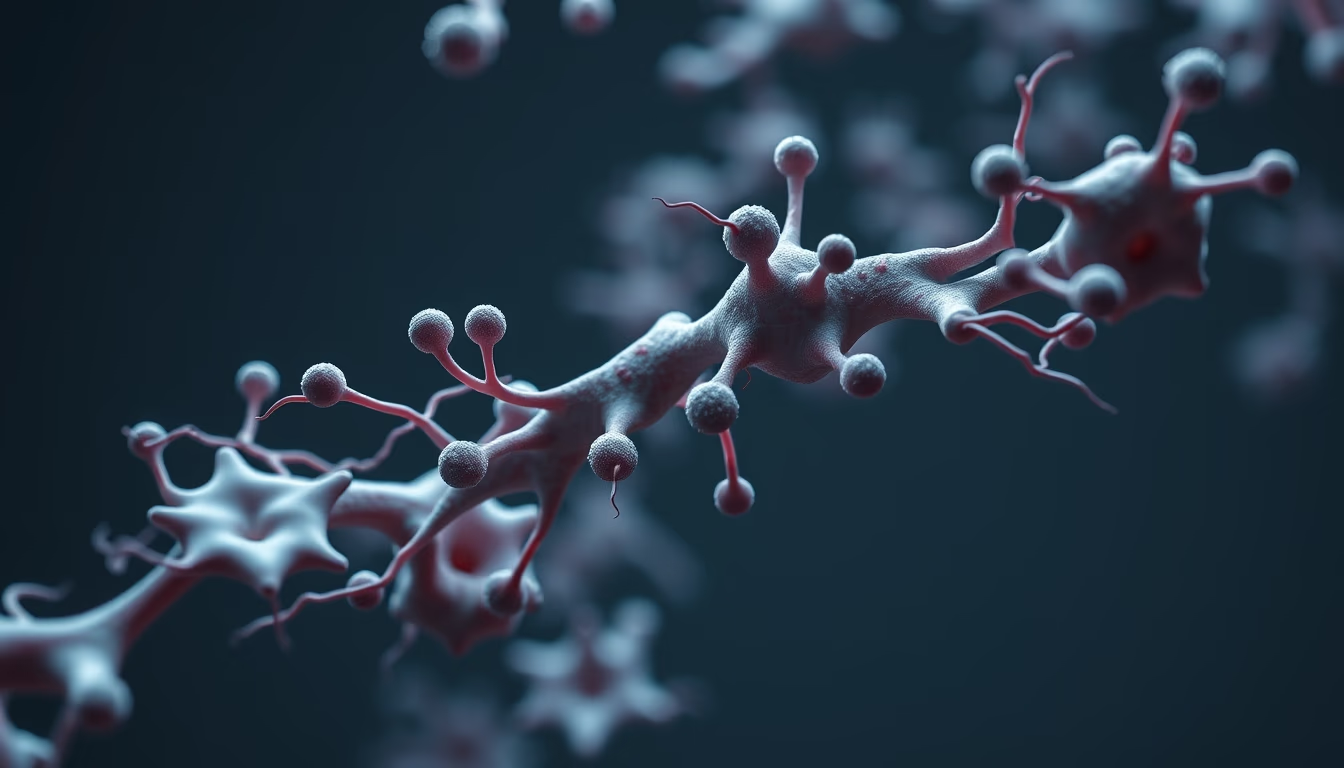
Mitochondria are cellular organelles responsible for energy production, featuring a double membrane structure and their own DNA.
About this subject
Mitochondria are organelles found in the cytoplasm of all eukaryotic cells, from protozoa to humans. Their primary function is to produce adenosine triphosphate (ATP), the molecule that stores and transports chemical energy within the cell, through cellular respiration. This process occurs in stages: glycolysis, the Krebs cycle, and oxidative phosphorylation, the last of which takes place on the inner mitochondrial membrane.
Structurally, mitochondria have two membranes: a smooth outer membrane and a highly folded inner membrane forming cristae, which increase the surface area for chemical reactions. The space between them is the intermembrane space, and the interior is the mitochondrial matrix, rich in enzymes, ribosomes, and circular DNA. This DNA is maternally inherited and encodes some mitochondrial proteins, supporting the endosymbiotic theory, which posits that mitochondria evolved from ancestral bacteria engulfed by larger cells billions of years ago.
Beyond energy production, mitochondria are involved in other essential cellular processes, such as cell cycle regulation, apoptosis (programmed cell death), and calcium homeostasis. Mitochondrial dysfunction is linked to various diseases, including neuromuscular disorders, type 2 diabetes, premature aging, and certain neurodegenerations. The number of mitochondria per cell varies with energy demand: a muscle cell may have thousands, while a skin cell may have only a few hundred. This versatility makes mitochondria one of the most studied components in cell biology.
Frequently Asked Questions
What are mitochondria and what is their main function?
Mitochondria are cellular organelles responsible for producing energy in the form of ATP through cellular respiration. They are essential for the energy metabolism of eukaryotic cells.
Why do mitochondria have their own DNA?
Mitochondrial DNA is circular and maternally inherited, providing evidence for the endosymbiotic theory, which states that mitochondria originated from ancient bacteria engulfed by host cells.
What are cristae and why are they important?
Cristae are folds of the inner mitochondrial membrane that increase the surface area available for electron transport chain reactions, optimizing ATP production.
Direct URL
https://pub-c7d6a6ea828543ac903a74a341ccb2e1.r2.dev/imagens/mitochondria-3d-render-studio-editorial-portrait-p6.avifHow to credit
Include a visible link back to UtilizAí. Copy one of the snippets below:
<a href="https://xn--utiliza-eza.com/en/midia/imagens/mitochondria-3d-render-studio-editorial-portrait-p6">Mitochondria 3d render</a> by <a href="https://xn--utiliza-eza.com">UtilizAí</a>, licensed under <a href="https://creativecommons.org/licenses/by/4.0/">CC BY 4.0</a>.
[Mitochondria 3d render](https://xn--utiliza-eza.com/en/midia/imagens/mitochondria-3d-render-studio-editorial-portrait-p6) by [UtilizAí](https://xn--utiliza-eza.com), CC BY 4.0
License: CC-BY-4.0