Meteora monasteries greece
1344×768 · AVIF · CC BY 4.0
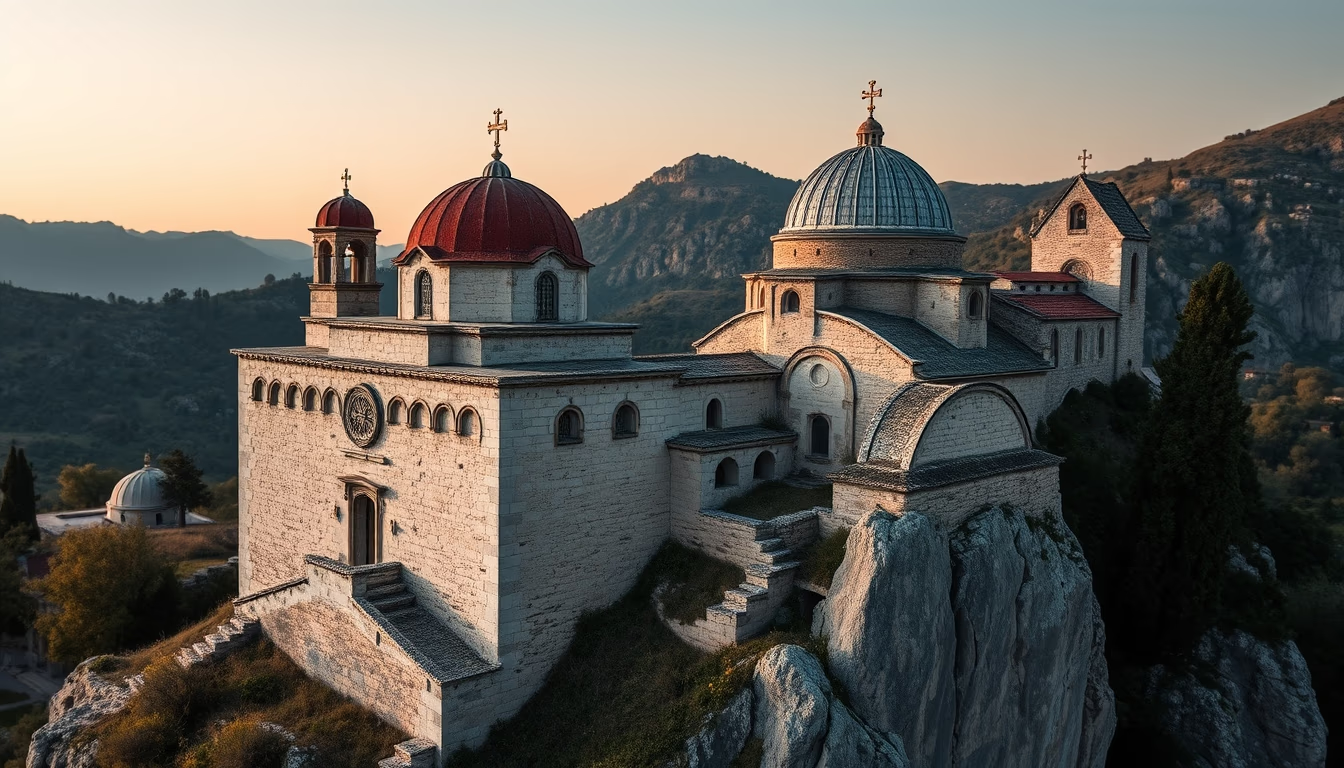
The Meteora monasteries in Greece are a complex of Orthodox monasteries built atop natural rock pillars, a UNESCO World Heritage site since 1988.
About this subject
Located in the plain of Thessaly near the town of Kalambaka, the Meteora monasteries are renowned for their unique geology: massive pillars of conglomerate and sandstone rising up to 400 meters, sculpted by erosion over millions of years. On top of these inaccessible formations, hermit monks began settling as early as the 11th century, but it was from the 14th century onward that the first monasteries were built during the instability of the Byzantine Empire. At their peak, there were 24 monasteries; today only six remain active and open to visitors: the Great Meteoron (Monastery of the Transfiguration), Varlaam, Rousanou, Saint Stephen, Holy Trinity, and Saint Nicholas Anapafsas.
Originally, access to the monasteries was extremely precarious: monks used baskets hoisted by ropes or retractable ladders, which were pulled up in case of danger. This configuration provided natural protection against invaders but also required a life of isolation and devotion. Today, staircases carved into the rock and footbridges allow tourists to reach them, but the sense of verticality and the vastness of the landscape still impress. Each monastery has its own history and collection, with Byzantine frescoes, illuminated manuscripts, and valuable icons.
Culturally, Meteora represents one of the most important centers of Greek Orthodox spirituality, comparable to Mount Athos. Its name means "suspended in air," reflecting the elevated location and ethereal atmosphere. The site has also served as a filming location for movies such as the James Bond film "For Your Eyes Only" (1981) and the series "Game of Thrones." Tourism is intense, especially during summer, but it is still possible to find moments of tranquility in the less visited monasteries, such as Saint Stephen's. UNESCO recognized the complex as a World Heritage site in 1988.
The monasteries continue to be administered by monastic communities that preserve liturgical traditions and hospitality. Visitation requires respect for rules: appropriate clothing (shoulders and knees covered), silence, and permission to photograph in specific areas. The experience of observing these centuries-old buildings balanced atop vertical rocks is a testament to human ingenuity and the spiritual quest in harmony with nature.
Frequently Asked Questions
How many monasteries are there in Meteora today?
There are currently six active monasteries open to visitors: Great Meteoron, Varlaam, Rousanou, Saint Stephen, Holy Trinity, and Saint Nicholas Anapafsas. Originally there were 24, but many were abandoned or destroyed over the centuries.
What is the best time to visit Meteora?
Spring (April to June) and autumn (September to October) offer mild weather and fewer crowds. Summer is hot and very busy; winter can be cold with snow, but the landscape is equally beautiful.
Do I need to pay to enter the monasteries?
Yes, each monastery charges an entrance fee (about 3 euros) for maintenance. There is also a dress code: shoulders and knees must be covered. Women are usually required to wear long skirts, but some monasteries provide wraps at the entrance.
Direct URL
https://pub-c7d6a6ea828543ac903a74a341ccb2e1.r2.dev/imagens/meteora-monasteries-greece-macro-closeup-p3.avifHow to credit
Include a visible link back to UtilizAí. Copy one of the snippets below:
<a href="https://xn--utiliza-eza.com/en/midia/imagens/meteora-monasteries-greece-macro-closeup-p3">Meteora monasteries greece</a> by <a href="https://xn--utiliza-eza.com">UtilizAí</a>, licensed under <a href="https://creativecommons.org/licenses/by/4.0/">CC BY 4.0</a>.
[Meteora monasteries greece](https://xn--utiliza-eza.com/en/midia/imagens/meteora-monasteries-greece-macro-closeup-p3) by [UtilizAí](https://xn--utiliza-eza.com), CC BY 4.0
License: CC-BY-4.0