Meteora monasteries greece
1344×768 · AVIF · CC BY 4.0
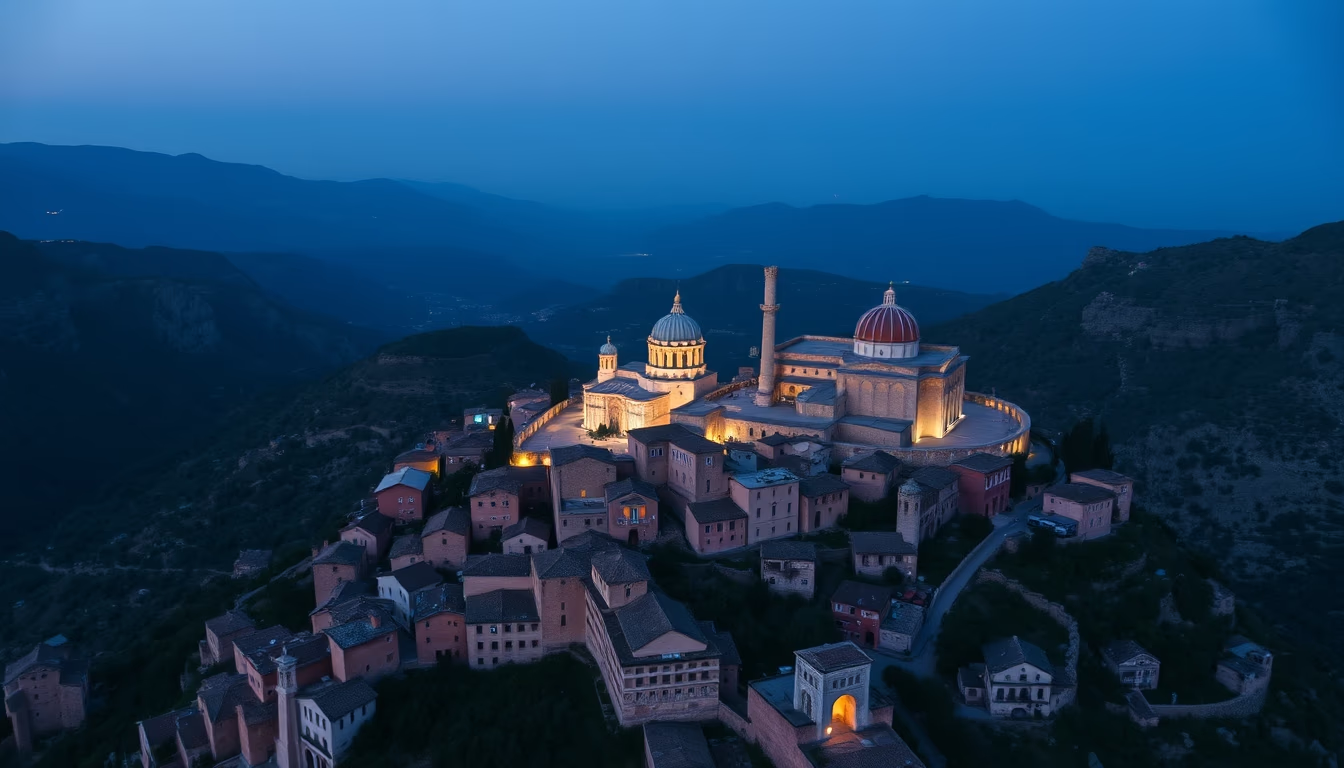
The Meteora monasteries in Greece, a UNESCO World Heritage site, are built atop towering rock pillars.
About this subject
Located in the region of Thessaly in central Greece, the Meteora monasteries are among the largest and most important monastic complexes in the world. The name Meteora means "suspended in the air," a fitting description for the structures perched atop enormous pillars of sandstone and conglomerate rock, formed millions of years ago by geological erosion. The unique landscape was shaped by tectonic movements and river action over eons, creating rock formations that rise up to 400 meters above the valley floor.
Originally, in the 14th century, hermit monks sought spiritual isolation and ascended these formations using retractable ladders and nets. The first monastery, Great Meteoron, was founded around 1350 by Saint Athanasius. At its peak, there were 24 monasteries, of which six remain active and open to the public: Great Meteoron, Varlaam, Rousanou, Saint Stephen, Holy Trinity, and Saint Nicholas Anapausas. They house valuable treasures such as Byzantine frescoes, religious icons, and illuminated manuscripts.
The cultural significance of Meteora extends beyond religion; it symbolizes resilience and faith, having served as a refuge during Ottoman invasions. Since 1988, it has been a UNESCO World Heritage site and a protected natural monument. Today, it is one of Greece's most visited tourist destinations, attracting pilgrims and travelers from around the world who come to admire the monastic architecture integrated into the wild nature. Access was facilitated with stairs and bridges, though original construction required climbing and ropes.
Interestingly, the 1996 film "Mission: Impossible" used the Varlaam Monastery as a setting, and the region inspired the design of landscapes in games like "Assassin's Creed Odyssey." The surrounding vegetation is dominated by oaks, cypresses, and pines, contrasting with the bare rocks. Tourism, while economically beneficial, requires balance to preserve the fragile environment and monastic silence.
Frequently Asked Questions
How many Meteora monasteries are open to the public today?
Currently, six monasteries are active and open to visitors: Great Meteoron, Varlaam, Rousanou, Saint Stephen, Holy Trinity, and Saint Nicholas Anapausas. They maintain monastic routines and receive tourists during specific hours.
What is the best time to visit the Meteora monasteries?
Spring (April to June) and autumn (September to November) offer mild weather and fewer crowds. Winter can be cold and foggy, while summer is hot and busy. Check opening hours as they may vary by season.
How did the monks build the monasteries on top of the rocks?
The monks used ropes, retractable ladders, and nets to ascend the cliffs. Building materials were hoisted using pulleys and manpower. This technique ensured isolation and defense. Today, stairs and bridges ease access.
Direct URL
https://pub-c7d6a6ea828543ac903a74a341ccb2e1.r2.dev/imagens/meteora-monasteries-greece-aerial-drone-shot-p2.avifHow to credit
Include a visible link back to UtilizAí. Copy one of the snippets below:
<a href="https://xn--utiliza-eza.com/en/midia/imagens/meteora-monasteries-greece-aerial-drone-shot-p2">Meteora monasteries greece</a> by <a href="https://xn--utiliza-eza.com">UtilizAí</a>, licensed under <a href="https://creativecommons.org/licenses/by/4.0/">CC BY 4.0</a>.
[Meteora monasteries greece](https://xn--utiliza-eza.com/en/midia/imagens/meteora-monasteries-greece-aerial-drone-shot-p2) by [UtilizAí](https://xn--utiliza-eza.com), CC BY 4.0
License: CC-BY-4.0