Meteor shower over forest
1344×768 · AVIF · CC BY 4.0
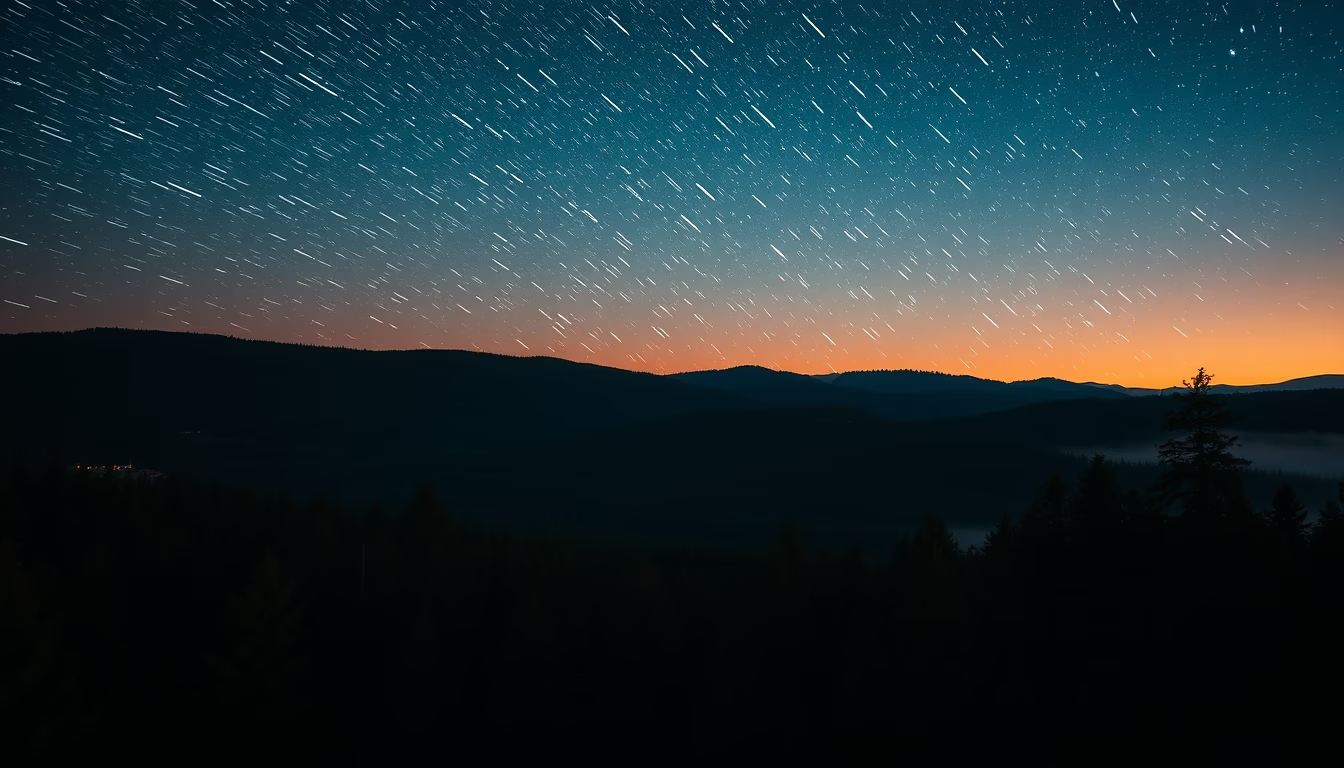
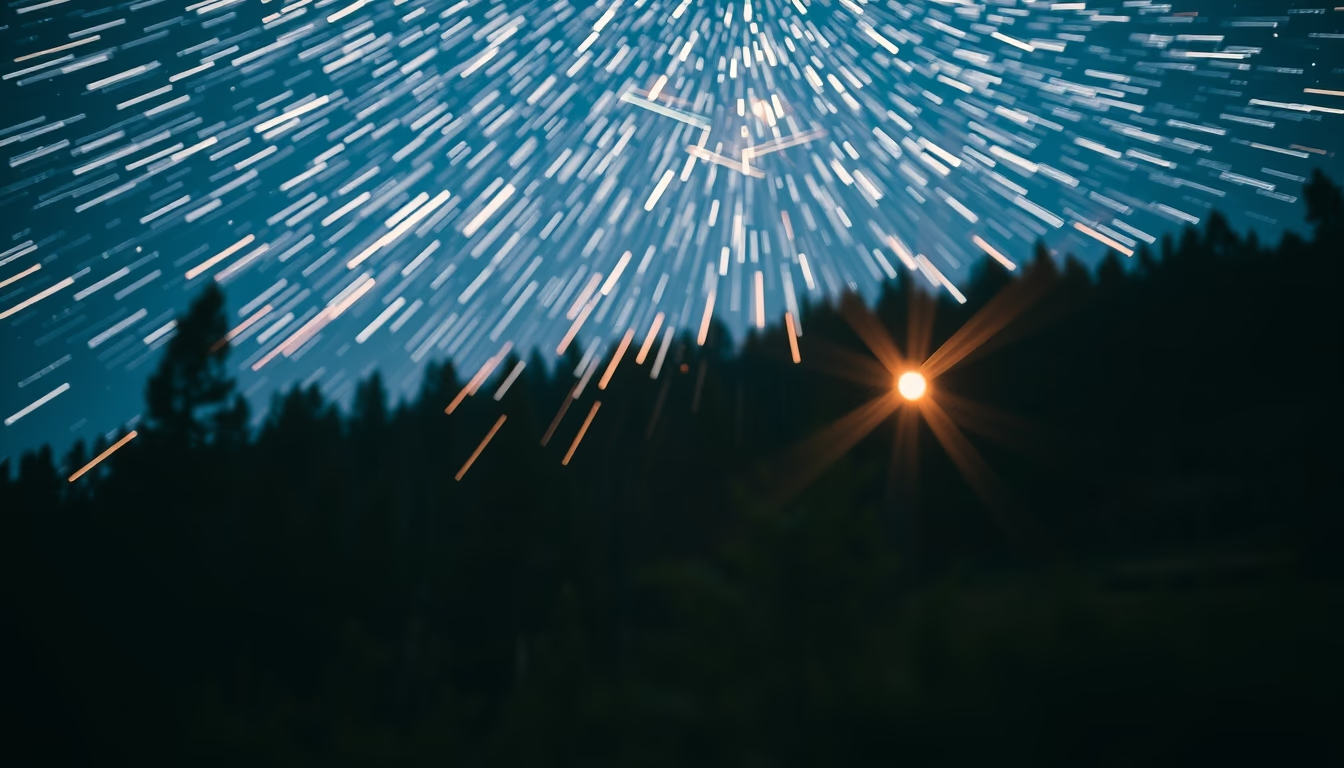
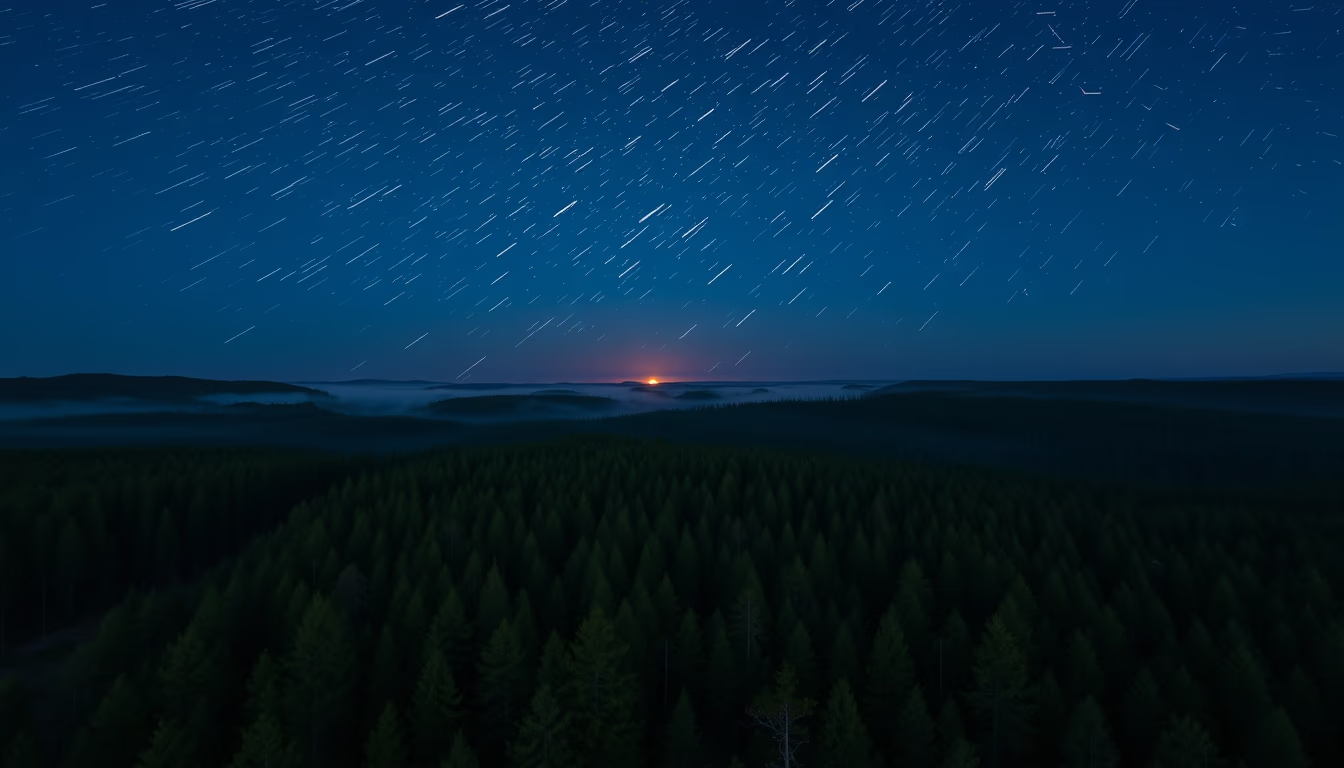
Meteor shower over a forest: understand the astronomical phenomenon that lights up the sky on dark, remote nights.
About this subject
Meteor showers occur when Earth passes through debris left by comets or asteroids. Particles, often the size of sand grains, burn up upon entering the atmosphere at high speeds, creating bright streaks known as meteors. Famous showers like the Perseids (August) and Geminids (December) can produce dozens to hundreds of meteors per hour under ideal conditions.
A dark forest landscape is the perfect setting for observation because light pollution from cities severely hampers visibility. National parks and remote areas, such as Brazil's Caparaó National Park or the United States' Black Hills National Forest, are often recommended by amateur astronomers for astrophotography. The clean sky combined with an unobstructed horizon enhances the spectacle.
Meteors can display various colors: green, blue, yellow, or red, depending on the chemical composition of the material and entry velocity. The presence of a forest in the frame adds scale and depth, emphasizing the vastness of the sky. To capture images like this, photographers use wide-angle lenses with wide apertures (f/1.4 to f/2.8) and long exposures of 15 to 30 seconds, adjusting ISO to balance starlight and meteor trails.
Culturally, meteors are associated with wishes and superstitions in many traditions. In Brazil, there are records of indigenous observations of meteor showers, such as the Tupi-Guarani legend of 'falling stars' being souls traveling to the sky. Modern science, however, allows precise prediction of shower peaks, enabling enthusiasts to plan their observations.
Frequently Asked Questions
What is the best time to watch meteor showers?
It depends on the shower. The Perseids peak in August, the Geminids in December, and the Quadrantids in January. Check annual astronomical calendars for exact dates and favorable Moon phases.
Do I need special equipment to see meteors?
No, meteors are visible to the naked eye. For photography, use a camera with a wide-angle lens, tripod, and remote shutter. A dark location without light pollution is essential.
Why are forests recommended for observation?
Remote forests usually have low light pollution and open horizons. Additionally, the dark vegetation does not reflect artificial light, contrasting with the starry sky.
Direct URL
https://pub-c7d6a6ea828543ac903a74a341ccb2e1.r2.dev/imagens/meteor-shower-over-forest-cinematic-wide-shot-p3.avifHow to credit
Include a visible link back to UtilizAí. Copy one of the snippets below:
<a href="https://xn--utiliza-eza.com/en/midia/imagens/meteor-shower-over-forest-cinematic-wide-shot-p3">Meteor shower over forest</a> by <a href="https://xn--utiliza-eza.com">UtilizAí</a>, licensed under <a href="https://creativecommons.org/licenses/by/4.0/">CC BY 4.0</a>.
[Meteor shower over forest](https://xn--utiliza-eza.com/en/midia/imagens/meteor-shower-over-forest-cinematic-wide-shot-p3) by [UtilizAí](https://xn--utiliza-eza.com), CC BY 4.0
License: CC-BY-4.0