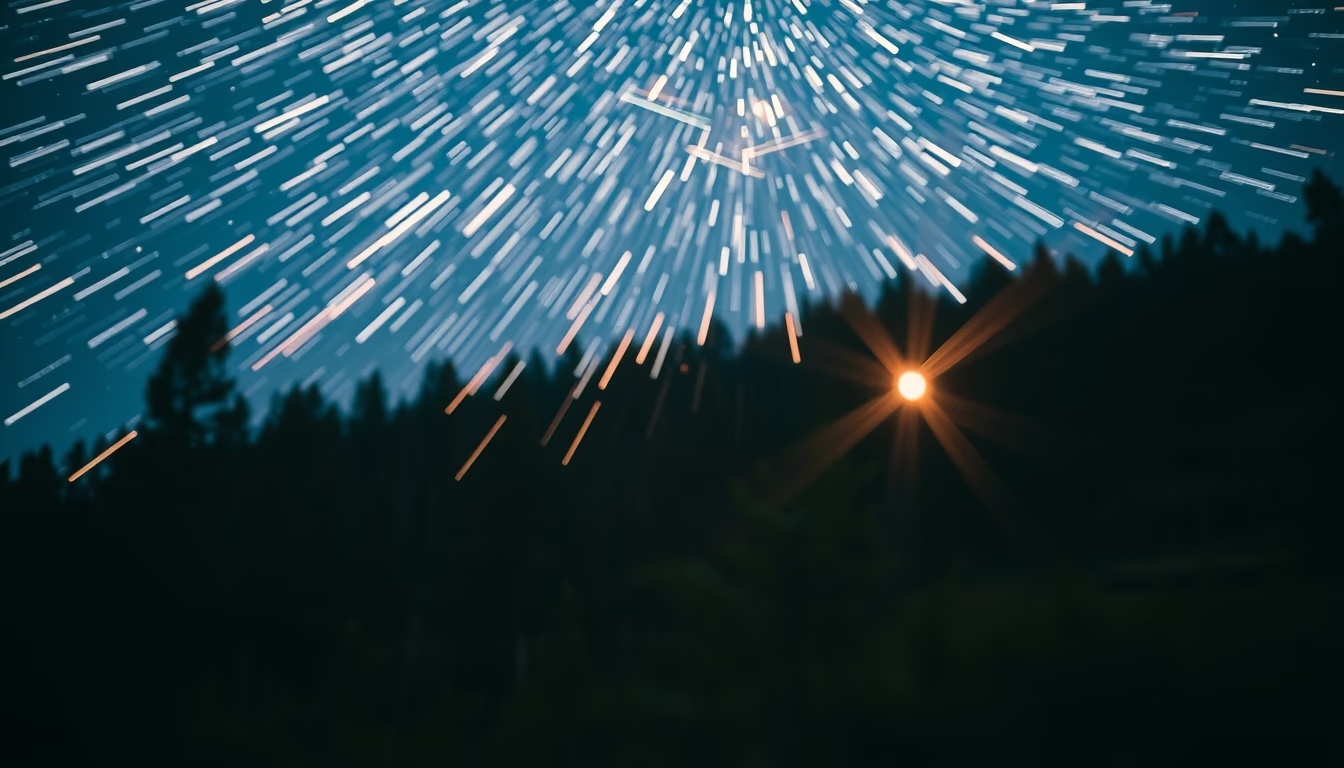
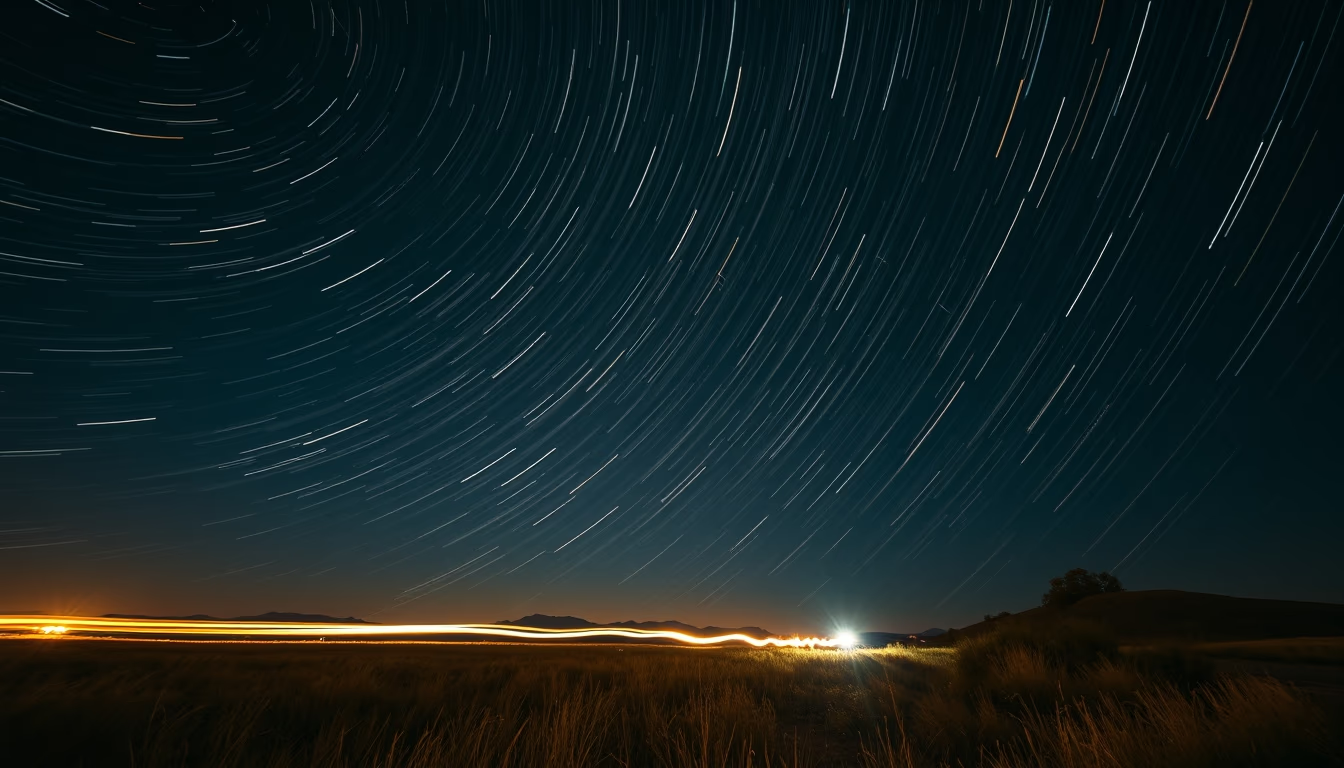
Meteor shower over forest
1344×768 · AVIF · CC BY 4.0
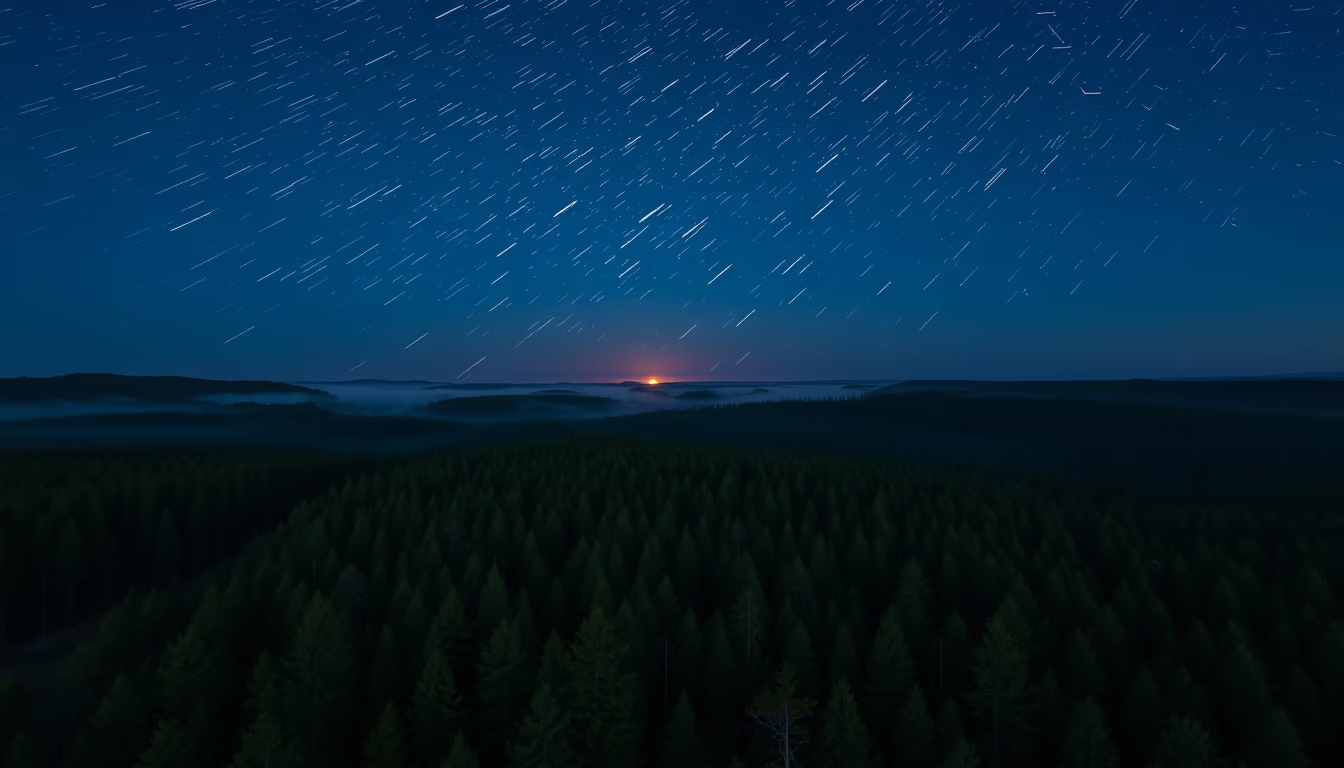
A meteor shower over a forest, captured by aerial drone, highlights the astronomical spectacle in protected natural settings.
About this subject
Meteor showers are astronomical phenomena that occur when Earth passes through the orbit of a comet or asteroid, leaving a trail of particles that burn upon entering the atmosphere. These events can be seen with the naked eye, but urban light pollution often obscures them. Forests and remote areas, like the one depicted in the image, offer dark skies ideal for observation, allowing up to 100 meteors per hour during the peaks of major showers such as the Perseids (August) and Geminids (December).
In Brazil, meteor showers can be observed nationwide, but the best locations include areas with low population density and high altitude, such as Chapada dos Veadeiros and Serra da Canastra National Park. The forest shown likely lies within an environmental protection zone, where the absence of artificial light enhances meteor brightness. Aerial photography with drones enables unique angles that showcase the vastness of the sky contrasting with the treetops.
Historically, meteors have inspired mythology and superstition across cultures. Ancient Greeks associated them with gods; the Tupi-Guarani people saw them as warriors' souls. Today, science studies them to understand the solar system's composition. Campaigns like “Earth Hour” encourage reducing light pollution to preserve these natural spectacles.
Interesting fact: The word “meteor” comes from Greek “meteoros,” meaning “suspended in air.” The particles are typically sand-sized but travel at speeds up to 70 km/s. Each year, over 20 meteor showers are recorded, with the Perseids being the most popular due to their occurrence during the Northern Hemisphere summer.
Frequently Asked Questions
What is the best time to observe meteor showers in Brazil?
Major meteor showers visible in Brazil include the Perseids (peak in August), Geminids (December), and Quadrantids (January). Best conditions are on moonless nights away from light pollution.
Why are forests good places to watch meteors?
Forests are usually far from urban centers, reducing light pollution. Additionally, the absence of tall buildings provides a wide horizon, essential for spotting meteors streaking across the sky in various directions.
Is it dangerous if a meteor falls to Earth?
Most meteors burn up completely in the atmosphere. Only larger fragments may reach the ground as meteorites, but they are extremely rare and rarely cause damage.
Direct URL
https://pub-c7d6a6ea828543ac903a74a341ccb2e1.r2.dev/imagens/meteor-shower-over-forest-aerial-drone-shot-p5.avifHow to credit
Include a visible link back to UtilizAí. Copy one of the snippets below:
<a href="https://xn--utiliza-eza.com/en/midia/imagens/meteor-shower-over-forest-aerial-drone-shot-p5">Meteor shower over forest</a> by <a href="https://xn--utiliza-eza.com">UtilizAí</a>, licensed under <a href="https://creativecommons.org/licenses/by/4.0/">CC BY 4.0</a>.
[Meteor shower over forest](https://xn--utiliza-eza.com/en/midia/imagens/meteor-shower-over-forest-aerial-drone-shot-p5) by [UtilizAí](https://xn--utiliza-eza.com), CC BY 4.0
License: CC-BY-4.0