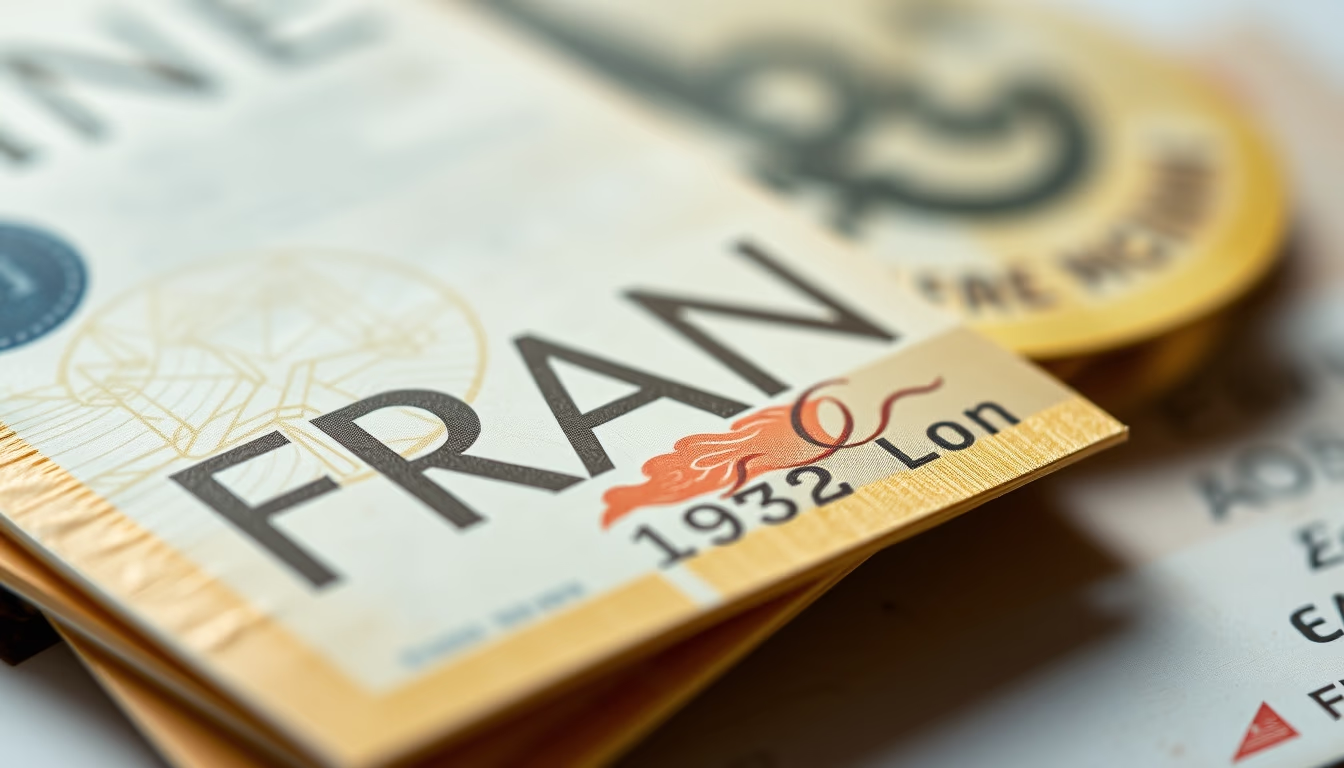
Medieval florin gold
1344×768 · AVIF · CC BY 4.0

The medieval gold florin, first minted in Florence in 1252, set the standard for European trade for centuries.
About this subject
The gold florin (fiorino d'oro) emerged in the Republic of Florence in 1252, during a period of commercial expansion and the strengthening of Italian city-states. It was a pure gold coin weighing approximately 3.5 grams, minted with high fineness (about 24 carats). Its creation aimed to facilitate international trade, replacing the less stable silver coins. The name "florin" derives from the fleur-de-lis (giglio), the symbol of Florence, which was stamped on the obverse of the coin.
The design of the florin was distinctive: on one side, the fleur-de-lis represented the city; on the other, the image of Saint John the Baptist, the patron saint of Florence. This visual standardization and the guarantee of gold purity quickly earned the coin trust. The florin became a reference currency in medieval Europe, used in transactions ranging from the spice trade to financing crusades. Its influence was so great that other cities and kingdoms began minting similar coins, such as the Venetian ducat and the Hungarian florin.
Economically, the florin played a crucial role in the development of the banking system and bills of exchange. Florentine bankers, such as the Medici, used the florin as backing for financial operations across Europe. The coin was also fundamental to the expansion of trade with the East, being accepted in markets like Constantinople and Alexandria. The stability of the florin contrasted with the constant devaluation of many local currencies, making it preferred by merchants and rulers.
The legacy of the florin persists today: the name "florin" gave rise to later currencies, such as the Hungarian forint and the Dutch guilder. Moreover, the minting technique and purity standard established in Florence influenced worldwide numismatics. The medieval gold florin is thus more than a simple coin; it is a symbol of the economic and cultural power of Renaissance Florence and the interconnectedness of medieval trade.
Frequently Asked Questions
What was the medieval gold florin?
It was a pure gold coin minted in Florence from 1252, weighing about 3.5 grams and 24 carats. It became a commercial standard in Europe due to its purity and reliability.
Why was the florin so important?
The florin facilitated international trade by providing a stable and widely accepted currency. It was used in long-distance transactions, boosted the banking system, and influenced other coins like the Hungarian forint and Dutch guilder.
What was the design of the florin?
The obverse featured a fleur-de-lis (symbol of Florence) and the reverse depicted Saint John the Baptist. The design was standardized and guaranteed the coin's authenticity.
Direct URL
https://pub-c7d6a6ea828543ac903a74a341ccb2e1.r2.dev/imagens/medieval-florin-gold-documentary-photography-fresh17.avifHow to credit
Include a visible link back to UtilizAí. Copy one of the snippets below:
<a href="https://xn--utiliza-eza.com/en/midia/imagens/medieval-florin-gold-documentary-photography-fresh17">Medieval florin gold</a> by <a href="https://xn--utiliza-eza.com">UtilizAí</a>, licensed under <a href="https://creativecommons.org/licenses/by/4.0/">CC BY 4.0</a>.
[Medieval florin gold](https://xn--utiliza-eza.com/en/midia/imagens/medieval-florin-gold-documentary-photography-fresh17) by [UtilizAí](https://xn--utiliza-eza.com), CC BY 4.0
License: CC-BY-4.0