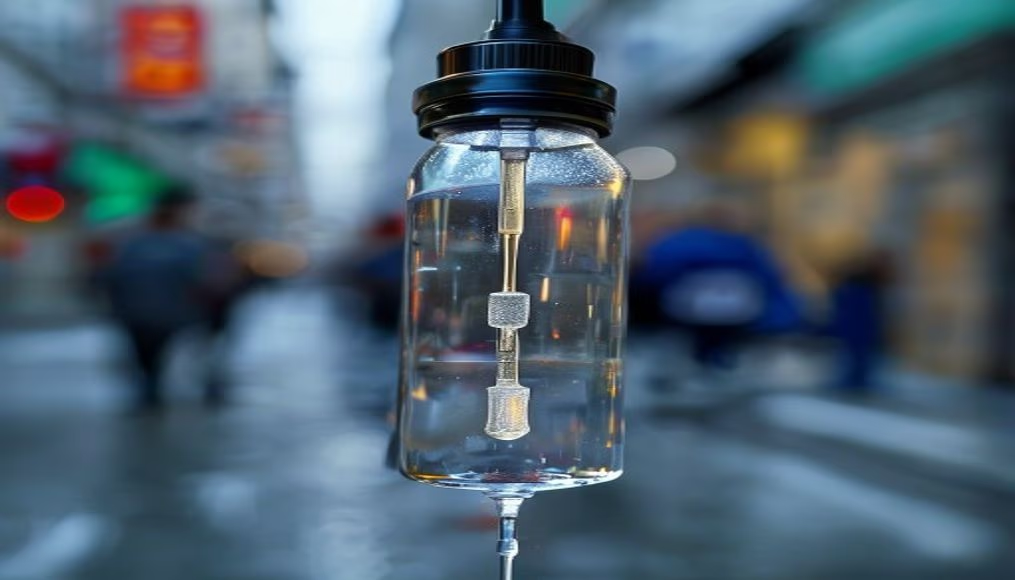
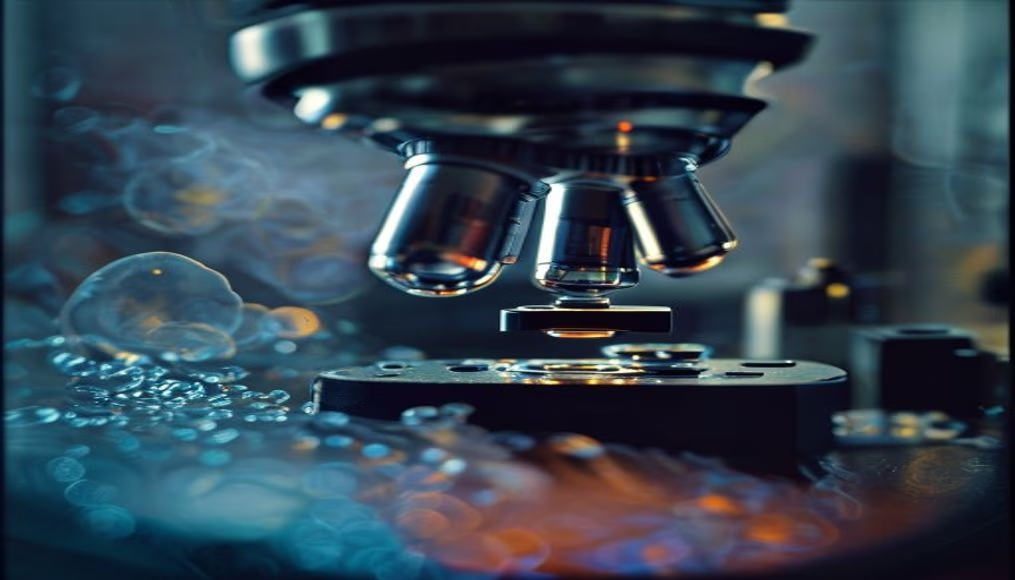
Medical lab glassware blue lighting
1344×768 · AVIF · CC BY 4.0
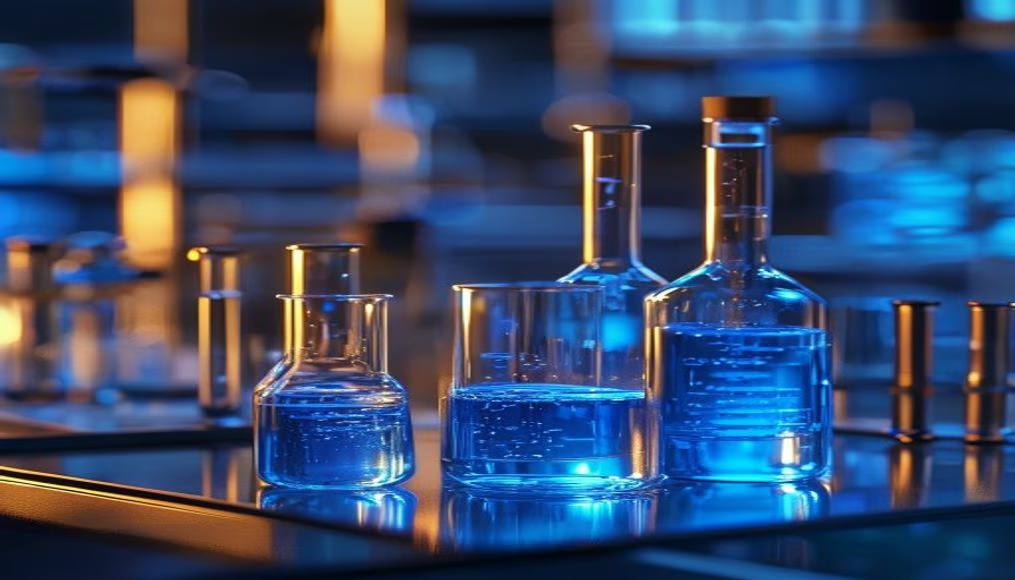
Medical laboratory glassware under blue lighting, essential for clinical analysis and scientific research.
About this subject
Medical laboratory glassware, including beakers, Erlenmeyer flasks, and pipettes, is primarily made of borosilicate glass, which withstands high temperatures and chemical corrosion. Blue lighting, often from UV or LED sources, is used in fluorescence techniques to detect compounds like proteins, nucleic acids, and specific dyes. This illumination not only enhances visualization of reactions but also reduces eye strain during prolonged work.
In clinical settings, glassware undergoes rigorous sterilization processes, such as autoclaving, to prevent cross-contamination. Volumetric flasks and round-bottom flasks are common for titrations and solution preparation. Standardization follows international norms ensuring measurement accuracy. Each glass type has a controlled thermal expansion coefficient to avoid cracking during heating.
Interestingly, blue light (450, 495 nm) excites fluorophores like DAPI (DNA dye) and GFP (green fluorescent protein). In microbiology, Petri dishes and test tubes under UV light reveal bacterial colonies that produce fluorescent pigments, aiding species identification. Disposable glassware, like plastic Pasteur pipettes, also appears under this light, though glass is preferred for reuse and low reactivity.
Safety handling is critical: thermal gloves and protective goggles prevent burns and injuries from shards. Biosafety level 2 or 3 labs require sealed glassware and exhaust systems. Blue lighting does not replace white light for routine tasks but complements advanced imaging and spectroscopy techniques.
Frequently Asked Questions
Why is blue lighting used in medical laboratories?
Blue or UV light excites fluorophores in biological samples, enabling detection of specific molecules like DNA, RNA, and proteins via fluorescence. It is essential in techniques such as real-time PCR and fluorescence microscopy.
What is the most common type of glass used in laboratory glassware?
Borosilicate glass (e.g., Pyrex or Duran) is most common due to its thermal and chemical resistance. It withstands temperature changes without breaking and is inert to most reagents.
How is laboratory glassware sterilized?
Methods include autoclaving (steam under pressure at 121°C), dry heat (oven at 160°C), and chemical sterilization with ethanol or hydrogen peroxide. The choice depends on the material and application.
Direct URL
https://pub-c7d6a6ea828543ac903a74a341ccb2e1.r2.dev/imagens/medical-lab-glassware-blue-lighting-travel-photography-v10.avifHow to credit
Include a visible link back to UtilizAí. Copy one of the snippets below:
<a href="https://xn--utiliza-eza.com/en/midia/imagens/medical-lab-glassware-blue-lighting-travel-photography-v10">Medical lab glassware blue lighting</a> by <a href="https://xn--utiliza-eza.com">UtilizAí</a>, licensed under <a href="https://creativecommons.org/licenses/by/4.0/">CC BY 4.0</a>.
[Medical lab glassware blue lighting](https://xn--utiliza-eza.com/en/midia/imagens/medical-lab-glassware-blue-lighting-travel-photography-v10) by [UtilizAí](https://xn--utiliza-eza.com), CC BY 4.0
License: CC-BY-4.0