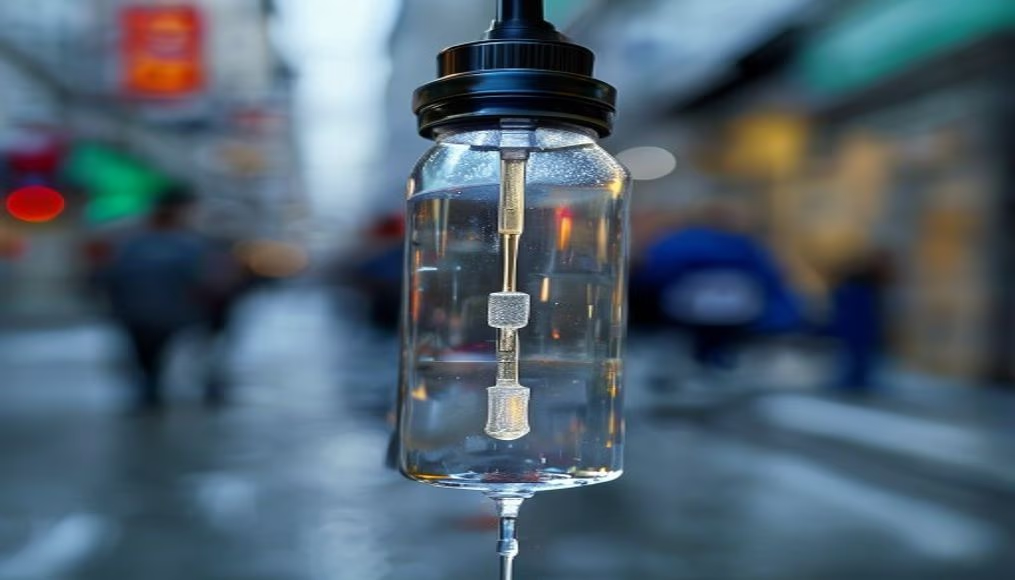
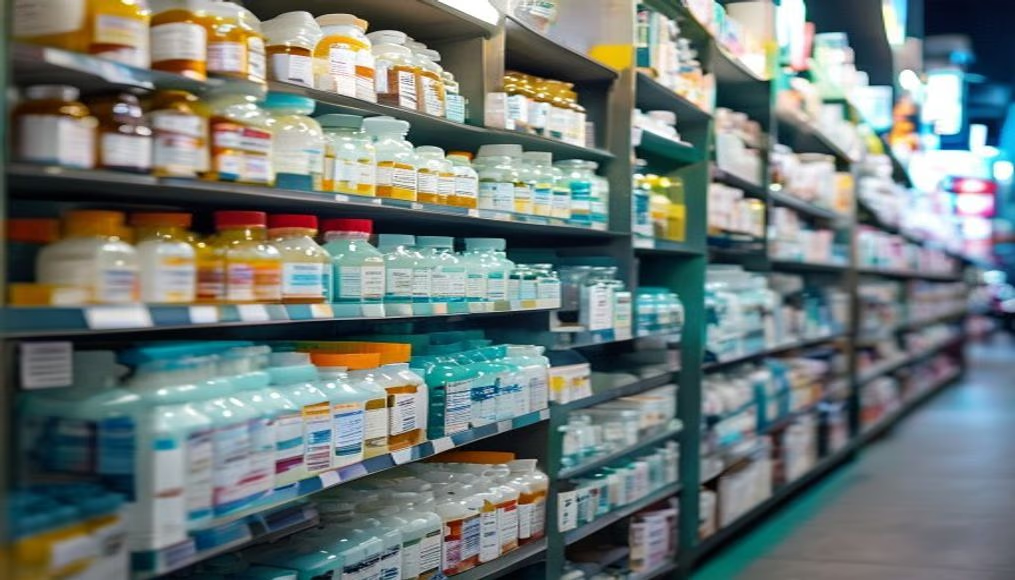
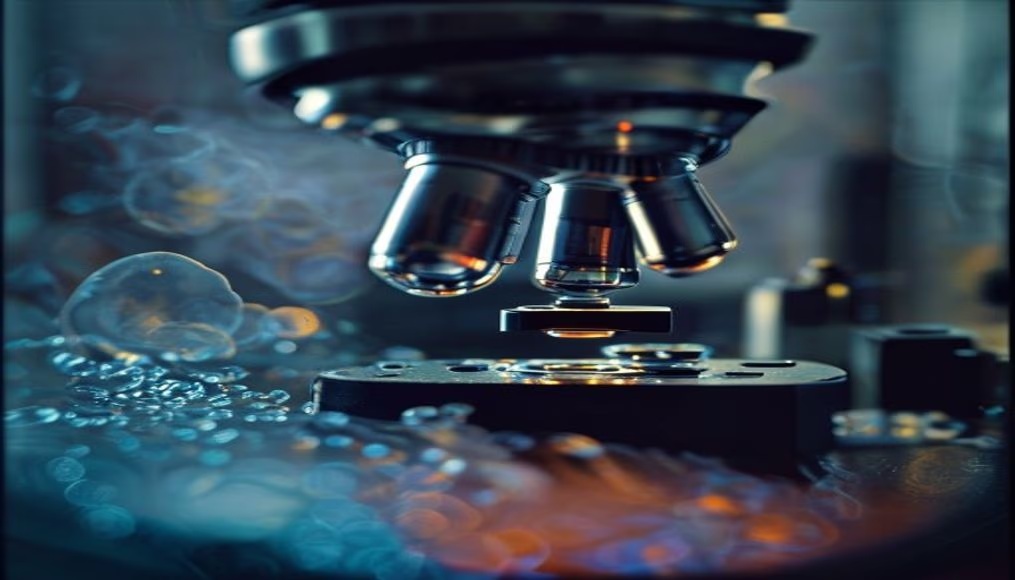
Medical lab glassware blue lighting
1344×768 · AVIF · CC BY 4.0
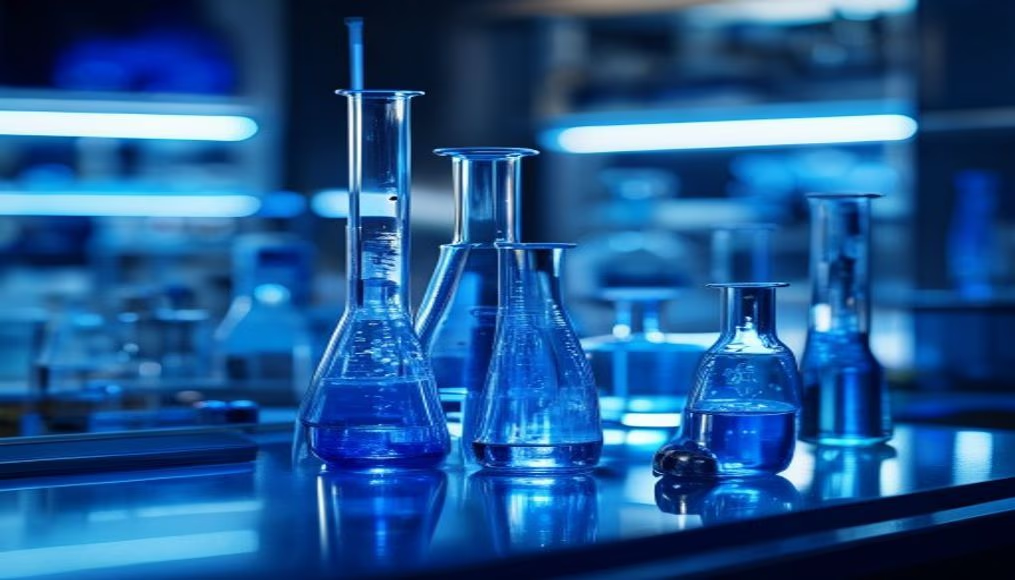
Medical lab glassware under blue lighting: essential for clinical analysis and scientific research.
About this subject
Medical laboratory glassware consists of tools made mainly of borosilicate glass, resistant to thermal shock and chemical reagents. Common items include beakers, test tubes, pipettes, burettes, and volumetric flasks. Each piece has a specific function: measuring precise volumes, mixing substances, heating, or storing samples. Blue lighting, often used in labs, is not merely aesthetic, it enables visualization of fluorescence in molecular tests, such as detecting amplified DNA by PCR, or in urinalysis and bacteriology exams.
In Brazil, glassware is mandatory in health clinics, hospitals, and research centers. The Unified Health System (SUS) uses thousands of units daily for routine exams like blood counts, glucose tests, and rapid screenings. Proper calibration and cleaning of these pieces are crucial to avoid cross-contamination, following Anvisa guidelines. Moreover, laboratory glass is recyclable, and reverse logistics initiatives are growing in the country to reduce waste.
Interestingly, borosilicate glass is chosen for its low thermal expansion coefficient, preventing cracks when subjected to high temperatures. Its transparency allows real-time observation of reactions. In research labs, blue lighting is used together with agarose gels to visualize DNA bands stained with ethidium bromide. This technique is fundamental in forensic genetics, diagnosis of hereditary diseases, and pathogen identification.
Photography of glassware under blue light also has educational and artistic appeal, used in textbooks and scientific journal covers. It highlights the precision and beauty of science, inviting the public to appreciate the work of technicians and researchers. In Brazil, university labs and health surveillance centers adopt this lighting to facilitate sample identification and reduce errors.
Frequently Asked Questions
Why is laboratory glassware made of borosilicate glass?
Borosilicate glass is resistant to high temperatures and thermal shock, and is chemically inert. This prevents contamination and allows heating or sterilizing without cracking.
What is the function of blue lighting in medical labs?
Blue light is used to visualize fluorescence in molecular tests, such as detecting DNA in agarose gels stained with ethidium bromide. It also helps highlight samples and reduce identification errors.
How is laboratory glassware disposed of in Brazil?
Broken or contaminated glassware is classified as infectious waste (Group A) by Anvisa. It must be disposed of in rigid containers and, if recyclable, undergoes decontamination before recycling.
Direct URL
https://pub-c7d6a6ea828543ac903a74a341ccb2e1.r2.dev/imagens/medical-lab-glassware-blue-lighting-street-photography-v11.avifHow to credit
Include a visible link back to UtilizAí. Copy one of the snippets below:
<a href="https://xn--utiliza-eza.com/en/midia/imagens/medical-lab-glassware-blue-lighting-street-photography-v11">Medical lab glassware blue lighting</a> by <a href="https://xn--utiliza-eza.com">UtilizAí</a>, licensed under <a href="https://creativecommons.org/licenses/by/4.0/">CC BY 4.0</a>.
[Medical lab glassware blue lighting](https://xn--utiliza-eza.com/en/midia/imagens/medical-lab-glassware-blue-lighting-street-photography-v11) by [UtilizAí](https://xn--utiliza-eza.com), CC BY 4.0
License: CC-BY-4.0