Marimba xylophone
1344×768 · AVIF · CC BY 4.0

The marimba is a percussion instrument with wooden bars, originating from Africa and widely used in Latin American music.
About this subject
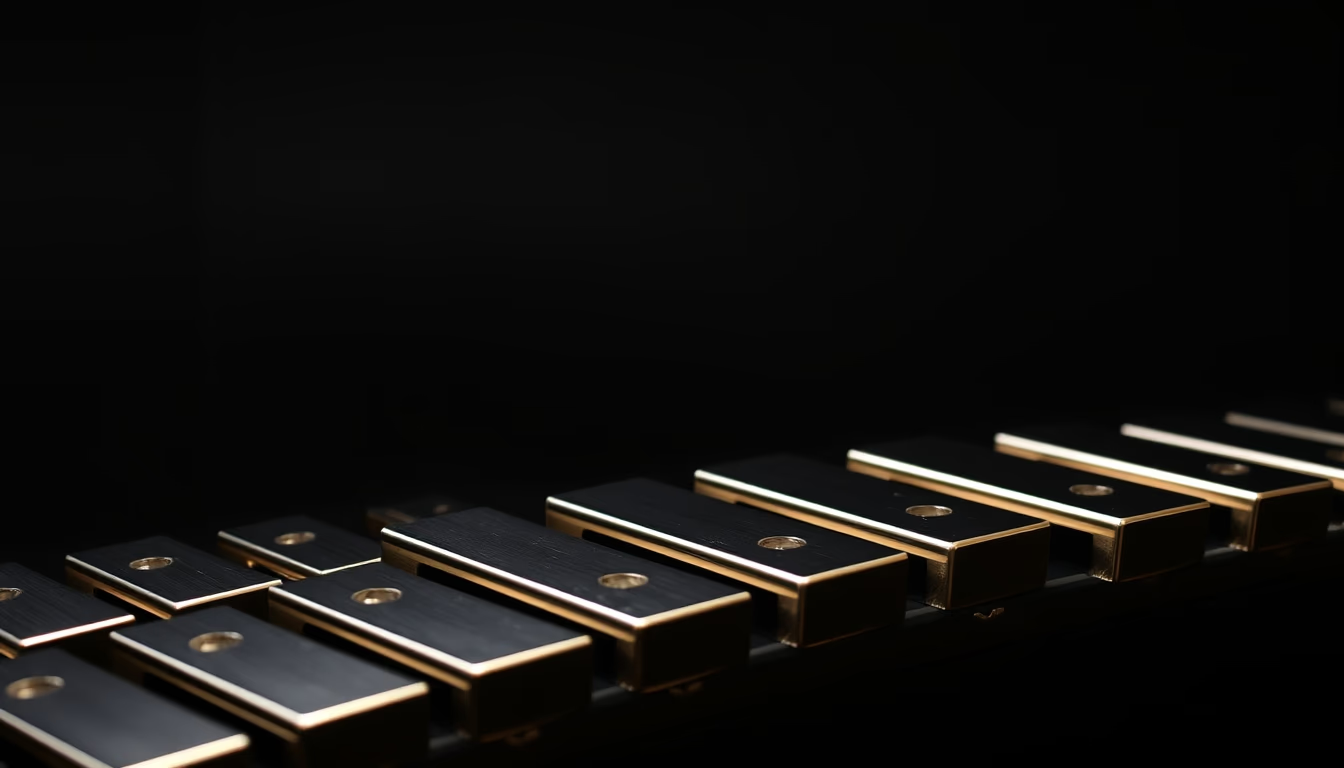
The marimba is a percussion instrument classified as an idiophone, consisting of tuned wooden bars (usually rosewood or padauk) arranged in a chromatic order. Each bar is struck by mallets with heads made of rubber, yarn, or cord, producing a rich and resonant sound. It differs from the xylophone by having tubular resonators (typically metallic) suspended below each bar, which amplify and sustain the timbre. Concert marimbas can have a range of up to five octaves, while more portable versions exist for education and travel.
The origin of the marimba dates back to sub-Saharan Africa, where similar instruments were made with gourds as resonators. During the colonial period, enslaved Africans brought it to Central America. In countries like Guatemala, Mexico, and Nicaragua, the marimba became a national symbol. In Guatemala, it is the national instrument, and the municipality of San Francisco El Alto is famous for its artisanal production. The modern marimba, with a chromatic keyboard and metal resonators, was developed in the early 20th century in the United States by manufacturers such as J.C. Deagan.
In contemporary classical music, the marimba is used in works by composers like Steve Reich (in "Music for Pieces of Wood") and in solo or ensemble pieces. In popular music, it is prominent in marimba bands from Chiapas (Mexico) and Colombian cumbia. Advanced techniques include the use of four mallets (two in each hand), allowing chords and fast passages. Concert marimbas feature hardwood bars, such as Honduran rosewood, and aluminum or brass resonators, ensuring sound projection in concert halls.
Interesting fact: the term "marimba" also refers to a type of percussion instrument in Africa, such as the Bantu marimba, made with wooden bars over gourds. UNESCO recognized traditional marimba music from Southern Africa as an Intangible Cultural Heritage of Humanity. In Brazil, the marimba is less common but appears in classical percussion groups and some folk manifestations.
Frequently Asked Questions
What is the difference between a marimba and a xylophone?
The marimba has wider wooden bars and tubular resonators, producing a softer, fuller sound. The xylophone has narrower bars and a drier, brighter sound, usually without individual resonators.
In which musical genres is the marimba most used?
The marimba is traditional in Central American folk music (especially Guatemala and Mexico), Colombian cumbia, and contemporary classical works. It also appears in film scores and jazz.
How is a marimba tuned?
The bars are tuned by sanding the underside, adjusting thickness to achieve the desired frequency. Tuning is chromatic, similar to a piano, covering two to five octaves depending on the model.
Direct URL
https://pub-c7d6a6ea828543ac903a74a341ccb2e1.r2.dev/imagens/marimba-xylophone-studio-editorial-portrait-p0.avifHow to credit
Include a visible link back to UtilizAí. Copy one of the snippets below:
<a href="https://xn--utiliza-eza.com/en/midia/imagens/marimba-xylophone-studio-editorial-portrait-p0">Marimba xylophone</a> by <a href="https://xn--utiliza-eza.com">UtilizAí</a>, licensed under <a href="https://creativecommons.org/licenses/by/4.0/">CC BY 4.0</a>.
[Marimba xylophone](https://xn--utiliza-eza.com/en/midia/imagens/marimba-xylophone-studio-editorial-portrait-p0) by [UtilizAí](https://xn--utiliza-eza.com), CC BY 4.0
License: CC-BY-4.0