Marimba xylophone
1344×768 · AVIF · CC BY 4.0
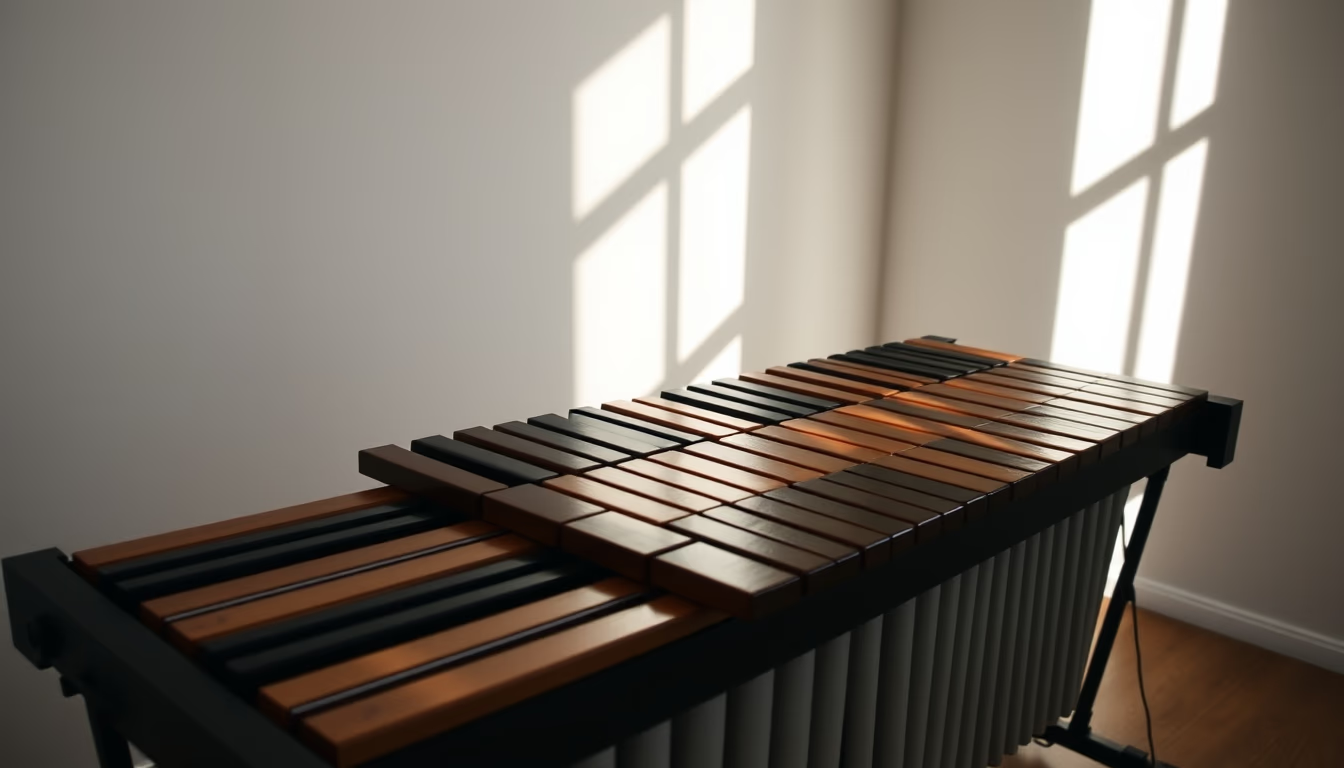
The marimba is a melodic percussion instrument of African origin, consisting of tuned wooden bars and tubular resonators, widely used in classical, jazz, and folk music.
About this subject
The marimba has roots in sub-Saharan Africa, where similar instruments were made with gourds as resonators. During the colonial period, it was brought to the Americas by enslaved people and underwent transformations, especially in Guatemala and Mexico, where it became a national symbol. The modern marimba, with metal or PVC tubular resonators, emerged in the 19th century and allowed for greater sound projection.
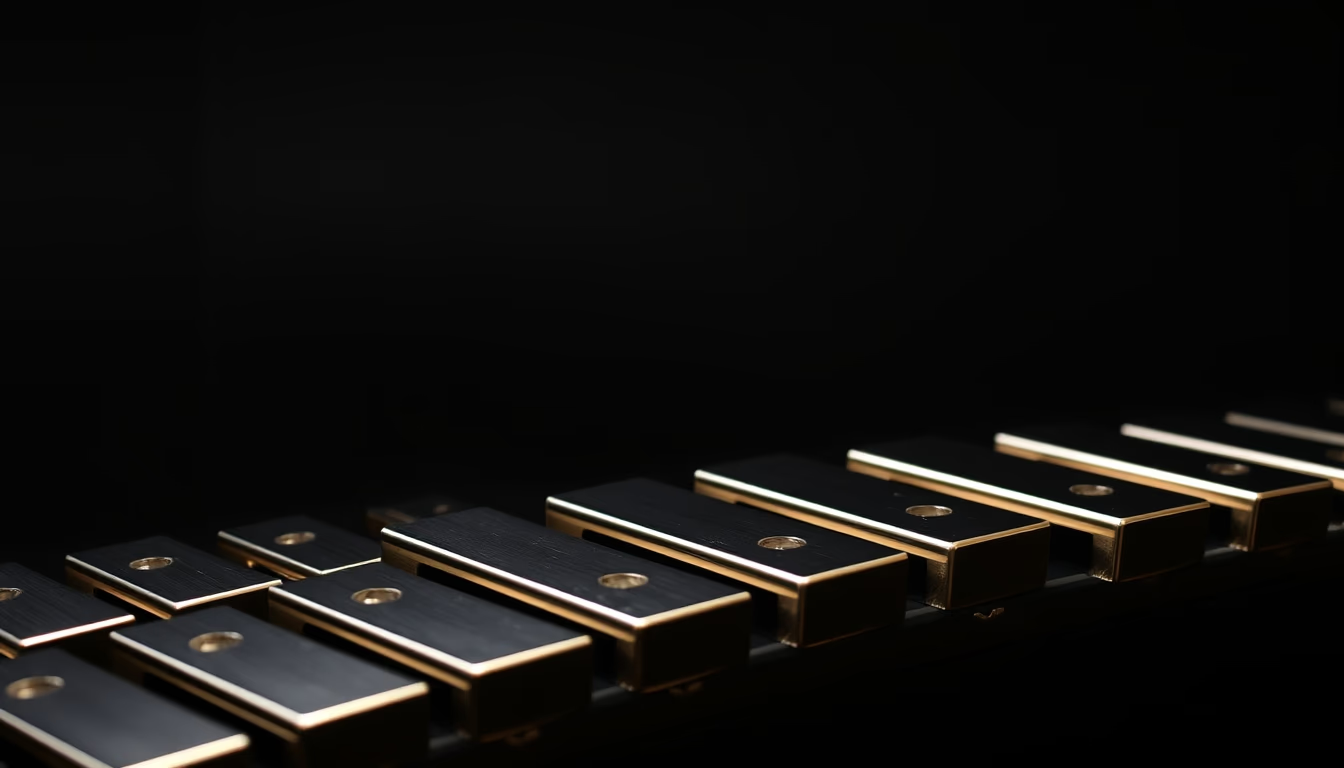
In construction, the bars are carved from hardwoods like rosewood, padouk, or synthetic materials. Each bar is tuned by undercutting on the underside, adjusting thickness. The resonators, tubes of specific length, amplify fundamental frequencies. The instrument is played with mallets having rubber or yarn heads, and players may use up to four mallets for chords. Concert marimbas have a range of 4 to 5 octaves.
In classical music, the marimba appears in works by Darius Milhaud (Concerto for Marimba and Vibraphone), Olivier Messiaen (Trois petites liturgies), and Steve Reich (Music for Pieces of Wood). In jazz, artists like Gary Burton and Dave Samuels popularized the instrument. In Latin America, the marimba is used in salsa ensembles and traditional orchestras of Mexican and Central American folk music.
Compared to the xylophone, the marimba has wider bars and resonators, resulting in a softer, more mellow timbre. The xylophone has a drier, brighter sound, common in marching bands. The marimba requires refined technique for dynamic control and articulation, and is studied in university percussion programs and conservatories.
Frequently Asked Questions
What is the difference between a marimba and a xylophone?
The marimba has wider wooden bars and tubular resonators, producing a mellower, richer sound. The xylophone has smaller bars without resonators, resulting in a drier, brighter tone.
How many octaves does a marimba have?
Concert marimbas typically have 4 to 5 octaves, ranging from C2 to C7. Smaller models may have 3 or 4 octaves.
What is the origin of the marimba?
The marimba originated in sub-Saharan Africa and was brought to Latin America by enslaved people. It developed significantly in Guatemala and Mexico, where it is considered a national instrument.
Direct URL
https://pub-c7d6a6ea828543ac903a74a341ccb2e1.r2.dev/imagens/marimba-xylophone-minimalist-composition-p3.avifHow to credit
Include a visible link back to UtilizAí. Copy one of the snippets below:
<a href="https://xn--utiliza-eza.com/en/midia/imagens/marimba-xylophone-minimalist-composition-p3">Marimba xylophone</a> by <a href="https://xn--utiliza-eza.com">UtilizAí</a>, licensed under <a href="https://creativecommons.org/licenses/by/4.0/">CC BY 4.0</a>.
[Marimba xylophone](https://xn--utiliza-eza.com/en/midia/imagens/marimba-xylophone-minimalist-composition-p3) by [UtilizAí](https://xn--utiliza-eza.com), CC BY 4.0
License: CC-BY-4.0