Marimba xylophone
1344×768 · AVIF · CC BY 4.0

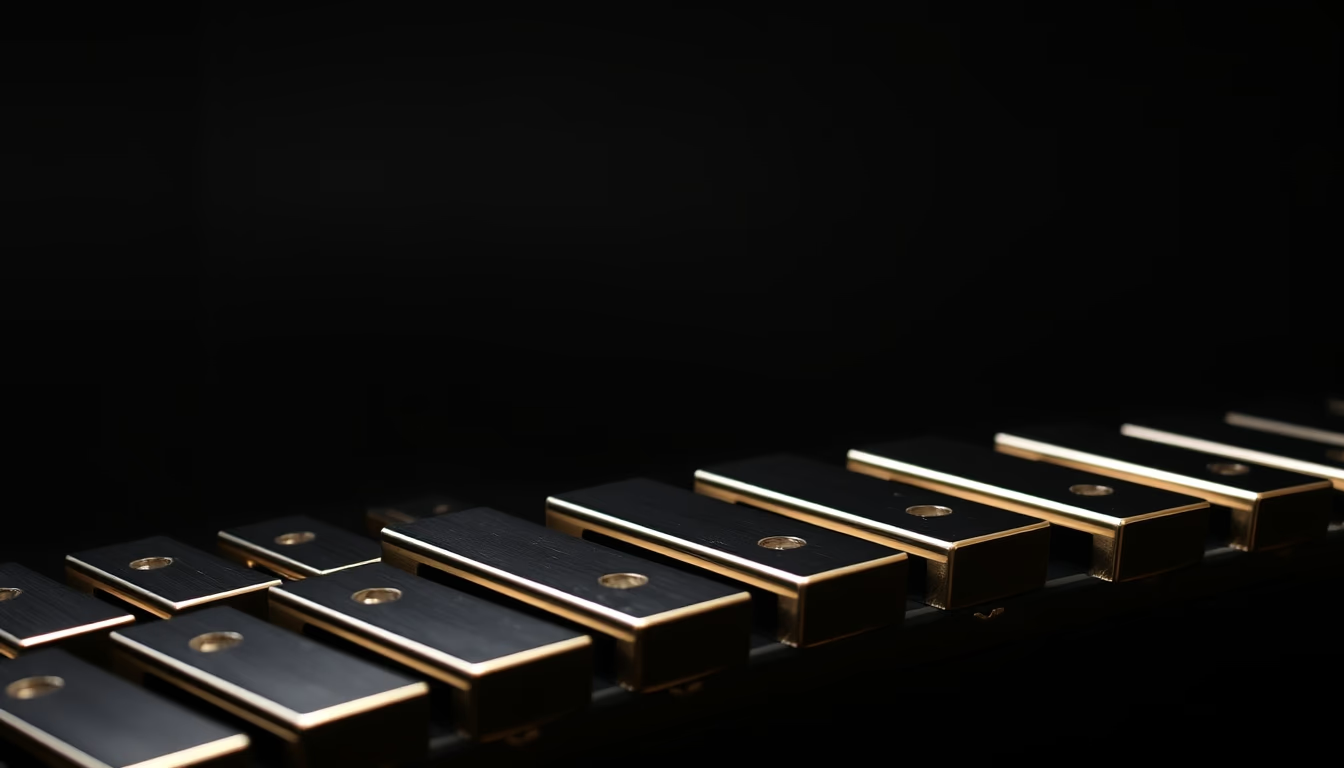
The marimba is a percussion instrument consisting of wooden bars struck by mallets, with resonators that amplify sound, originating in Africa and developed in Central America.
About this subject
The marimba is a percussion instrument similar to the xylophone but with a lower, richer tone. Its origins trace back to Africa, where instruments made from gourds and wooden bars were used in ceremonies. During the colonial period, the marimba was brought to Central America, particularly Guatemala and Mexico, where it was refined. The modern marimba features wooden bars made from rosewood or other hardwoods arranged chromatically, and resonators (metal or wooden tubes) that amplify the notes.
The marimba is the national instrument of Guatemala, a country that contributed significantly to its technical development and repertoire. Artisan marimba construction is a tradition passed down through generations, with families of luthiers dedicated to the craft. Instruments typically range from 3 to 5 octaves, with professional models exceeding 4 octaves. Mallets often have rubber or yarn heads, allowing for varied articulation and dynamics.
In classical music, the marimba gained prominence in the 20th century, with composers like Paul Creston and Darius Milhaud writing works for it. In jazz, artists such as Lionel Hampton and Gary Burton feature it prominently. In Central American popular music, the marimba is a staple in dance bands and folk festivals. Marimbists commonly perform solos or accompany percussion ensembles.
Interesting facts: the marimba is tuned by adjusting air volume in the resonators, and bars are sanded at the ends to refine pitch. The instrument requires independent mallet technique, enabling simultaneous melody and chords. Honduras mahogany wood is often used for bars, providing a warm, resonant timbre.
Frequently Asked Questions
What is the difference between a marimba and a xylophone?
The main difference lies in pitch range and construction. The marimba has wider bars and tubular resonators, producing a lower, richer sound, while the xylophone has a higher, drier sound and often lacks resonators.
What material are marimba bars made from?
Traditional bars are made of rosewood, but other hardwoods like mahogany or padauk are also used. Modern marimbas may incorporate synthetic materials for increased durability.
Where is the marimba most popular?
The marimba is especially popular in Central America, being the national instrument of Guatemala. It is also widely used in Mexico, African countries like Zimbabwe and Mozambique, and in classical percussion ensembles worldwide.
Direct URL
https://pub-c7d6a6ea828543ac903a74a341ccb2e1.r2.dev/imagens/marimba-xylophone-high-fashion-editorial-p9.avifHow to credit
Include a visible link back to UtilizAí. Copy one of the snippets below:
<a href="https://xn--utiliza-eza.com/en/midia/imagens/marimba-xylophone-high-fashion-editorial-p9">Marimba xylophone</a> by <a href="https://xn--utiliza-eza.com">UtilizAí</a>, licensed under <a href="https://creativecommons.org/licenses/by/4.0/">CC BY 4.0</a>.
[Marimba xylophone](https://xn--utiliza-eza.com/en/midia/imagens/marimba-xylophone-high-fashion-editorial-p9) by [UtilizAí](https://xn--utiliza-eza.com), CC BY 4.0
License: CC-BY-4.0