Machu picchu inca
1344×768 · AVIF · CC BY 4.0
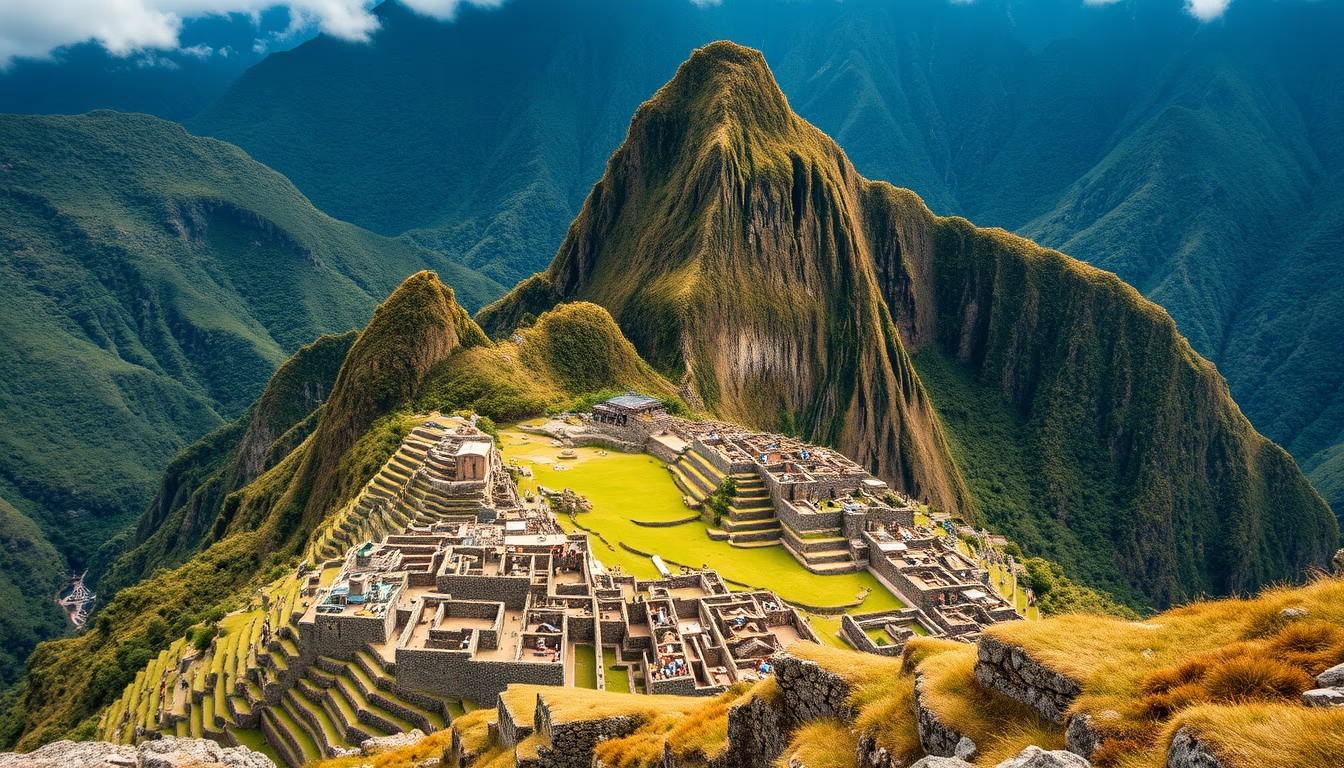
Machu Picchu is the iconic 15th-century Inca citadel in Peru, renowned for its stunning architecture and historical significance.
About this subject
Machu Picchu is an Inca citadel built around 1450, perched on a mountain ridge in the Peruvian Andes at 2,430 meters above sea level. It served as an estate for Emperor Pachacuti, one of the greatest rulers of the Inca Empire. The site combines urban and agricultural sectors, featuring terraces, temples, and water fountains that demonstrate advanced hydraulic engineering and mountain agriculture.
After the Spanish conquest, Machu Picchu was abandoned and never discovered by the invaders, remaining hidden for centuries. In 1911, explorer Hiram Bingham rediscovered it, bringing it to global attention. Since then, it has become one of the most important tourist destinations in the world, attracting millions of visitors annually.
UNESCO declared Machu Picchu a World Heritage Site in 1983, and in 2007 it was named one of the New Seven Wonders of the World. Its architecture is remarkable for the use of dry stone walls fitted perfectly without mortar, a technique that has withstood earthquakes for centuries. The Intihuatana stone and the Temple of the Sun are highlights that reflect Inca astronomy and religion.
Interestingly, the citadel's location was strategically chosen to align with sacred mountains and astronomical events. Construction required intensive labor and geological knowledge to prevent landslides. Even today, new archaeological discoveries continue to reveal details about the life and purpose of this exceptional site.
Frequently Asked Questions
Where is Machu Picchu located?
Machu Picchu is located in Peru, in the Cusco region, on the Eastern Cordillera of the Andes at 2,430 meters above sea level.
Who built Machu Picchu and when?
It was built by the Inca emperor Pachacuti around 1450 as a royal estate and ceremonial center.
Why was Machu Picchu abandoned?
After the Spanish conquest, the city was gradually abandoned, but it was never discovered by the Spanish, remaining hidden until 1911.
Direct URL
https://pub-c7d6a6ea828543ac903a74a341ccb2e1.r2.dev/imagens/machu-picchu-inca-isometric-flat-lay-p7.avifHow to credit
Include a visible link back to UtilizAí. Copy one of the snippets below:
<a href="https://xn--utiliza-eza.com/en/midia/imagens/machu-picchu-inca-isometric-flat-lay-p7">Machu picchu inca</a> by <a href="https://xn--utiliza-eza.com">UtilizAí</a>, licensed under <a href="https://creativecommons.org/licenses/by/4.0/">CC BY 4.0</a>.
[Machu picchu inca](https://xn--utiliza-eza.com/en/midia/imagens/machu-picchu-inca-isometric-flat-lay-p7) by [UtilizAí](https://xn--utiliza-eza.com), CC BY 4.0
License: CC-BY-4.0