Machu picchu inca
1344×768 · AVIF · CC BY 4.0
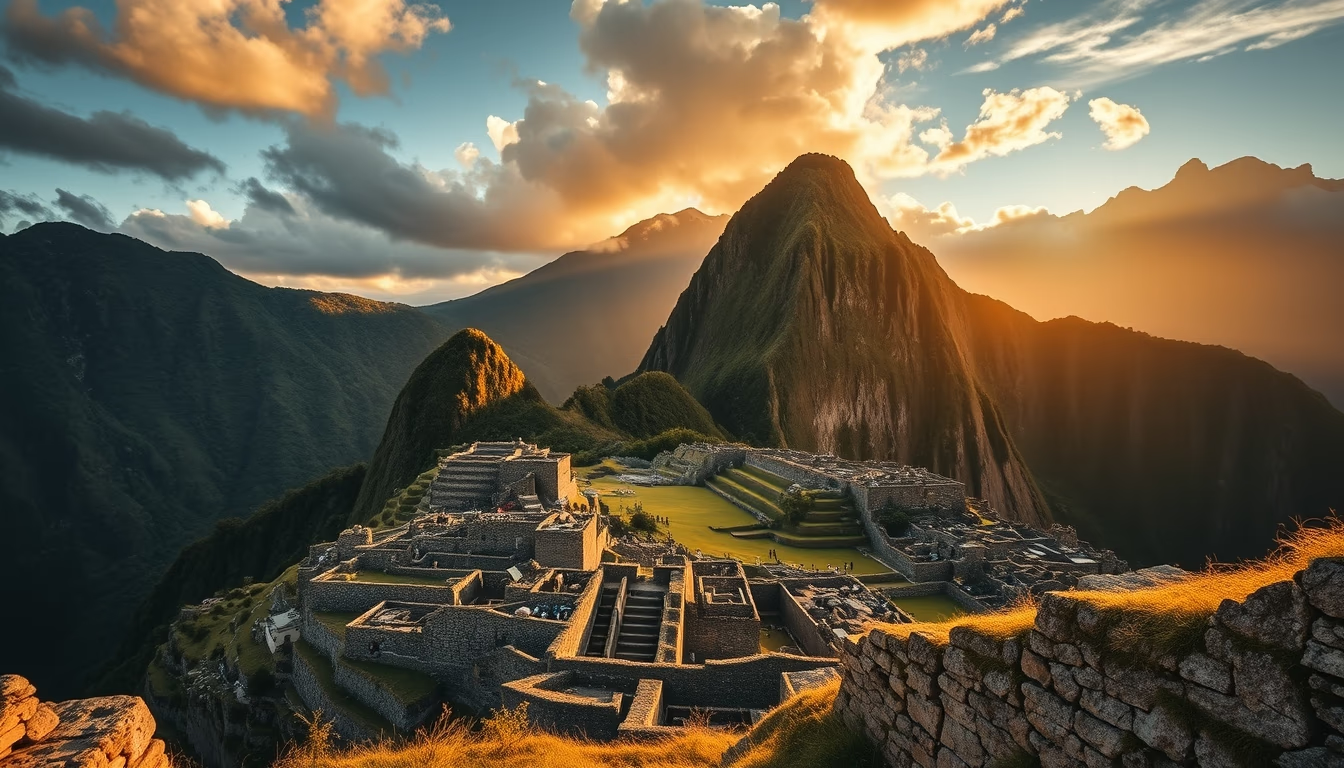
Machu Picchu, the Inca citadel perched high in the Peruvian Andes, is one of the world's most fascinating and visited archaeological sites.
About this subject
Machu Picchu is an ancient Inca citadel set high in the Andes Mountains in Peru, at an elevation of about 2,430 meters above sea level. Built in the 15th century under the reign of Emperor Pachacuti, it is believed to have been a royal estate or a sacred religious site. The site remained unknown to the outside world until 1911, when historian Hiram Bingham brought it to global attention, though local farmers were already aware of its existence. Renowned for its stunning dry-stone walls that fit together without mortar, and its dramatic mountain setting, Machu Picchu was designated a UNESCO World Heritage Site in 1983 and named one of the New Seven Wonders of the World in 2007.
The citadel is divided into two main sectors: the agricultural area, with terraced fields for farming, and the urban sector, containing temples, plazas, and residences. Notable structures include the Temple of the Sun, the Intihuatana (a carved stone used as an astronomical clock), and the Room of the Three Windows. The Incas built Machu Picchu on a geological fault line, requiring advanced drainage and foundation techniques to prevent landslides. An estimated 750 people lived here, but the site was abandoned around 1572, likely due to the Spanish conquest, although the Spanish never discovered it.
Today, Machu Picchu is Peru's most iconic tourist attraction, drawing approximately 1.5 million visitors annually. To protect the site, strict measures have been implemented, including a daily visitor limit and timed entry slots. The Inca Trail, a four-day trek through cloud forests and mountain passes, remains a popular way to reach the citadel. In 2023, new restrictions were added to combat overtourism, such as mandatory guides for small groups. The site also faces threats from climate change, with increased rainfall and landslides endangering its structural integrity.
Frequently Asked Questions
Why was Machu Picchu built in such a high and remote location?
The elevated location offered defensive and religious advantages. The Incas considered mountains sacred, and the altitude brought the city closer to the gods. It also provided opportunities for astronomical observation and control of trade routes.
How did the Incas transport the massive stones to build Machu Picchu?
Stones were quarried locally and moved using earthen ramps, ropes, and human labor. The blocks were precisely carved to fit together without mortar, a technique that made structures earthquake-resistant.
Is Machu Picchu at risk of collapsing?
Yes, there are risks from landslides and erosion, intensified by climate change. UNESCO and the Peruvian government constantly monitor the site and carry out reinforcement work, but overtourism also accelerates deterioration.
Direct URL
https://pub-c7d6a6ea828543ac903a74a341ccb2e1.r2.dev/imagens/machu-picchu-inca-cinematic-wide-shot-p11.avifHow to credit
Include a visible link back to UtilizAí. Copy one of the snippets below:
<a href="https://xn--utiliza-eza.com/en/midia/imagens/machu-picchu-inca-cinematic-wide-shot-p11">Machu picchu inca</a> by <a href="https://xn--utiliza-eza.com">UtilizAí</a>, licensed under <a href="https://creativecommons.org/licenses/by/4.0/">CC BY 4.0</a>.
[Machu picchu inca](https://xn--utiliza-eza.com/en/midia/imagens/machu-picchu-inca-cinematic-wide-shot-p11) by [UtilizAí](https://xn--utiliza-eza.com), CC BY 4.0
License: CC-BY-4.0