Louvre pyramid glass
1344×768 · AVIF · CC BY 4.0
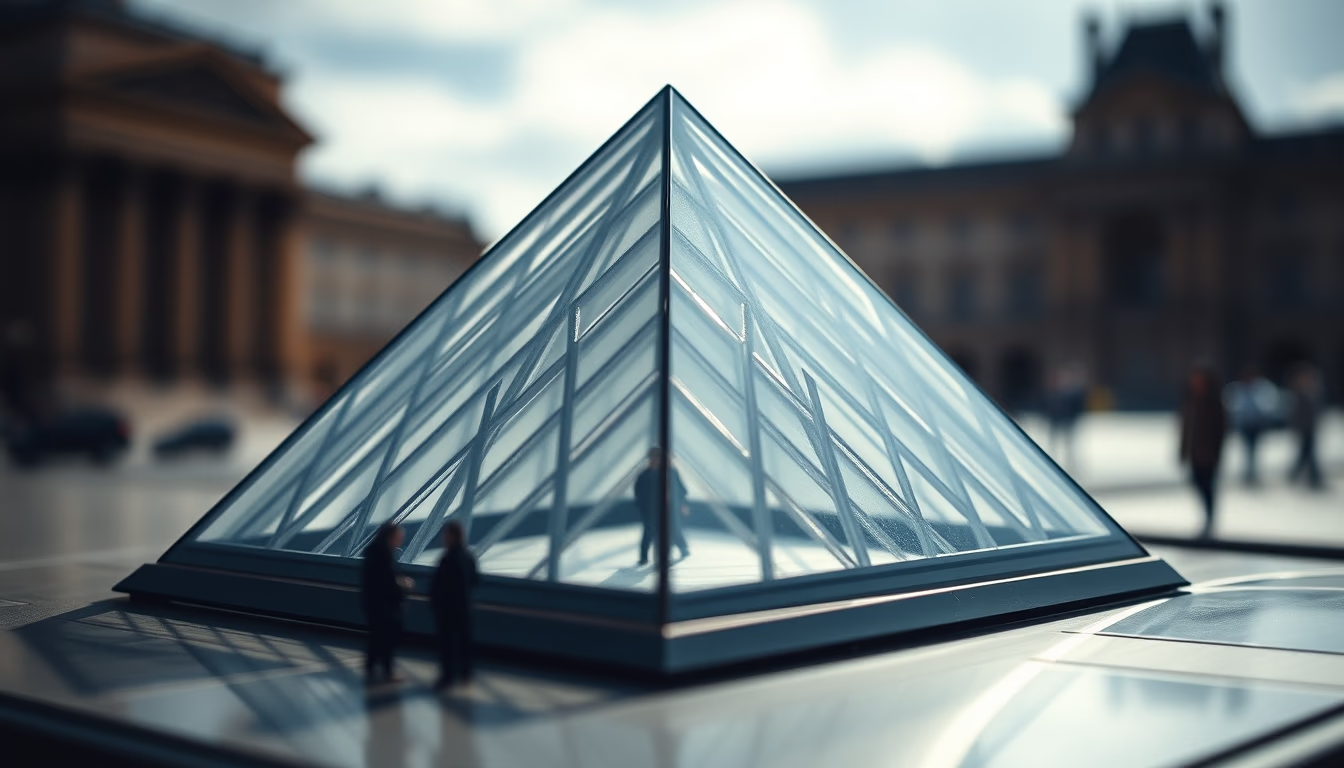
The Louvre Pyramid, designed by I.M. Pei, is an iconic glass and metal entrance to the Louvre Museum in Paris, inaugurated in 1989.
About this subject
The Louvre Pyramid was constructed as part of the Grand Louvre project, initiated by President François Mitterrand in the 1980s to modernize and expand the museum. Its location in the historic Cour Napoléon sparked intense controversy, as many Parisians viewed it as a modern intrusion on the Renaissance and classical heritage of the Louvre Palace. However, since its inauguration on March 29, 1989, the pyramid has become an iconic symbol of Paris.
The structure consists of a stainless steel frame and steel cables supporting 673 laminated glass panels, each 21 mm thick. A popular but incorrect myth claims there are 666 panels, a number associated with the beast in the Book of Revelation. In reality, the original design had 666, but after adjustments, 603 rhombi and 70 triangles were installed, totaling 673 pieces. The pyramid stands 21.6 meters tall with a base side of 35.4 meters.
Its primary function is to serve as the main entrance and distribute visitors to the museum's three wings. Natural light passing through the glass illuminates the vast underground lobby, the Hall Napoléon. A system of nighttime reflectors makes the pyramid glow, complementing the palace's lighting. A smaller inverted pyramid was installed in the Carrousel du Louvre shopping center to bring light to an underground space.
The pyramid influenced contemporary architecture by demonstrating that modern structures can coexist with historic buildings. Today, it is one of the most photographed tourist attractions in the world, appearing in films such as "The Da Vinci Code" (2006), which reinforced the 666-panel legend. The transparency of the glass allows visitors to see the palace behind, integrating past and present harmoniously.
Frequently Asked Questions
How many glass panels does the Louvre Pyramid have?
The pyramid has 673 laminated glass panels: 603 rhombi and 70 triangles. The myth of 666 panels is false, though the original design had that number.
What are the height and dimensions of the pyramid?
The Louvre Pyramid is 21.6 meters tall with a base side of 35.4 meters. Its slope follows the same proportion as the Great Pyramid of Giza.
Why was the pyramid controversial when built?
Many critics felt a modern glass and metal structure would disrespect the classical and Renaissance architecture of the Louvre Palace. Over time, it became a beloved landmark.
Direct URL
https://pub-c7d6a6ea828543ac903a74a341ccb2e1.r2.dev/imagens/louvre-pyramid-glass-tilt-shift-miniature-p9.avifHow to credit
Include a visible link back to UtilizAí. Copy one of the snippets below:
<a href="https://xn--utiliza-eza.com/en/midia/imagens/louvre-pyramid-glass-tilt-shift-miniature-p9">Louvre pyramid glass</a> by <a href="https://xn--utiliza-eza.com">UtilizAí</a>, licensed under <a href="https://creativecommons.org/licenses/by/4.0/">CC BY 4.0</a>.
[Louvre pyramid glass](https://xn--utiliza-eza.com/en/midia/imagens/louvre-pyramid-glass-tilt-shift-miniature-p9) by [UtilizAí](https://xn--utiliza-eza.com), CC BY 4.0
License: CC-BY-4.0