Louvre pyramid glass
1344×768 · AVIF · CC BY 4.0
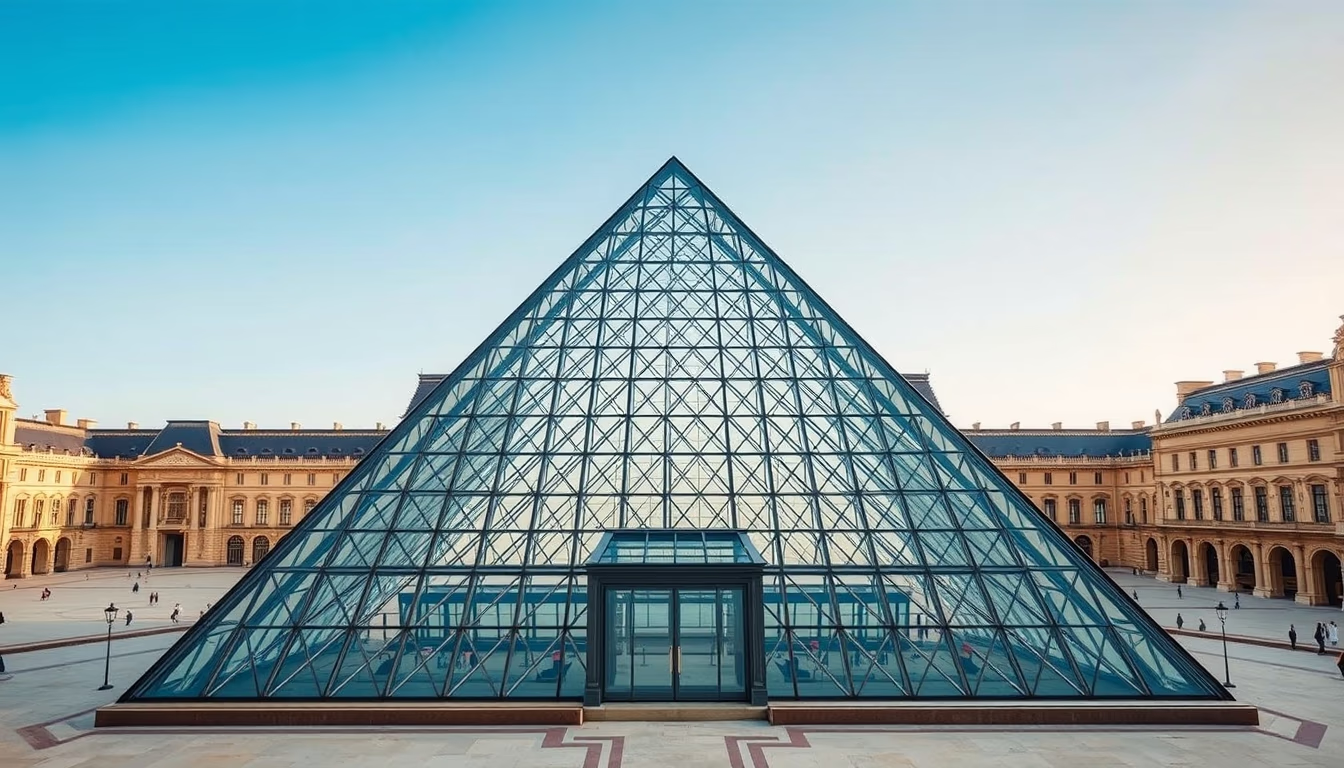
The Louvre Pyramid, designed by I. M. Pei, is a modern architectural landmark in the heart of Paris, inaugurated in 1989.
About this subject
The Louvre Pyramid, located in the main courtyard of the Louvre Museum in Paris, France, is an iconic glass and metal structure that serves as the museum's main entrance. Designed by Chinese-American architect Ieoh Ming Pei, the pyramid was commissioned by French President François Mitterrand in 1983 and inaugurated on March 30, 1989. Standing 21.6 meters tall with a base side length of 35.4 meters, the pyramid consists of 673 glass panes (603 rhombi and 70 triangles) supported by a steel and aluminum framework. Its modern design sharply contrasts with the Renaissance architecture of the Louvre, sparking intense controversy at the time. Critics argued that the pyramid marred the historic setting, but over time it became a beloved symbol of Paris and an example of how modern design can harmonize with classical heritage. The use of laminated glass and a metal structure allowed for maximum transparency and visual lightness, while also illuminating the underground lobby. The central pyramid is surrounded by three smaller pyramids and a reflective pool, forming a complex that organizes visitor flow. The project also included the creation of a vast underground space housing ticket counters, shops, and access to museum wings. The Louvre Pyramid receives millions of visitors annually and is one of the most photographed monuments in the world. A restoration in 2016 replaced damaged panels and improved lighting, preserving its beauty for future generations.
Frequently Asked Questions
How many glass panes does the Louvre Pyramid have?
The Louvre Pyramid has 673 glass panes: 603 rhombi and 70 triangles. This number is often mistaken for 666, but the official count is 673.
Why was the Louvre Pyramid controversial when built?
Many Parisians and art critics felt that the modern glass and metal design clashed with the Renaissance architecture of the Louvre. The controversy subsided over time, and the pyramid became an iconic Parisian symbol.
How tall is the Louvre Pyramid?
The pyramid is 21.6 meters (about 71 feet) tall. Its square base measures 35.4 meters on each side.
Direct URL
https://pub-c7d6a6ea828543ac903a74a341ccb2e1.r2.dev/imagens/louvre-pyramid-glass-isometric-flat-lay-p7.avifHow to credit
Include a visible link back to UtilizAí. Copy one of the snippets below:
<a href="https://xn--utiliza-eza.com/en/midia/imagens/louvre-pyramid-glass-isometric-flat-lay-p7">Louvre pyramid glass</a> by <a href="https://xn--utiliza-eza.com">UtilizAí</a>, licensed under <a href="https://creativecommons.org/licenses/by/4.0/">CC BY 4.0</a>.
[Louvre pyramid glass](https://xn--utiliza-eza.com/en/midia/imagens/louvre-pyramid-glass-isometric-flat-lay-p7) by [UtilizAí](https://xn--utiliza-eza.com), CC BY 4.0
License: CC-BY-4.0