Loom weaving alpaca
1344×768 · AVIF · CC BY 4.0
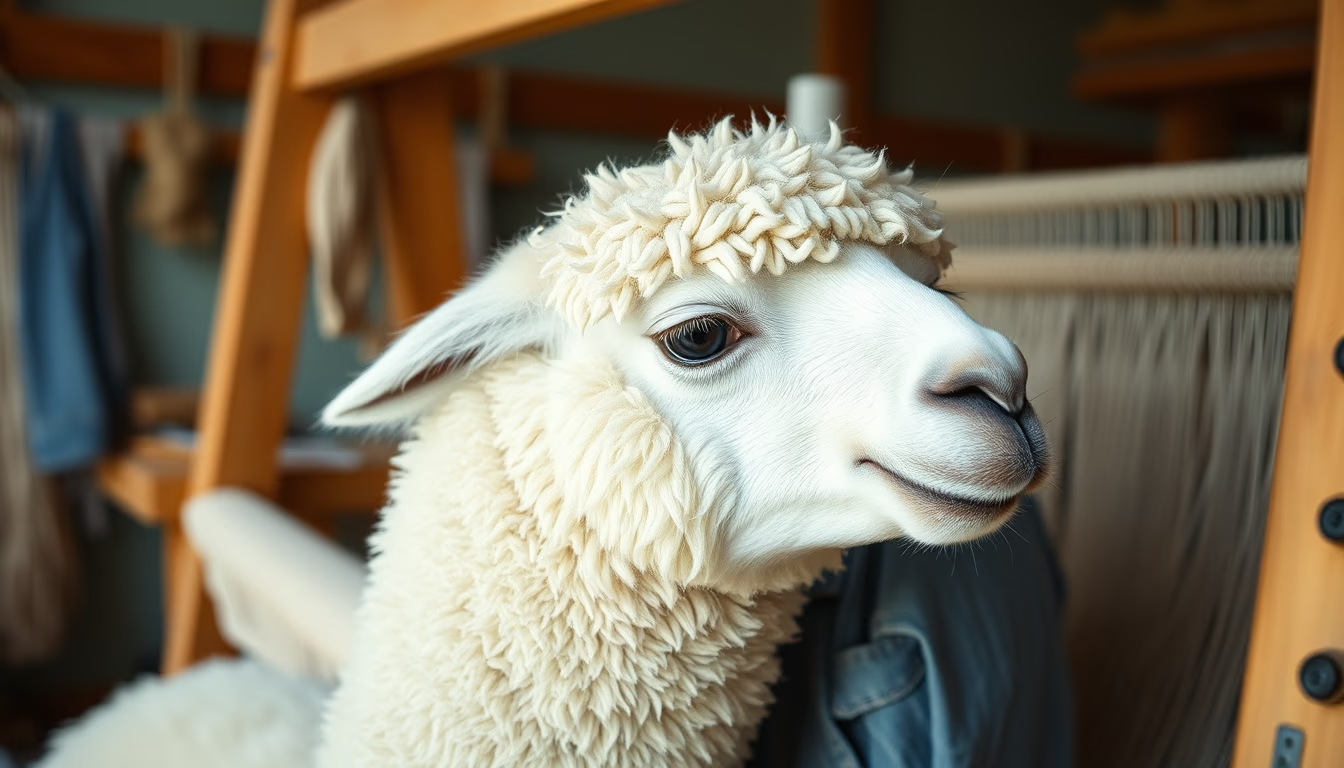
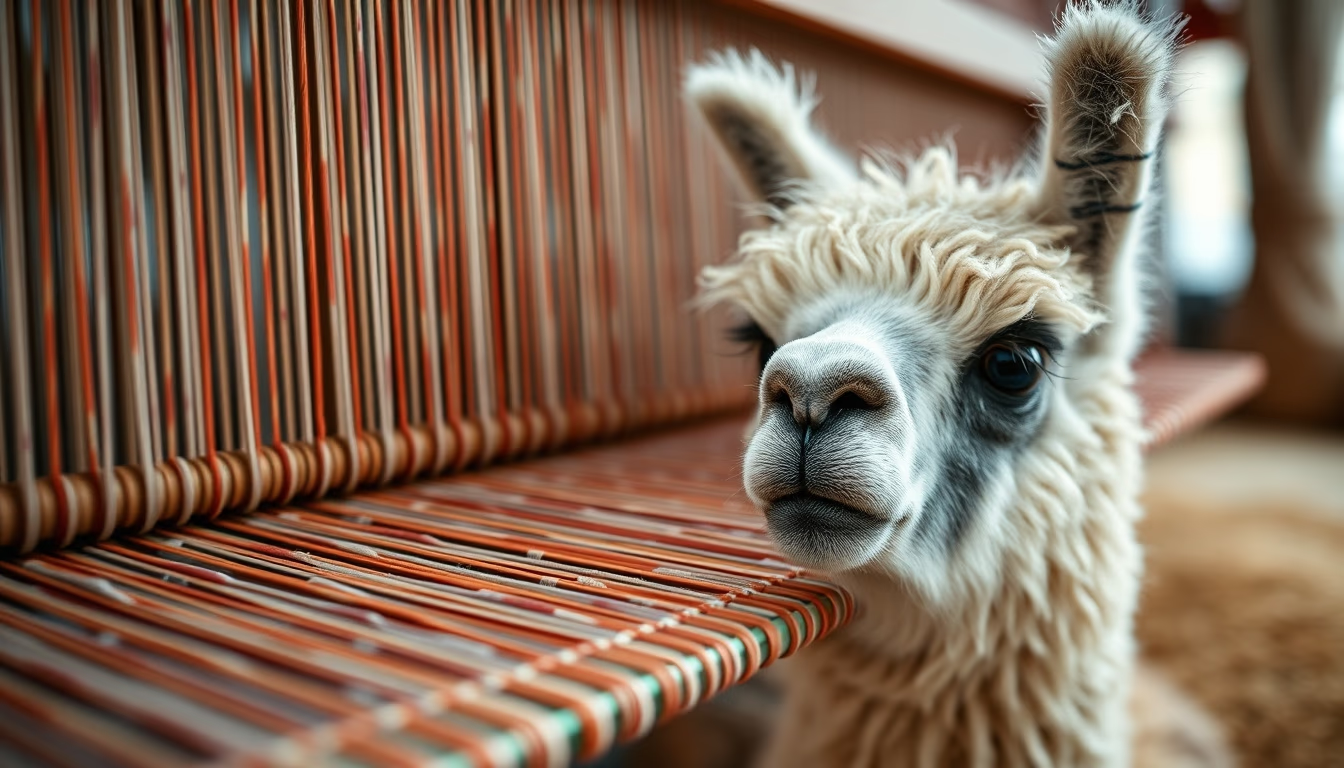
Hand weaving with alpaca fiber, an ancient Andean tradition producing soft and durable textiles.
About this subject
Alpaca fiber is one of the most valued in the textile world, surpassing sheep's wool in softness, lightness and thermal properties. Originating from the Peruvian, Bolivian and Chilean Andes, the alpaca was domesticated thousands of years ago by pre-Inca peoples and later by the Incas, who considered its wool an elite good reserved for nobility. Today, alpaca farming sustains thousands of Andean families, who maintain weaving techniques passed down orally for generations.
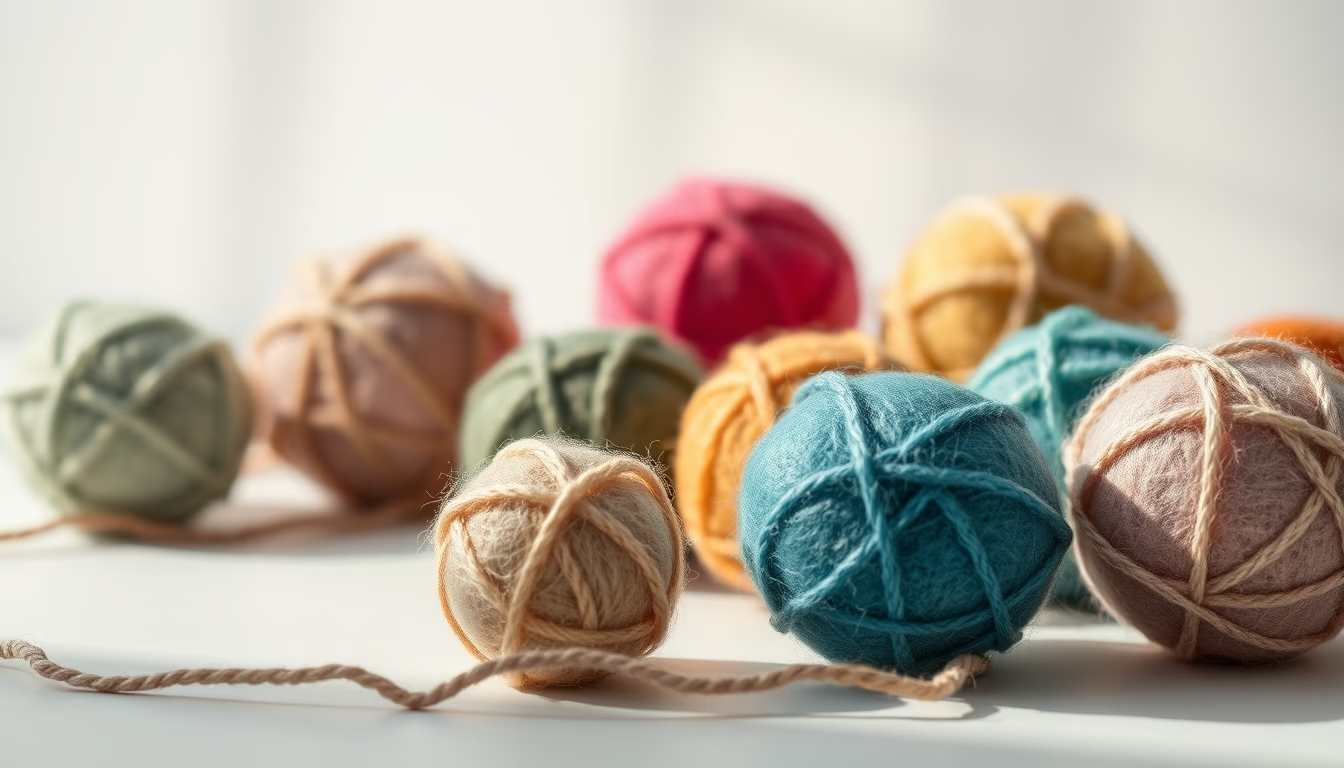
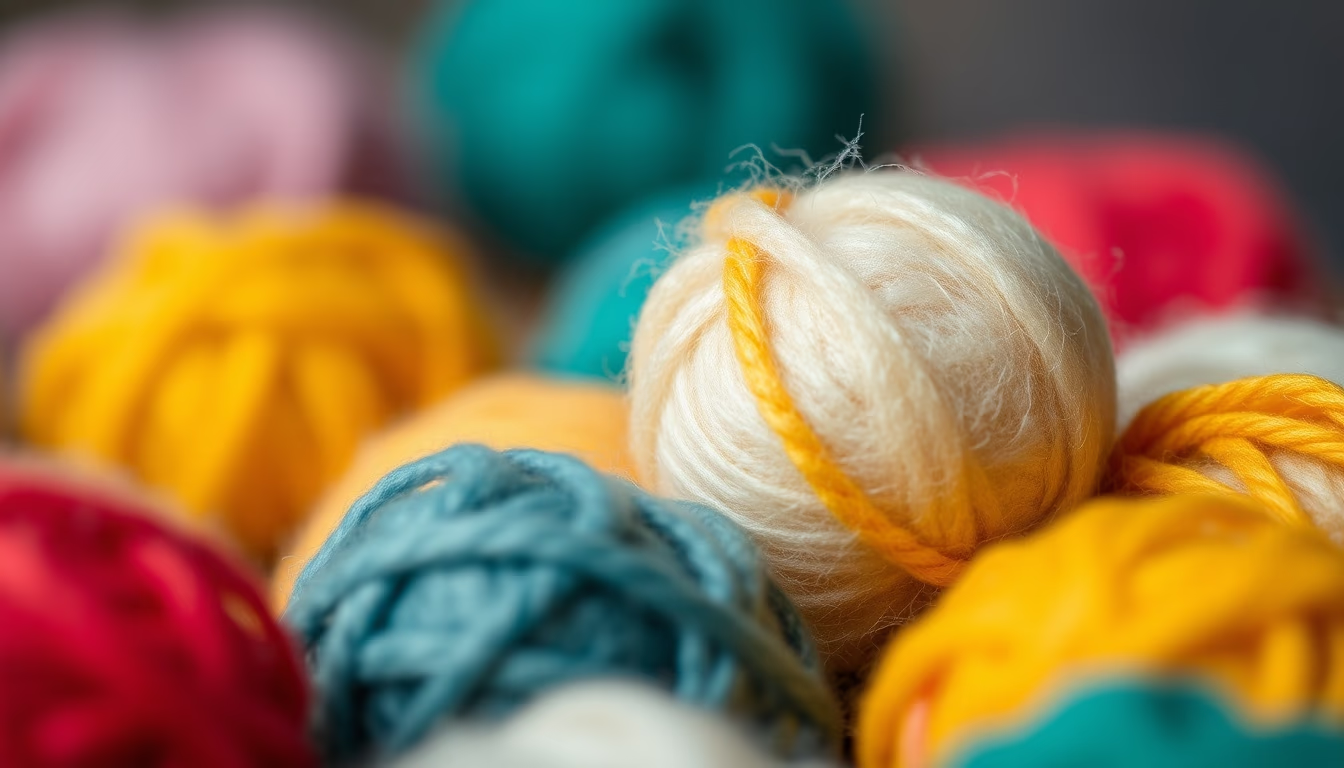
The backstrap loom, or "callwa", is one of the most traditional tools. In it, the weaver attaches one end to her body and the other to a fixed point, adjusting tension with her own movement. This method allows the creation of complex geometric patterns that carry symbolic meanings linked to the Andean worldview, such as mountains, rivers and sacred animals. The fibers are hand-spun and dyed with natural colorants from plants, minerals and insects, such as cochineal.
A curiosity: alpacas produce fiber in 22 natural shades, from white to black, passing through grays and browns. This reduces the need for artificial dyeing. Furthermore, the fiber is hypoallergenic because it does not contain lanolin, unlike sheep's wool. Fair trade of alpaca products has grown, helping to preserve this art and improve the income of rural communities. Items such as ponchos, blankets and scarves are exported worldwide, uniting tradition and sustainable fashion.
Frequently Asked Questions
What makes alpaca fiber special compared to sheep's wool?
Alpaca fiber is softer, lighter, and has superior thermal properties. It is also hypoallergenic because it lacks lanolin, and comes in 22 natural colors, reducing the need for artificial dyeing.
What is the traditional weaving process with alpaca fiber in the Andes?
Weavers use a backstrap loom, controlling tension with their body. The fiber is hand-spun and dyed with natural pigments. The geometric patterns carry Andean cultural meanings.
Is alpaca farming sustainable and beneficial for local communities?
Yes, alpaca farming is part of the sustainable economy in the Andes. Fair trade of alpaca products generates income for rural families and helps preserve ancient craft techniques.
Direct URL
https://pub-c7d6a6ea828543ac903a74a341ccb2e1.r2.dev/imagens/loom-weaving-alpaca-film-grain-authentic-fresh5.avifHow to credit
Include a visible link back to UtilizAí. Copy one of the snippets below:
<a href="https://xn--utiliza-eza.com/en/midia/imagens/loom-weaving-alpaca-film-grain-authentic-fresh5">Loom weaving alpaca</a> by <a href="https://xn--utiliza-eza.com">UtilizAí</a>, licensed under <a href="https://creativecommons.org/licenses/by/4.0/">CC BY 4.0</a>.
[Loom weaving alpaca](https://xn--utiliza-eza.com/en/midia/imagens/loom-weaving-alpaca-film-grain-authentic-fresh5) by [UtilizAí](https://xn--utiliza-eza.com), CC BY 4.0
License: CC-BY-4.0