Loch ness scotland
1344×768 · AVIF · CC BY 4.0
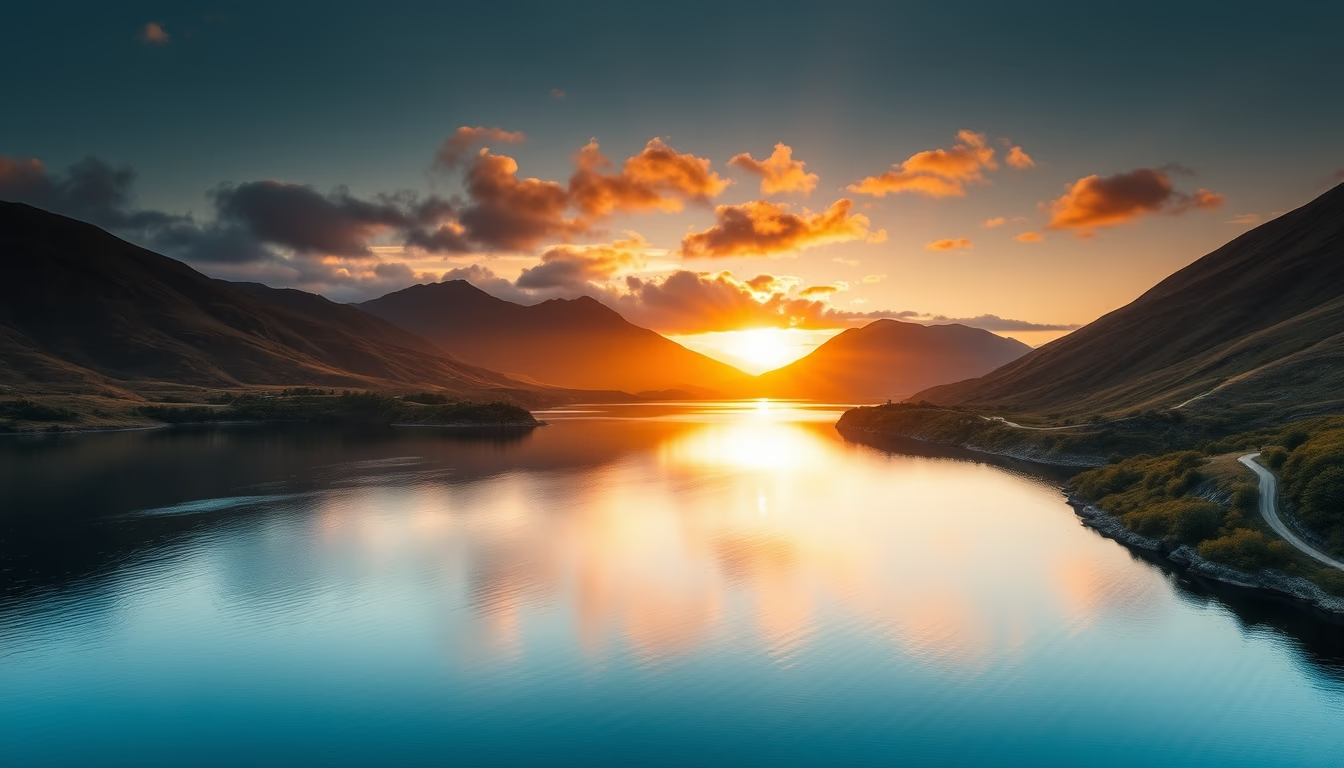
Loch Ness, one of the world's most famous lakes, is located in the Scottish Highlands and draws millions of visitors intrigued by its legend and scenery.
About this subject
Loch Ness is a large freshwater lake in the Scottish Highlands, stretching approximately 36 kilometers in length and reaching depths of over 230 meters. It is the second largest Scottish loch by water volume, after Loch Lomond. Its dark waters, caused by high peat content from surrounding soils, limit visibility to a few meters, adding to the air of mystery that surrounds it.
The global fame of Loch Ness is intrinsically tied to the legend of a monster said to inhabit its depths. The modern story of the creature, affectionately named Nessie, gained prominence in 1933 when a local couple claimed to have seen a huge animal crossing the road near the loch. Since then, thousands of sightings and photographs, many later debunked as hoaxes or natural phenomena, have fueled the folklore. Scientific expeditions, such as Operation Deepscan in 1987, used sonar to scan the loch without finding conclusive evidence of a large prehistoric animal.
Beyond the myth, Loch Ness offers rich tourist and historical experiences. On its shores lies Urquhart Castle, a 13th-century ruin that was a key stronghold during the Scottish Wars of Independence. Visitors can explore the castle's exhibition center, take boat cruises on the loch, or visit The Loch Ness Centre & Exhibition, which presents displays on the region's geology, history, and legend. The Caledonian Canal, connecting the loch to other waterways, allows navigation between Scotland's east and west coasts.
Ecologically, the loch supports populations of Atlantic salmon, brown trout, and eels. Its watershed has been used for hydroelectric power generation since the 1930s. The local climate is typically wet and overcast, with average annual temperatures around 9°C. The Nessie legend continues to drive tourism, generating millions of pounds for the Scottish economy each year, and remains one of the great unsolved mysteries of popular culture.
Frequently Asked Questions
How big is Loch Ness?
Loch Ness is approximately 36 km long, 1.5 km wide at its widest, and reaches a maximum depth of 230 meters, making it the second largest Scottish loch by water volume.
Does the Loch Ness monster really exist?
There is no scientific confirmation of the monster's existence. Sonar surveys and expeditions have found no conclusive evidence, though sightings continue to be reported.
How can I visit Loch Ness?
You can take boat cruises, visit Urquhart Castle ruins, the Loch Ness Centre & Exhibition, and explore the loch's shores. The area is accessible by car from Inverness.
Direct URL
https://pub-c7d6a6ea828543ac903a74a341ccb2e1.r2.dev/imagens/loch-ness-scotland-travel-photography-p4.avifHow to credit
Include a visible link back to UtilizAí. Copy one of the snippets below:
<a href="https://xn--utiliza-eza.com/en/midia/imagens/loch-ness-scotland-travel-photography-p4">Loch ness scotland</a> by <a href="https://xn--utiliza-eza.com">UtilizAí</a>, licensed under <a href="https://creativecommons.org/licenses/by/4.0/">CC BY 4.0</a>.
[Loch ness scotland](https://xn--utiliza-eza.com/en/midia/imagens/loch-ness-scotland-travel-photography-p4) by [UtilizAí](https://xn--utiliza-eza.com), CC BY 4.0
License: CC-BY-4.0