Lightning bolt night sky
1344×768 · AVIF · CC BY 4.0
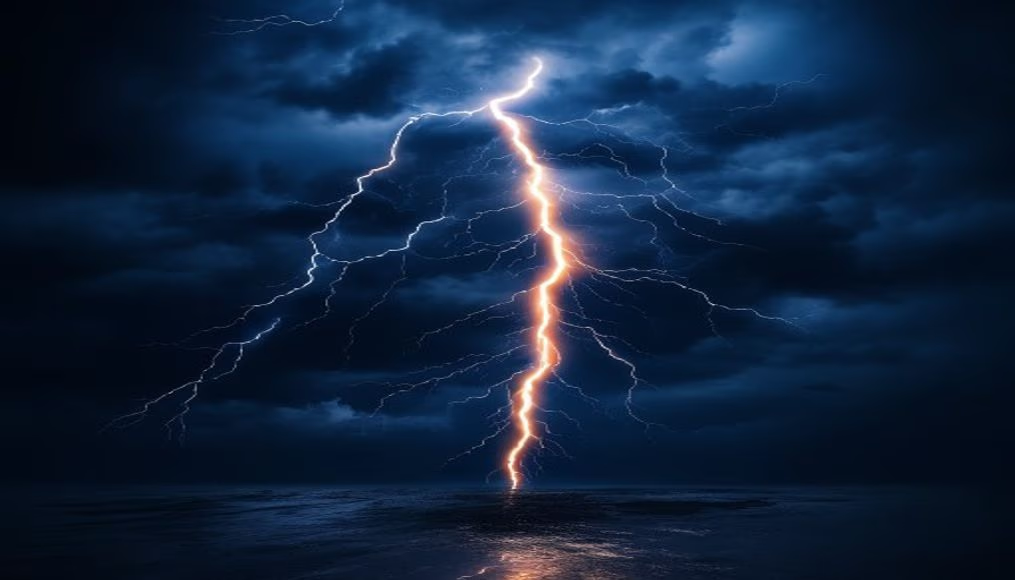
Nighttime lightning bolts are intense electrical discharges in the atmosphere, reaching temperatures up to 30,000 °C, five times hotter than the Sun's surface.
About this subject
Lightning is a large-scale electrical discharge that occurs during thunderstorms when ice particles and water collide within clouds, generating charge separation. The discharge can happen within the cloud, between clouds, or from cloud to ground. Brazil has the highest lightning incidence worldwide, with about 50 million strikes per year, mostly in the South, Southeast, and Center-West regions during summer.
A lightning bolt can reach 30,000 °C, instantly heating the surrounding air and causing explosive expansion, which produces thunder. Light travels faster than sound, so the flash is seen before the boom is heard. The distance can be estimated by counting seconds between flash and thunder: every 3 seconds equals roughly 1 km.
Technologically, lightning is monitored by detection networks such as the Brazilian Atmospheric Discharge Detection Network (BrasilDAT), which uses ground sensors and satellites to locate and characterize each strike. These data are crucial for power grid safety, aviation, and severe storm warnings. Protective equipment like lightning rods and surge suppressors are designed based on lightning physics.
Remarkably, a single lightning bolt can carry up to 1 billion volts and 30,000 amperes, enough to power a whole city for a few moments. Observing nighttime lightning inspires art and photography, but extreme safety precautions are necessary due to the risk of a direct strike.
Frequently Asked Questions
Is it safe to photograph lightning during a storm?
No. Lightning photography should be done from safe locations such as indoors or inside a closed vehicle. Never stay outdoors, in open fields, on hilltops, or near trees during thunderstorms with lightning.
What is the difference between lightning, flash, and thunder?
Lightning is the complete electrical discharge phenomenon. The flash is the visible light produced by lightning. Thunder is the sound caused by the violent expansion of air heated by lightning.
How do lightning rods protect buildings?
Lightning rods are metal rods installed on top of buildings, connected to cables that lead the electrical discharge directly to the ground, diverting the strike away from the structure and dissipating the current safely.
Direct URL
https://pub-c7d6a6ea828543ac903a74a341ccb2e1.r2.dev/imagens/lightning-bolt-night-sky-commercial-product-photography-v9.avifHow to credit
Include a visible link back to UtilizAí. Copy one of the snippets below:
<a href="https://xn--utiliza-eza.com/en/midia/imagens/lightning-bolt-night-sky-commercial-product-photography-v9">Lightning bolt night sky</a> by <a href="https://xn--utiliza-eza.com">UtilizAí</a>, licensed under <a href="https://creativecommons.org/licenses/by/4.0/">CC BY 4.0</a>.
[Lightning bolt night sky](https://xn--utiliza-eza.com/en/midia/imagens/lightning-bolt-night-sky-commercial-product-photography-v9) by [UtilizAí](https://xn--utiliza-eza.com), CC BY 4.0
License: CC-BY-4.0