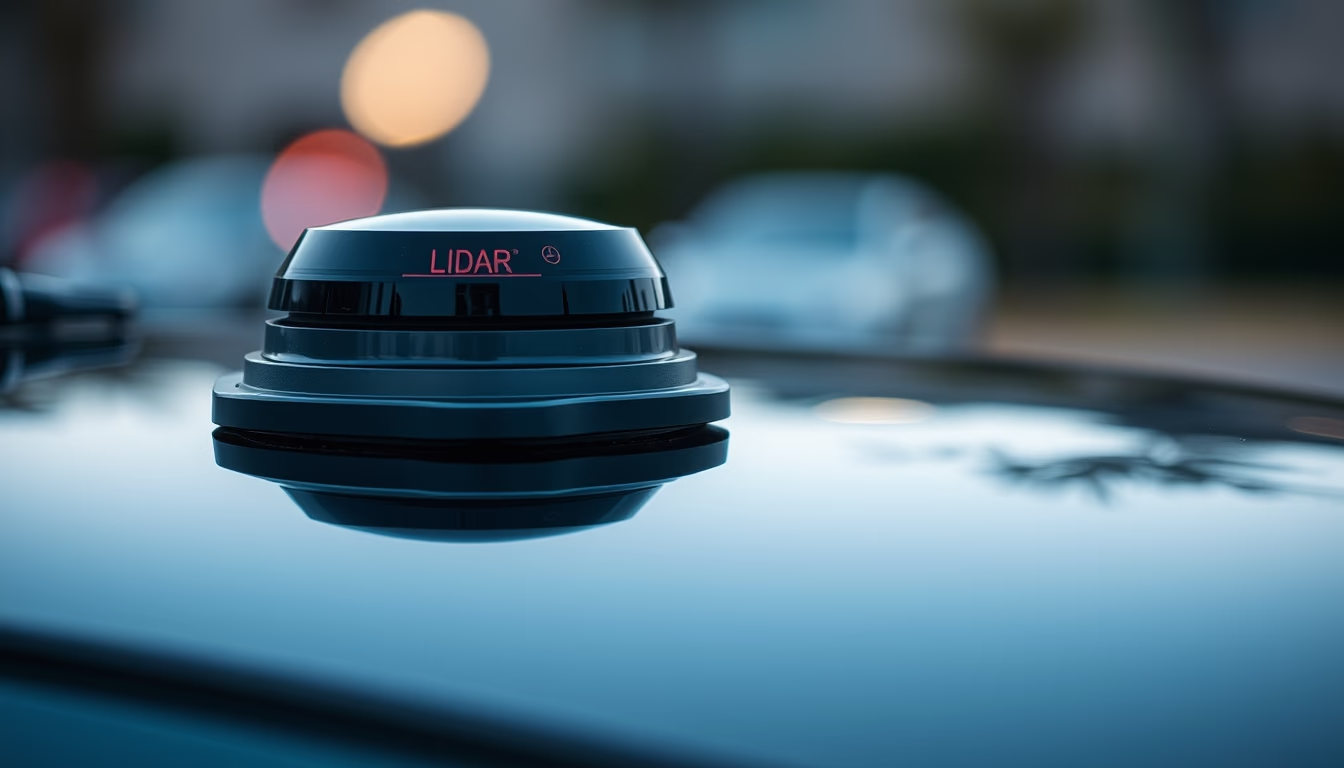
Lidar sensor on car roof
1344×768 · AVIF · CC BY 4.0
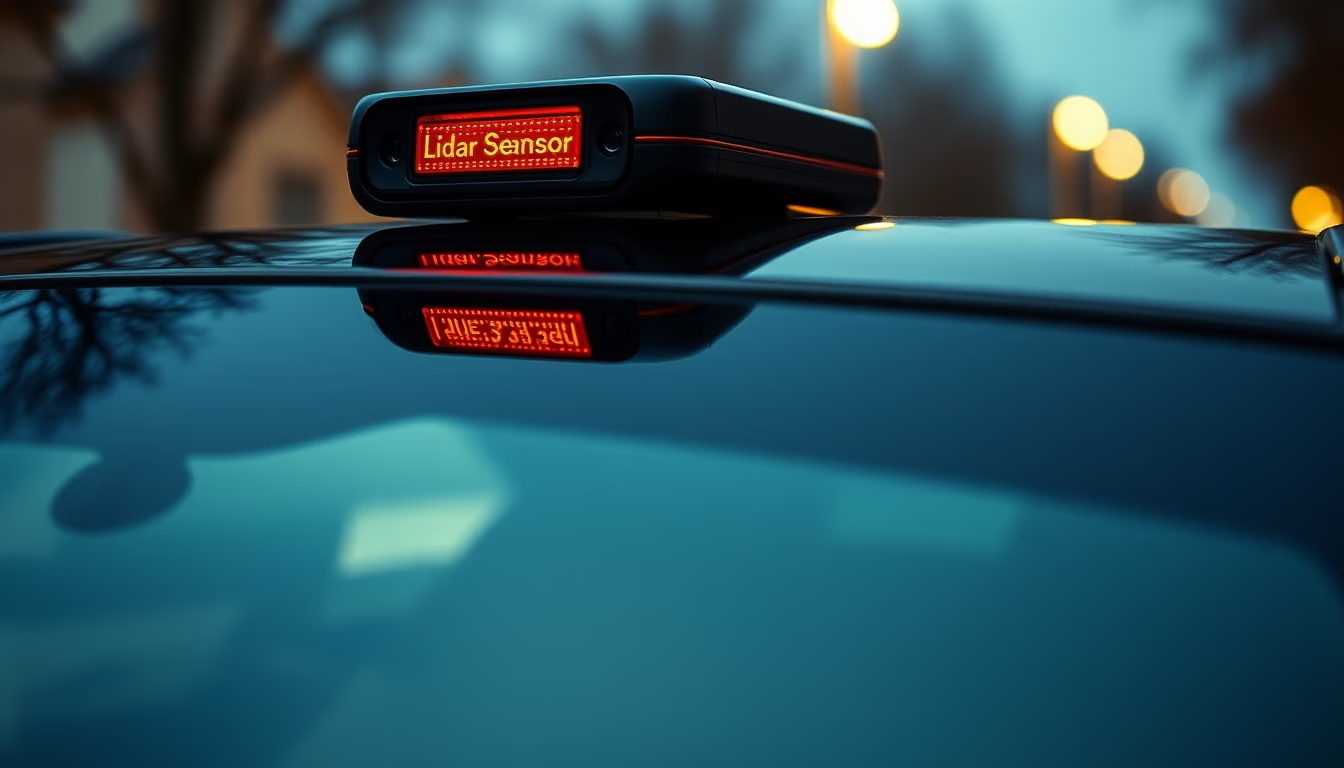
Lidar is an essential sensor for autonomous vehicles, emitting laser pulses to map the environment in 3D in real time.
About this subject
Lidar, short for Light Detection and Ranging, is a remote sensing technology that uses laser pulses to measure distances and generate three-dimensional point clouds of the surroundings. In autonomous vehicles, the sensor is often mounted on the roof to achieve a 360 degree unobstructed view. Each pulse bounces off objects and returns to the sensor, enabling centimeter accurate distance calculations. This continuous data stream feeds perception algorithms that identify pedestrians, other vehicles, traffic signs, and obstacles.
Unlike cameras and radar, lidar provides high spatial resolution and operates independently of ambient light, working effectively both day and night. However, its performance can be degraded by adverse weather conditions such as heavy rain, fog, or dust. Major manufacturers include Velodyne, Luminar, and Hesai, with costs ranging from hundreds to thousands of dollars. Recent advancements aim to reduce size and price to enable mass production.
In the Brazilian context, the adoption of autonomous vehicles faces challenges such as uneven road infrastructure and nascent legislation. Nonetheless, pilot projects in cities like São Paulo and Campinas are testing self driving technologies with lidar. The global trend points toward multi sensor integration, combining lidar, cameras, and radar for redundancy and safety. The lo fi aesthetic of the image recalls disposable cameras, suggesting a nostalgic perspective on future technology.
Frequently Asked Questions
How does a lidar sensor work in autonomous cars?
Lidar emits laser pulses that reflect off surrounding objects. The time each pulse takes to return is measured to calculate distance, generating a 3D point cloud that allows the vehicle to perceive its environment in real time.
What is the difference between lidar, radar, and camera?
Lidar uses laser light for high resolution 3D, working day and night. Radar uses radio waves, good for range and speed but with lower resolution. Cameras capture color and texture but depend on lighting and have limited depth perception.
Is lidar mandatory for autonomous vehicles?
It is not strictly mandatory; some companies attempt to use only cameras and radar. However, most high level automation systems still rely on lidar for its reliability in precise 3D mapping.
Direct URL
https://pub-c7d6a6ea828543ac903a74a341ccb2e1.r2.dev/imagens/lidar-sensor-on-car-roof-lo-fi-disposable-camera-p1.avifHow to credit
Include a visible link back to UtilizAí. Copy one of the snippets below:
<a href="https://xn--utiliza-eza.com/en/midia/imagens/lidar-sensor-on-car-roof-lo-fi-disposable-camera-p1">Lidar sensor on car roof</a> by <a href="https://xn--utiliza-eza.com">UtilizAí</a>, licensed under <a href="https://creativecommons.org/licenses/by/4.0/">CC BY 4.0</a>.
[Lidar sensor on car roof](https://xn--utiliza-eza.com/en/midia/imagens/lidar-sensor-on-car-roof-lo-fi-disposable-camera-p1) by [UtilizAí](https://xn--utiliza-eza.com), CC BY 4.0
License: CC-BY-4.0