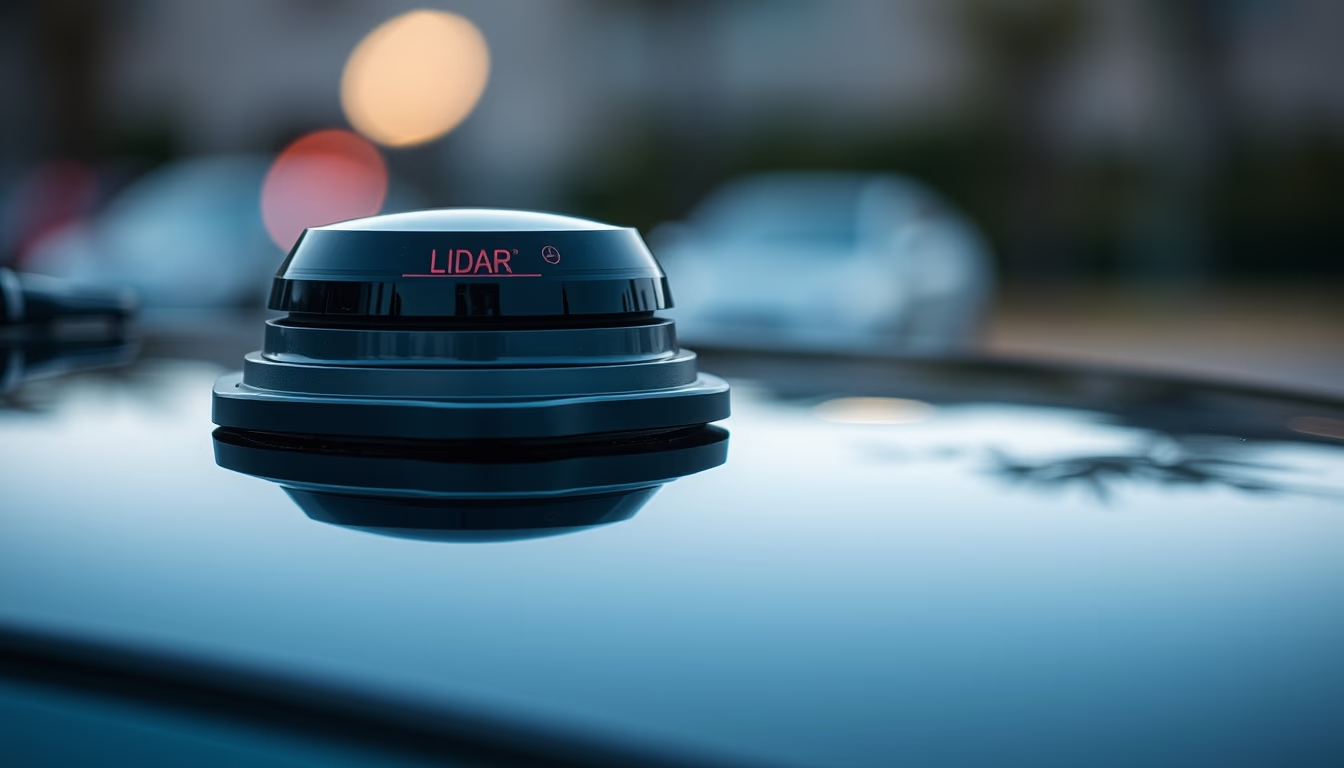
Lidar sensor on car roof
1344×768 · AVIF · CC BY 4.0
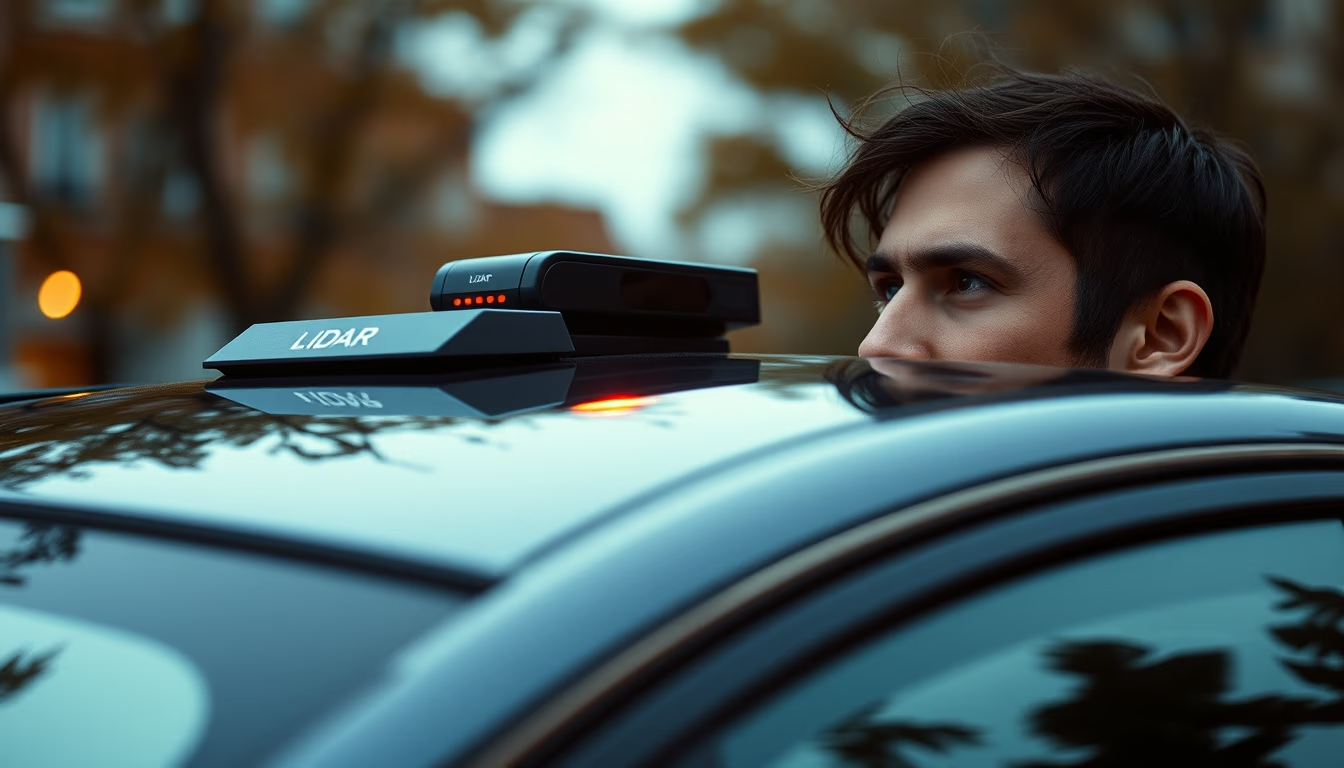
The roof-mounted lidar sensor in autonomous vehicles is essential for 3D environmental perception, using laser pulses to map obstacles and navigate with precision.
About this subject
Lidar (Light Detection and Ranging) is a remote sensing technology that emits laser pulses and measures their return time to calculate distances, generating three-dimensional point clouds. In autonomous vehicles, it is often mounted on the roof to achieve a 360-degree view of the surroundings without obstructions. Unlike cameras (which depend on visible light) and radar (lower angular resolution), lidar offers high spatial precision, enabling detection of objects up to 200 meters away even in low light.
Companies like Waymo, Cruise, and Aurora rely on lidar as a core component of their self-driving systems. The roof-mounted sensor is a classic design, exemplified by the Waymo Firefly and test vehicles. The technology has evolved from mechanical spinning units (e.g., Velodyne HDL-64) to more compact and affordable solid-state versions, such as MEMS lidar and flash lidar, now integrated into production cars (e.g., Volvo EX90, Mercedes S-Class).
Despite progress, lidar faces challenges: high cost (though dropping to hundreds of dollars), atmospheric interference (fog, dust), and controversy with Tesla, which prioritizes computer vision. However, the trend for 2026 points to lidar becoming a safety redundancy in autonomous driving, especially at levels 3 and 4. Regulations in Europe and China also encourage its adoption for safety validation. The film grain effect in the image suggests an authentic testing aesthetic, common in prototype documentation.
Frequently Asked Questions
How does a lidar sensor work?
Lidar emits infrared laser pulses and measures the time each pulse takes to reflect off an object and return to the sensor. Using this time-of-flight (ToF) principle, it calculates precise distances, generating a point cloud that maps the environment in 3D.
Why is lidar mounted on the car roof?
Mounting lidar on the roof provides an unobstructed field of view, enabling 360-degree coverage around the vehicle. This elevated position is ideal for detecting pedestrians, vehicles, and obstacles in all directions, essential for safe autonomous navigation.
What are the limitations of lidar compared to cameras and radar?
Lidar offers high spatial resolution and works in darkness, but suffers in adverse weather (fog, heavy rain) and has a higher cost than cameras and radar. Unlike cameras, it cannot recognize colors or signs; unlike radar, it has shorter range in storms. Therefore, autonomous systems combine all three sensors (sensor fusion).
Direct URL
https://pub-c7d6a6ea828543ac903a74a341ccb2e1.r2.dev/imagens/lidar-sensor-on-car-roof-film-grain-authentic-p0.avifHow to credit
Include a visible link back to UtilizAí. Copy one of the snippets below:
<a href="https://xn--utiliza-eza.com/en/midia/imagens/lidar-sensor-on-car-roof-film-grain-authentic-p0">Lidar sensor on car roof</a> by <a href="https://xn--utiliza-eza.com">UtilizAí</a>, licensed under <a href="https://creativecommons.org/licenses/by/4.0/">CC BY 4.0</a>.
[Lidar sensor on car roof](https://xn--utiliza-eza.com/en/midia/imagens/lidar-sensor-on-car-roof-film-grain-authentic-p0) by [UtilizAí](https://xn--utiliza-eza.com), CC BY 4.0
License: CC-BY-4.0