Lichens symbiotic close
1344×768 · AVIF · CC BY 4.0
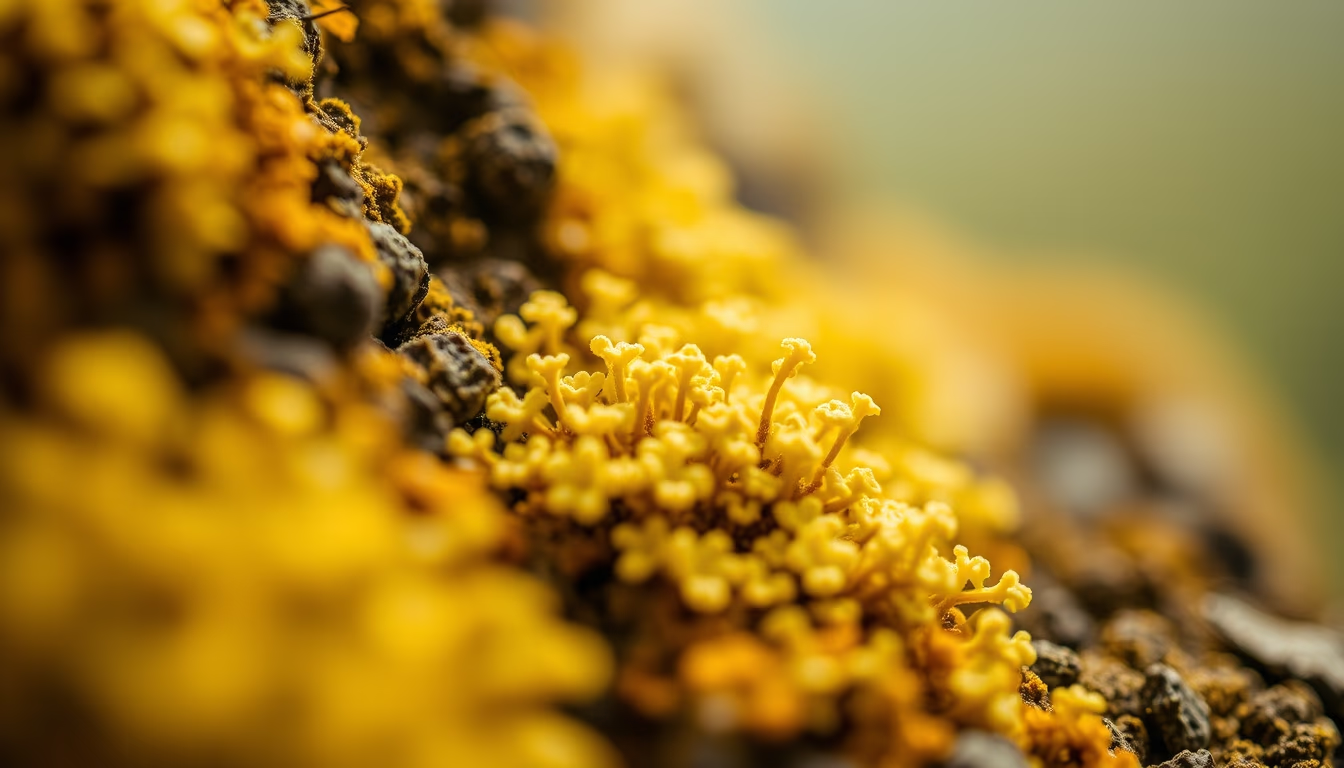
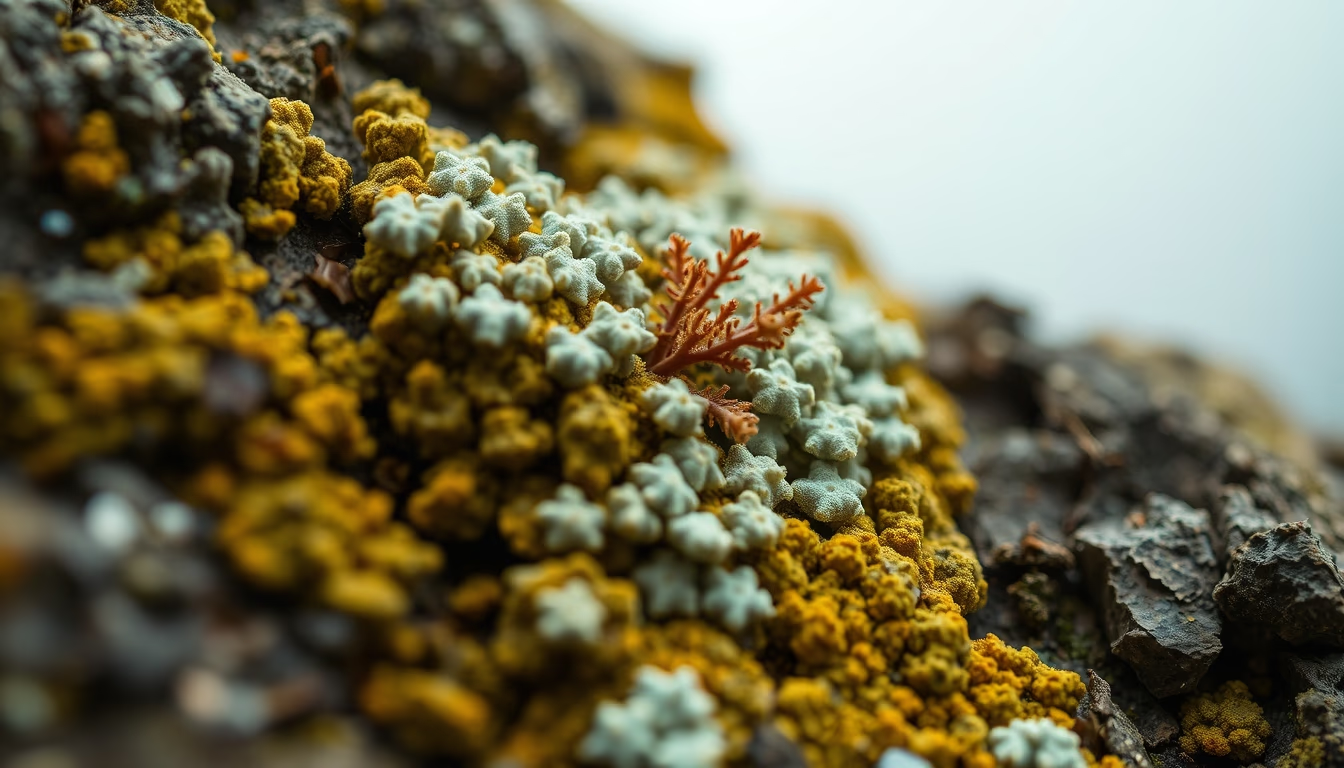
Lichens are symbiotic organisms formed by fungi and algae or cyanobacteria, found worldwide and critical as bioindicators of air quality.
About this subject
Lichens are a symbiotic partnership between a fungus (mycobiont) and one or more photosynthetic organisms (photobionts), such as green algae or cyanobacteria. This association enables lichens to colonize extreme environments, from bare rocks to tree bark, on every continent, including Antarctica. In Brazil, they are especially diverse in the Atlantic Forest, Cerrado, and Amazon, contributing significantly to epiphytic biodiversity.
Ecologically, lichens play crucial roles: they fix atmospheric nitrogen (when associated with cyanobacteria), initiate soil formation by weathering rocks, and provide shelter and food for small invertebrates. Their sensitivity to air pollution, particularly sulfur dioxide and ozone, makes them excellent bioindicators. Cities like São Paulo use lichen surveys to map areas with better environmental quality.
Lichens grow very slowly, 1 to 10 mm per year, and can live for centuries. Historically, they have been used to produce dyes (such as litmus for pH testing), medicines (antibiotics like usnic acid), and even perfumes (like oakmoss). Some are edible, such as old man’s beard (Usnea), but must be consumed with caution. Their reproduction occurs through fragments (soredia, isidia) or fungal spores, which must find the appropriate photobiont.
Frequently Asked Questions
Why are lichens considered bioindicators?
Lichens absorb nutrients and pollutants directly from the air, having no roots. Their sensitivity to gases like SO₂ and ozone causes visible changes in color, shape, and abundance, allowing economical and efficient air quality monitoring.
What is the difference between crustose, foliose, and fruticose lichens?
Crustose lichens form crusts tightly attached to the substrate (e.g., rocks); foliose have leaf-like structures with free edges; fruticose are erect or pendulous, resembling shrubs or beards. These forms reflect adaptations to light and moisture.
Can lichens be found in urban areas?
Yes, especially in parks, old trees, and stone walls. However, their diversity is lower in highly polluted centers. The presence of foliose or fruticose lichens indicates relatively clean air, while crustose ones dominate more degraded areas.
Direct URL
https://pub-c7d6a6ea828543ac903a74a341ccb2e1.r2.dev/imagens/lichens-symbiotic-close-tilt-shift-miniature-fresh5.avifHow to credit
Include a visible link back to UtilizAí. Copy one of the snippets below:
<a href="https://xn--utiliza-eza.com/en/midia/imagens/lichens-symbiotic-close-tilt-shift-miniature-fresh5">Lichens symbiotic close</a> by <a href="https://xn--utiliza-eza.com">UtilizAí</a>, licensed under <a href="https://creativecommons.org/licenses/by/4.0/">CC BY 4.0</a>.
[Lichens symbiotic close](https://xn--utiliza-eza.com/en/midia/imagens/lichens-symbiotic-close-tilt-shift-miniature-fresh5) by [UtilizAí](https://xn--utiliza-eza.com), CC BY 4.0
License: CC-BY-4.0