Lichens symbiotic close
1344×768 · AVIF · CC BY 4.0
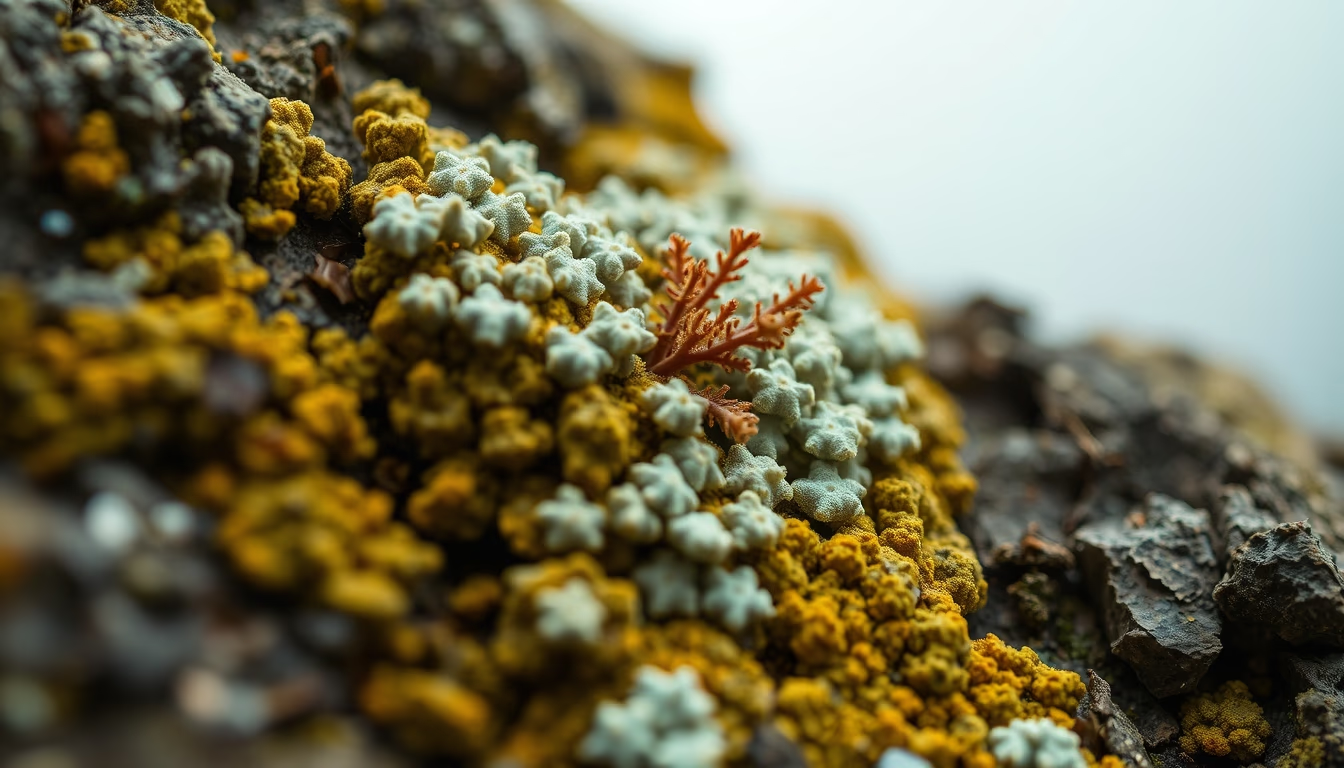
Lichens are composite organisms resulting from a symbiotic relationship between fungi and algae or cyanobacteria, forming unique and resilient structures.
About this subject
Lichens are among nature's most remarkable symbiotic associations, combining a fungus (mycobiont) with one or more photosynthetic organisms such as green algae or cyanobacteria (photobionts). This partnership enables lichens to colonize extreme environments where neither partner would survive alone: from arid deserts to polar regions, as well as tree bark, bare rocks, and poor soils.
The fungus provides structure and protection against desiccation and UV radiation, while the photobiont produces sugars through photosynthesis. This interdependence is so profound that lichens are considered holobiont organisms with emergent properties. There are over 20,000 species of lichens worldwide, classified into forms such as crustose (tightly attached to rocks), foliose (leafy), and fruticose (shrubby).
Historically, lichens have been used for dyeing fabrics (e.g., litmus, a pH indicator), perfume production, and even as food in times of scarcity (e.g., Cetraria islandica, “Iceland moss”). In science, they serve as sensitive bioindicators of air quality because they absorb pollutants directly from the atmosphere. Regions with low pollution, such as preserved forests, exhibit rich lichen diversity.
Interestingly, lichens grow very slowly, typically a few millimeters per year, and some individuals can be hundreds or thousands of years old. They also play a crucial ecological role in soil formation, rock weathering, and providing shelter for microinvertebrates. Lichen symbiosis is a model for studies of coevolution and systems biology.
Frequently Asked Questions
What is lichen symbiosis?
Lichen symbiosis is a mutualistic relationship between a fungus (mycobiont) and algae or cyanobacteria (photobionts). The fungus provides protection and structure, while the photobiont performs photosynthesis and supplies nutrients.
Where can lichens be found?
Lichens are highly adaptable and grow on surfaces such as rocks, tree bark, soil, rooftops, and even in deserts or polar regions. They are sensitive to pollution and thrive in areas with clean air.
What is the ecological importance of lichens?
Lichens contribute to soil formation by weathering rocks, act as bioindicators of air quality, provide habitat for microorganisms, and serve as a food source for some animals.
Direct URL
https://pub-c7d6a6ea828543ac903a74a341ccb2e1.r2.dev/imagens/lichens-symbiotic-close-documentary-nature-style-fresh16.avifHow to credit
Include a visible link back to UtilizAí. Copy one of the snippets below:
<a href="https://xn--utiliza-eza.com/en/midia/imagens/lichens-symbiotic-close-documentary-nature-style-fresh16">Lichens symbiotic close</a> by <a href="https://xn--utiliza-eza.com">UtilizAí</a>, licensed under <a href="https://creativecommons.org/licenses/by/4.0/">CC BY 4.0</a>.
[Lichens symbiotic close](https://xn--utiliza-eza.com/en/midia/imagens/lichens-symbiotic-close-documentary-nature-style-fresh16) by [UtilizAí](https://xn--utiliza-eza.com), CC BY 4.0
License: CC-BY-4.0