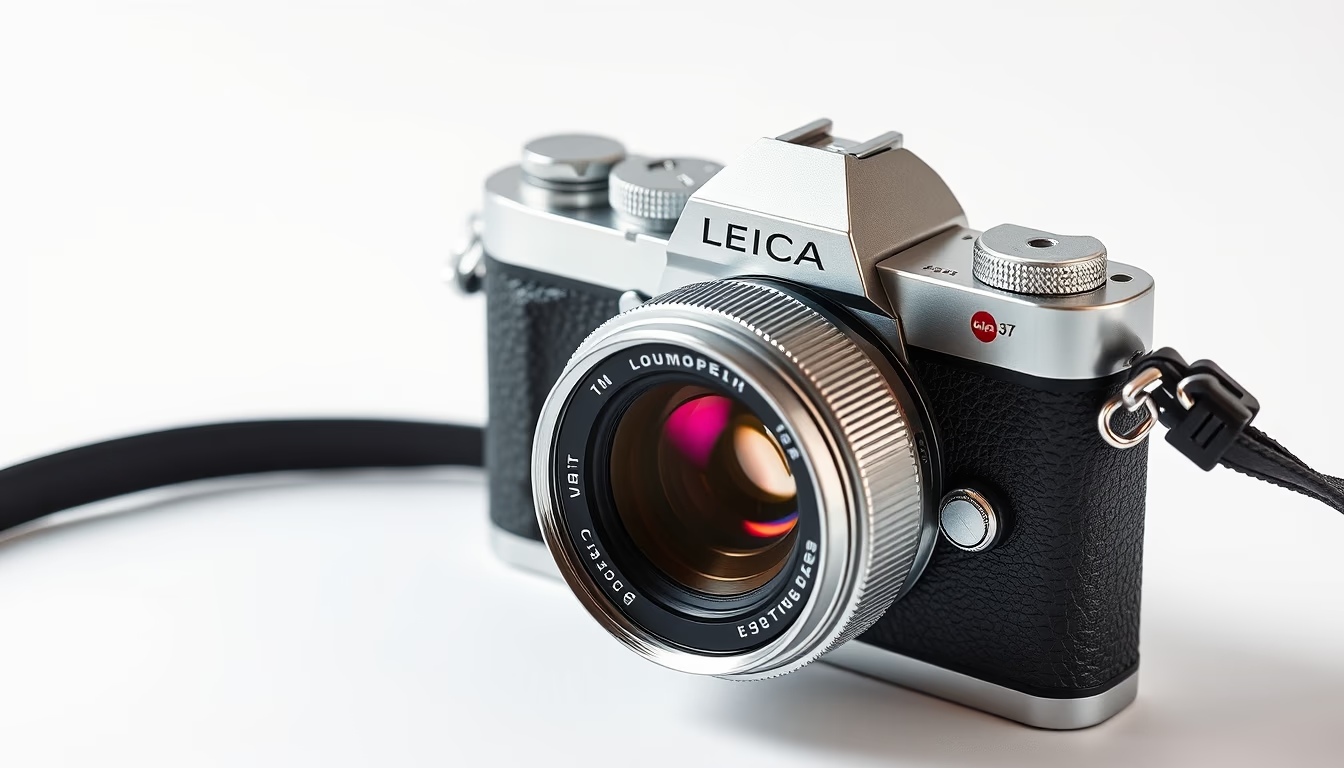
Leica m3 chrome
1344×768 · AVIF · CC BY 4.0
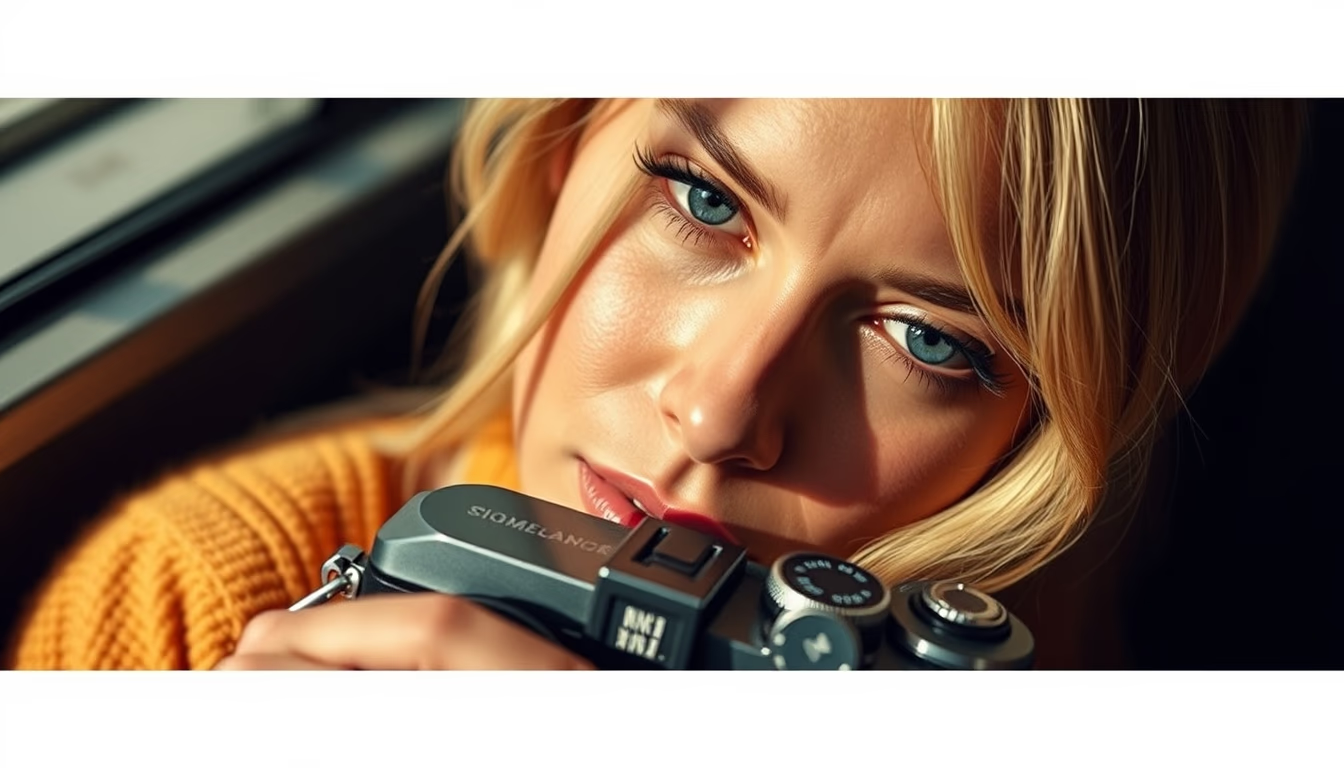
The chrome Leica M3, launched in 1954, is one of the most iconic cameras in photographic history, blending mechanical precision and timeless design.
About this subject
The Leica M3 was introduced in 1954 at Photokina, marking the beginning of the legendary M series of rangefinder cameras. It replaced direct viewfinder cameras and set a new standard for portable 35 mm photography. Its design incorporated a combined viewfinder and rangefinder with 0.91x magnification, considered ideal for 50 mm lenses. The cloth focal-plane shutter, with speeds from 1 to 1/1000 second, was quiet and precise, making it the choice of photojournalists and documentarians.
The M3's construction was robust, with a cast aluminum alloy body and synthetic leather covering. The name "M" comes from "Messsucher" (German for rangefinder). Around 230,000 units were produced until 1966, when it was replaced by the M4. The chrome version is the most common, but special editions like the black paint M3 are extremely rare. The Leica M lens mount, introduced with this camera, remained compatible with all subsequent M models, an engineering achievement.
The Leica M3 was used by legendary photographers such as Henri Cartier-Bresson, Robert Capa, and Sebastião Salgado. Its discretion and reliability in harsh conditions made it an essential tool for capturing decisive moments. Today, it is highly collectible: well-preserved examples can exceed $2,000, and rare models (like low serial numbers) fetch even higher prices. The M3 also influenced the design of modern digital cameras, such as the Leica M10.
Trivia: The Leica M3 was the first M-series camera with an automatic frame counter and film advance lever. Its rangefinder was initially calibrated only for 50 mm lenses, but later versions (from 1957) included frames for 90 mm and 135 mm. Production gradually declined after the introduction of the M2 (1957), which offered a wider viewfinder for 35 mm lenses.
Frequently Asked Questions
Why is the Leica M3 so valuable?
The Leica M3 is prized for its exceptional mechanical build, timeless design, and historical role in photojournalism. Its reliability and image quality make it a collector's item still usable today, with well-preserved examples fetching high market prices.
What is the difference between the M3 and the M2?
The M2 was launched in 1957 as a more affordable version aimed at 35 mm lenses. The main difference is the viewfinder: the M3 has 0.91x magnification and frames for 50, 90, and 135 mm, while the M2 has 0.72x magnification and frames for 35, 50, and 90 mm. The M2 also omitted the M3's automatic frame counter.
Can I still use 35mm film in a Leica M3 today?
Yes, the Leica M3 works perfectly with standard 35 mm film. Simply load the film, set the ASA/ISO on the compensation dial (though there is no built-in light meter), and shoot. Many photographers still use it for analog photography, as its mechanics are reliable and modern lenses are compatible.
Direct URL
https://pub-c7d6a6ea828543ac903a74a341ccb2e1.r2.dev/imagens/leica-m3-chrome-magazine-editorial-fresh17.avifHow to credit
Include a visible link back to UtilizAí. Copy one of the snippets below:
<a href="https://xn--utiliza-eza.com/en/midia/imagens/leica-m3-chrome-magazine-editorial-fresh17">Leica m3 chrome</a> by <a href="https://xn--utiliza-eza.com">UtilizAí</a>, licensed under <a href="https://creativecommons.org/licenses/by/4.0/">CC BY 4.0</a>.
[Leica m3 chrome](https://xn--utiliza-eza.com/en/midia/imagens/leica-m3-chrome-magazine-editorial-fresh17) by [UtilizAí](https://xn--utiliza-eza.com), CC BY 4.0
License: CC-BY-4.0