Leica m3 chrome
1344×768 · AVIF · CC BY 4.0
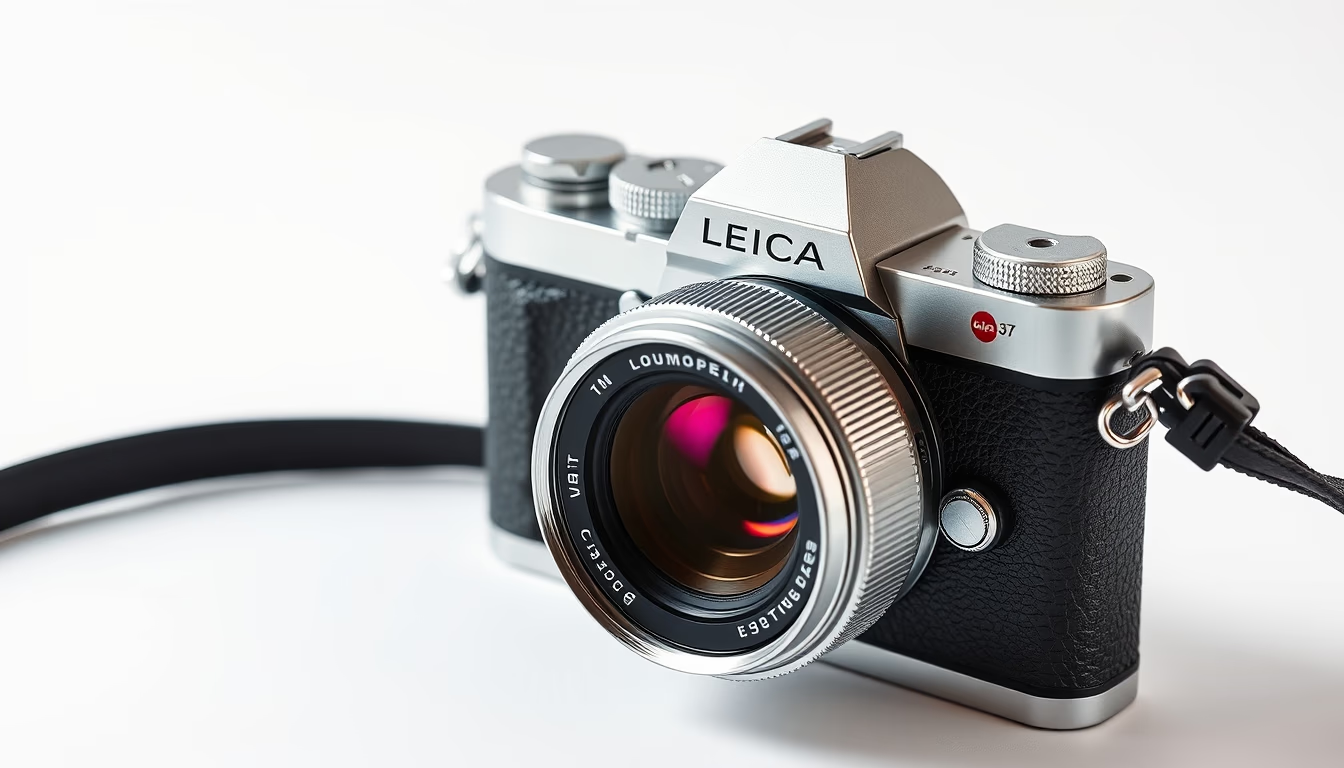
The Leica M3 chrome, launched in 1954, revolutionized photography with its rangefinder viewfinder and M mount, becoming an icon of design and mechanical precision.
About this subject
The Leica M3 is a 35 mm rangefinder camera manufactured by Leica Camera AG from 1954 to 1966. It was the first camera in the Leica M series and introduced the M mount system, which became a standard for interchangeable high-performance lenses. Its innovative design included a combined viewfinder with bright frame lines for 50 mm, 90 mm, and 135 mm lenses, eliminating the need for external viewfinders. The Leica M3 also pioneered a quiet and precise focal plane shutter with speeds from 1 second to 1/1000 second.
The camera is known for its robust construction, with a metal body covered in synthetic leather and detailed chrome finish. The Leica M3 became the choice of renowned photographers like Henri Cartier-Bresson, who used it to capture iconic moments of 20th-century photojournalism. Its mechanical precision and reliability made it an essential tool in reportage and documentary photography.
Beyond its technical features, the Leica M3 holds significant historical value as a milestone in camera evolution. It was produced in several versions, including the M3 DS (automatic frame counter) and M3 SS (manual reset). The original chrome version is especially prized by collectors for its elegant finish and the quality of Leica lenses, such as the Summicron 50 mm f/2 and Summarit 50 mm f/1.5.
The Leica M3 remains a sought-after camera among enthusiasts and professionals today, not only as a collector's item but also as functional equipment. Its influence on modern camera design is undeniable, and its legacy lives on in the current Leica M, which maintains the same rangefinder concept and M mount.
Frequently Asked Questions
What is the difference between the Leica M3 and the Leica M2?
The Leica M3 was launched first and has frame lines for 50 mm, 90 mm, and 135 mm lenses, plus an automatic frame counter on early versions. The M2, released in 1957, offered lines for 35 mm, 50 mm, and 90 mm and a manual counter, being more compact and lighter.
Why is the Leica M3 so highly valued?
The Leica M3 is valued for its solid construction, mechanical precision, and innovative design that influenced all rangefinder photography. It is a historical landmark and a collector's item, especially in good condition with original lenses.
Can the Leica M3 still be used today?
Yes, the Leica M3 is a fully mechanical camera that does not rely on batteries except for external light meters. Many photographers still use it for film photography, and maintenance can be done by specialized technicians.
Direct URL
https://pub-c7d6a6ea828543ac903a74a341ccb2e1.r2.dev/imagens/leica-m3-chrome-commercial-product-photography-fresh18.avifHow to credit
Include a visible link back to UtilizAí. Copy one of the snippets below:
<a href="https://xn--utiliza-eza.com/en/midia/imagens/leica-m3-chrome-commercial-product-photography-fresh18">Leica m3 chrome</a> by <a href="https://xn--utiliza-eza.com">UtilizAí</a>, licensed under <a href="https://creativecommons.org/licenses/by/4.0/">CC BY 4.0</a>.
[Leica m3 chrome](https://xn--utiliza-eza.com/en/midia/imagens/leica-m3-chrome-commercial-product-photography-fresh18) by [UtilizAí](https://xn--utiliza-eza.com), CC BY 4.0
License: CC-BY-4.0