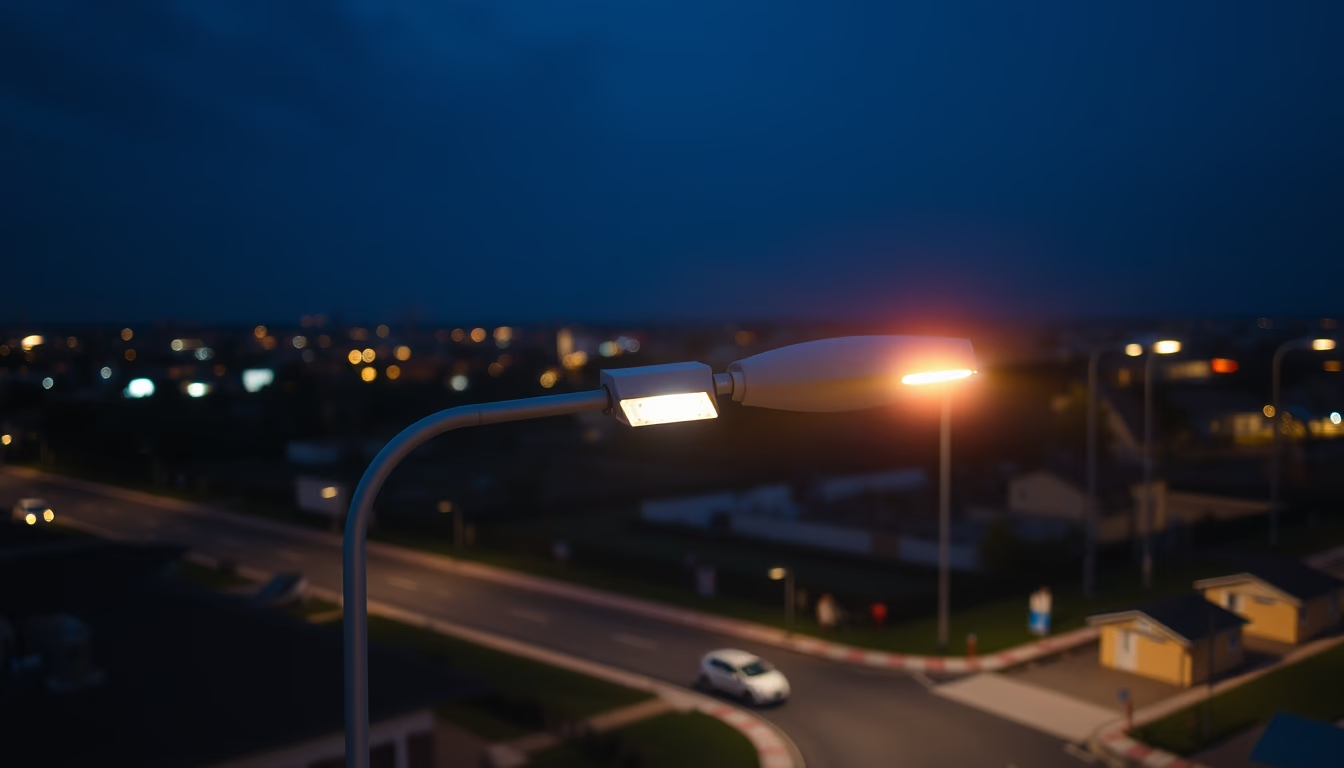
Led street light pole
1344×768 · AVIF · CC BY 4.0

LED street light poles are pillars of smart city infrastructure, combining energy efficiency and connectivity.
About this subject
LED street light poles represent a technological leap in urban management. Unlike sodium vapor or mercury lamps, LEDs consume up to 70% less energy and have a lifespan of 50,000 to 100,000 hours, drastically reducing maintenance costs. These devices are key components in the smart city concept, as they can be integrated with environmental monitoring sensors, security cameras, and electric vehicle charging stations.
In Brazil, the replacement of traditional poles with LEDs has been driven by energy efficiency programs. Cities like São Paulo, Rio de Janeiro, and Curitiba have already modernized significant portions of their lighting parks. The technology allows remote control of light intensity (dimming), adjusting illumination according to pedestrian and vehicle flow, generating additional savings. Replacing 10 million light points in the country could avoid 4 million tons of CO₂ emissions per year.
A lesser‑known aspect is that smart poles can host 5G antennas, acting as microcells to improve mobile coverage. Some models also feature digital displays for traffic information or weather forecasts. The trend for 2026 is the expansion of autonomous systems powered by solar energy, eliminating the need for electrical wiring and making public lighting even more sustainable.
Frequently Asked Questions
What is the lifespan of an LED street pole compared to a traditional lamp?
While sodium vapor lamps last about 24,000 hours, LEDs can reach 100,000 hours, depending on quality and usage. This means fewer replacements and lower operational costs.
Can LED poles be used for other functions besides lighting?
Yes. Smart poles can incorporate cameras, air quality sensors, Wi‑Fi hotspots, electric vehicle chargers, and 5G antennas, becoming urban connectivity hubs.
Does LED street lighting actually reduce crime?
Studies suggest that more uniform and better‑quality lighting can increase the perception of safety and deter criminal activity, but effectiveness depends on other factors such as policing and urban design.
Direct URL
https://pub-c7d6a6ea828543ac903a74a341ccb2e1.r2.dev/imagens/led-street-light-pole-studio-editorial-portrait-p4.avifHow to credit
Include a visible link back to UtilizAí. Copy one of the snippets below:
<a href="https://xn--utiliza-eza.com/en/midia/imagens/led-street-light-pole-studio-editorial-portrait-p4">Led street light pole</a> by <a href="https://xn--utiliza-eza.com">UtilizAí</a>, licensed under <a href="https://creativecommons.org/licenses/by/4.0/">CC BY 4.0</a>.
[Led street light pole](https://xn--utiliza-eza.com/en/midia/imagens/led-street-light-pole-studio-editorial-portrait-p4) by [UtilizAí](https://xn--utiliza-eza.com), CC BY 4.0
License: CC-BY-4.0