Led street light pole
1344×768 · AVIF · CC BY 4.0
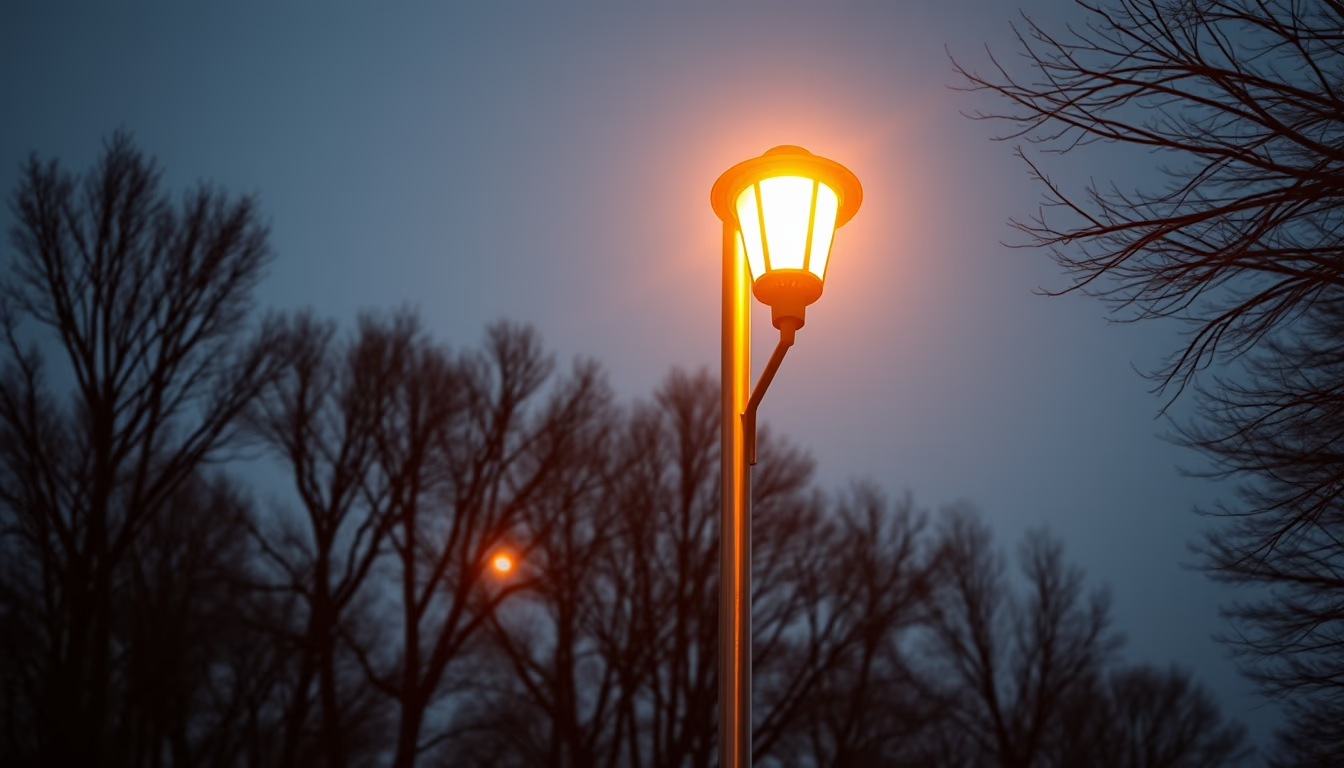
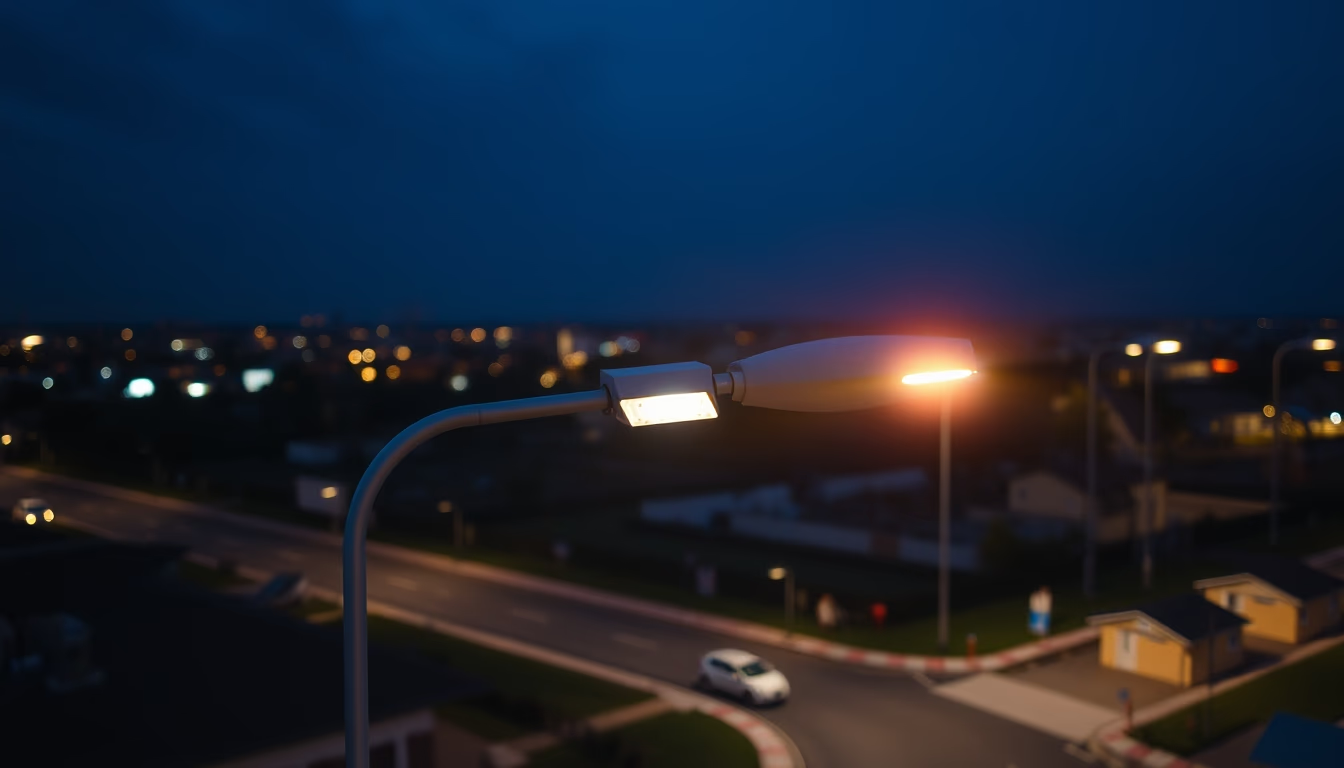
LED street light poles transform urban lighting with energy efficiency and long lifespan, reducing costs and emissions.
About this subject
LED-based public lighting represents one of the greatest technological revolutions in modern cities. Replacing sodium and mercury vapor lamps, LEDs consume up to 70% less energy and last between 50,000 and 100,000 hours, compared to 15,000 hours for traditional lamps. This efficiency drastically reduces municipal spending on electricity and maintenance. Cities like São Paulo, Los Angeles, and Copenhagen have already replaced thousands of poles, saving millions of dollars annually. Beyond economics, LEDs enable intelligent lighting control with dimming and motion sensors, enhancing safety and reducing light pollution.
LED technology advanced rapidly since its commercial introduction in the 2000s. Initially limited to indoor applications, today there are specific luminaires for public roads with optimized lenses and thermal sinks. Color temperature (from 2700K to 5000K) can be adjusted for different environments: warmer tones in residential areas, cooler ones on high-traffic roads. Studies show LED lighting improves visual perception for drivers and pedestrians, reducing nighttime accidents by up to 30%.
In Brazil, utility energy efficiency programs have encouraged fixture replacement. Cities like Curitiba and Belo Horizonte lead adoption. However, challenges remain: improper disposal of LEDs (containing rare metals) requires specialized recycling, and initial installation requires investment. Even so, typical payback is three to five years. With cheaper components and integrated photovoltaic systems, solar LED poles are gaining ground in remote areas.
Interestingly, LED lighting also affects urban fauna. Unlike sodium lamps that attract insects, LEDs can be designed with spectra that minimize ecological impacts. Pilot projects in ecological parks use amber LEDs to avoid disorienting bats and migratory birds. These innovations solidify LED as a pillar of smart cities, integrating efficiency, sustainability, and connectivity.
Frequently Asked Questions
What is the actual savings when replacing traditional lamps with LED street lighting?
Savings can reach 70% on electricity bills, plus reduced maintenance due to longer lifespan. Payback typically occurs within 3 to 5 years.
Do LED streetlights harm health or the environment?
If poorly designed, they can cause glare and light pollution. Proper color temperature and shielding minimize risks. Environmentally, disposal requires specialized recyclers to recover rare metals.
Can sensors and connectivity be integrated into LED poles?
Yes. Smart poles can include motion sensors, cameras, Wi-Fi, and traffic monitoring. This is part of the smart city concept, enabling remote and efficient lighting management.
Direct URL
https://pub-c7d6a6ea828543ac903a74a341ccb2e1.r2.dev/imagens/led-street-light-pole-cinematic-wide-shot-p3.avifHow to credit
Include a visible link back to UtilizAí. Copy one of the snippets below:
<a href="https://xn--utiliza-eza.com/en/midia/imagens/led-street-light-pole-cinematic-wide-shot-p3">Led street light pole</a> by <a href="https://xn--utiliza-eza.com">UtilizAí</a>, licensed under <a href="https://creativecommons.org/licenses/by/4.0/">CC BY 4.0</a>.
[Led street light pole](https://xn--utiliza-eza.com/en/midia/imagens/led-street-light-pole-cinematic-wide-shot-p3) by [UtilizAí](https://xn--utiliza-eza.com), CC BY 4.0
License: CC-BY-4.0